
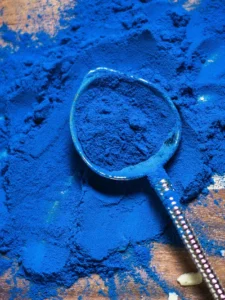
Blue spirulina has moved from smoothie bowls into serums, masks and shampoos. Its natural pigment and antioxidant profile make it an appealing clean-beauty ingredient at a time when brands and shoppers are moving away from synthetic dyes and harsh actives. Here is how blue spirulina is used in skincare and haircare, and what it can realistically do.
Why beauty brands use blue spirulina
Blue spirulina is phycocyanin — a water-soluble pigment and antioxidant extracted from spirulina algae. In cosmetics it plays two roles at once: a natural blue colourant that replaces artificial dyes, and a functional active valued for its antioxidant content. That dual purpose, plus its clean-label story, is why it appears in premium natural formulations.
Benefits for skin
- Antioxidant support — helps defend skin against free-radical and environmental stress that contributes to visible ageing.
- Soothing feel — phycocyanin is studied for anti-inflammatory properties, which makes it useful in calming and post-sun formulations.
- Natural colour — gives products a clean, plant-based blue without synthetic dyes.
- Nutrient content — spirulina-derived ingredients carry vitamins, minerals and amino acids that support skin conditioning.
Benefits for hair
In haircare, spirulina and phycocyanin are used for their protein and antioxidant content. They appear in shampoos, conditioners, masks and scalp treatments aimed at nourishing the hair and supporting a healthy-looking scalp. As with skincare, blue spirulina also lets brands colour products naturally.
Where blue spirulina shows up in beauty
| Product | Role of blue spirulina |
|---|---|
| Serums & creams | Antioxidant active + subtle natural tint |
| Face masks | Soothing, colour, nutrient boost |
| Shampoos & scalp care | Protein + antioxidant support |
| Colour cosmetics | Natural blue pigment for eyeshadow, etc. |
| Bath products | Vivid natural colour for soaps and bombs |
What to look for when sourcing for cosmetics
For beauty formulations, purity and consistency are everything. You want a stable colour that will not fade unpredictably in the finished product, low contaminant levels, and a grade suited to topical use. Certified, batch-tested phycocyanin from a reliable manufacturer avoids the colour shifts and quality surprises that come with cheap material.
A realistic note on claims
Blue spirulina is a promising natural ingredient, but results in any product depend on the full formulation, concentration and how it is stabilised. It is best thought of as a valuable clean-label active and colourant — not a miracle cure.
Frequently asked questions
Is blue spirulina good for skin? Its antioxidant and soothing properties make it a popular clean-beauty active, though results depend on formulation.
Is it safe in cosmetics? Yes, as a topical ingredient it is generally well tolerated; brands should use cosmetic-grade material.
Does it stain the skin? In properly formulated products, no — concentrations are controlled for colour, not staining.
Can it be used in natural hair products? Yes — for protein, antioxidants and natural colour.
Sourcing cosmetic-grade phycocyanin? Algology supplies cosmetic-grade phycocyanin and blue spirulina for beauty brands.