
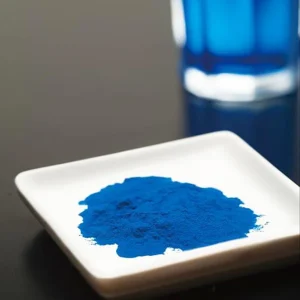
The spirulina market in India is expanding quickly, powered by rising health awareness, the clean-label movement and surging global demand for blue spirulina. For producers, brands and investors, understanding what is driving that growth is key to positioning well. Here is a clear snapshot.
A market on the rise
Spirulina demand in India now spans several distinct segments: dietary supplements, functional foods and beverages, animal and aqua feed, cosmetics, and natural food colouring. Within this, the premium segment — phycocyanin, or blue spirulina — is growing fastest, because it directly replaces synthetic blue dyes that consumers and regulators increasingly avoid.
What is driving demand
- Health & wellness — consumers want plant-based, protein-rich superfoods, and spirulina is a flagship example.
- Clean-label colour — food and beverage brands are switching from artificial dyes to natural phycocyanin.
- Exports — Indian manufacturers increasingly supply global food, beverage, nutraceutical and cosmetic brands.
- Nutraceutical growth — rising supplement consumption across urban and semi-urban India.
- Sustainability — microalgae are seen as a low-footprint protein and pigment source.
India’s competitive advantages
India is emerging as a strong global supplier for several reasons: a favourable warm climate and abundant sunlight for cultivation, comparatively lower production costs, and a growing base of certified manufacturers capable of meeting international quality and documentation standards. Together these make Indian spirulina and phycocyanin attractive to overseas buyers seeking reliable, cost-effective supply.
Key market segments at a glance
| Segment | Uses spirulina / phycocyanin for |
|---|---|
| Supplements | Protein, iron, antioxidants |
| Food & beverage | Natural blue colour, fortification |
| Cosmetics | Colour + antioxidant actives |
| Feed | Nutrition for poultry, fish, pets |
Challenges in the market
Growth brings competition and price pressure, and quality varies widely between producers. Buyers increasingly demand certifications, batch testing and consistent colour, which rewards serious manufacturers and squeezes out low-quality suppliers. Maintaining pigment stability through storage and shipping is an ongoing technical challenge, especially for the premium blue segment.
Outlook
With natural ingredients, functional foods and clean-label products continuing to grow, demand for both standard spirulina and high-value blue spirulina extract is expected to keep rising in India and its export markets. Producers who invest in quality and move up the value chain into phycocyanin are best placed to benefit.
Frequently asked questions
Is spirulina in demand in India? Yes — across supplements, food colour, feed and exports.
Which is more valuable, spirulina or phycocyanin? Phycocyanin (blue spirulina) commands a significant premium.
Why is India becoming a key supplier? Climate, cost, and a growing base of certified manufacturers.
Who buys Indian spirulina? Domestic brands plus international food, beverage, nutraceutical and cosmetic companies.
Sourcing from India? Algology supplies spirulina and phycocyanin for domestic and export markets.