
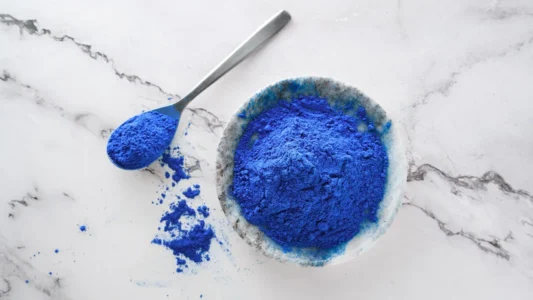
Because blue spirulina is nearly tasteless and a fun natural colour, parents and expecting mothers often ask whether it is safe for children and during pregnancy. Here is a balanced, practical answer — with the honest caveat that this is general information, not medical advice, and individual circumstances vary.
Blue spirulina for kids
In small food amounts — for example a little blue spirulina powder colouring a smoothie or yoghurt — it is generally considered fine for children. Many parents like that it adds a playful, vivid colour without artificial dyes, and that it carries some of spirulina’s nutrients. The rules of thumb are simple: use certified, tested, contaminant-free products, keep amounts modest, and introduce it gradually.
Blue spirulina during pregnancy
Spirulina and phycocyanin are nutrient-dense, but pregnancy is a sensitive time and caution is sensible. Importantly, the main concern is purity, not the algae itself — poorly produced spirulina can contain heavy metals or contaminants that no one, and especially not a pregnant person, should consume. If a pregnant or breastfeeding person wants to use blue spirulina, they should choose a certified product and consult their doctor or midwife first.
Why product quality matters most
For both children and pregnancy, the deciding factor is where the product comes from:
- Choose spirulina or phycocyanin tested for heavy metals and microbes.
- Look for certifications such as FSSAI, ISO and HACCP.
- Avoid cheap, uncertified sources of unknown origin.
A clean, certified product removes the biggest and most avoidable risk.
Safe-use tips
- Start with very small amounts and watch for any reaction.
- Use it mainly for natural colour rather than high-dose supplementation.
- Keep total intake modest and occasional rather than large and daily, unless advised otherwise.
- Treat any medical question — especially in pregnancy or for young children — as a conversation for a healthcare professional.
Green vs blue for these groups
Blue spirulina’s neutral taste makes it easier to sneak a little colour into kids’ food than strong-tasting green spirulina. Nutritionally, green spirulina is more of a whole-food supplement, while blue is the concentrated pigment; for children, colour-only use of a certified product is the most common approach.
Frequently asked questions
Can kids have blue spirulina? In small food amounts, generally yes, using certified products; consult a paediatrician for supplements.
Is blue spirulina safe in pregnancy? The algae is nutritious but purity is critical — use certified, tested products and check with a doctor first.
What is the biggest risk? Contamination from low-quality algae — which certified products are tested to prevent.
Is it better than artificial blue dye for kids? Many parents prefer it as a natural, dye-free colour, used in small amounts.
How do I know a product is clean? Buy certified, batch-tested material. Algology produces certified, tested phycocyanin (FSSAI, ISO, HACCP).