
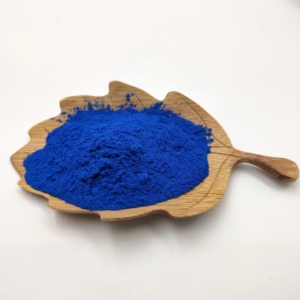
Understanding how quality is maintained in blue spirulina (phycocyanin) manufacturing to ensure purity, safety, and performance.
In the rapidly growing natural colorant and nutraceutical industry, Blue Spirulina manufacturers in India are playing a key role in delivering high-quality phycocyanin extracts that meet global standards. Blue spirulina, derived from the pigment phycocyanin, is valued for its vibrant blue color, nutritional benefits, and wide applications in food, beverages, cosmetics, and supplements. However, ensuring consistency, safety, and purity is a critical aspect of production.
This is where Blue Spirulina manufacturers focus heavily on strict quality control and testing protocols throughout the manufacturing process. From raw algae cultivation to final extraction and packaging, every stage is carefully monitored to eliminate contaminants, maintain potency, and preserve color stability. Understanding how quality is maintained in blue spirulina (phycocyanin) manufacturing helps ensure that the final product delivers not only visual appeal but also safety, reliability, and performance across various applications.
Importance of Quality Control in Algae Production
For Blue Spirulina manufacturers in India, maintaining strict quality control in algae production is the foundation of producing high-grade phycocyanin. Since blue spirulina is derived from cultivated microalgae, even minor variations in growth conditions can significantly affect the purity, color intensity, and nutritional value of the final extract. This makes quality control an essential step rather than an optional process. Blue Spirulina manufacturers implement controlled cultivation systems to monitor key factors such as water quality, light exposure, temperature, and nutrient balance. These parameters directly influence algae growth and pigment concentration. Without proper control, the risk of contamination, inconsistent batches, and reduced phycocyanin yield increases.
Lab Testing for Phycocyanin Purity
Ensuring high purity levels is one of the most critical steps followed by Blue Spirulina manufacturers in India during the production of phycocyanin extract. As demand for natural blue colorants continues to rise in food, beverage, and nutraceutical industries, maintaining consistent pigment quality has become essential for global acceptance and safety compliance.
Reputed Blue Spirulina manufacturers rely on advanced laboratory testing methods to accurately measure phycocyanin purity and concentration. One of the key parameters tested is the phycocyanin purity ratio (A620/A280), which determines the concentration of active pigment compared to protein impurities. Higher ratios indicate a cleaner, more refined extract suitable for premium applications.
Heavy Metal & Contaminant Testing
In the production of high-quality phycocyanin, Blue Spirulina manufacturers in India place strong emphasis on heavy metal and contaminant testing to ensure product safety and global compliance. Since blue spirulina is derived from algae, it has a natural tendency to absorb substances from its growing environment, including trace metals from water and soil. Without strict monitoring, this can lead to contamination risks that affect purity and consumer safety.
To address this, leading Blue Spirulina manufacturers implement rigorous testing protocols at multiple stages of production. Raw biomass is first screened for heavy metals such as lead, arsenic, mercury, and cadmium using advanced analytical techniques like ICP-MS (Inductively Coupled Plasma Mass Spectrometry). Additional checks are conducted after extraction to ensure that purification processes effectively reduce contaminants to permissible limits.
Microbiological Safety Checks
In the production of high-quality phycocyanin, Blue Spirulina manufacturers in India place strong emphasis on microbiological safety checks to ensure that the final product is safe for consumption and free from harmful microbial contamination. Since blue spirulina is used in food, beverages, and nutraceutical applications, maintaining strict hygiene standards throughout cultivation, harvesting, and extraction is essential.
Leading Blue Spirulina manufacturers implement comprehensive testing protocols to detect the presence of bacteria, yeast, mold, and other pathogens at multiple stages of production. Regular microbial load testing helps ensure that the spirulina biomass and extracted phycocyanin meet international safety standards. In addition, controlled cultivation environments, sterile processing conditions, and GMP-certified facilities are used to minimize the risk of contamination.
Colour Value (CI) & Potency Measurement
For leading Blue Spirulina manufacturers in India, maintaining consistent quality is not just about producing a vibrant blue pigment but also ensuring measurable strength and stability in every batch. One of the most important quality indicators in this process is the Colour Value (CI), which determines the intensity and visual performance of phycocyanin extracted from blue spirulina.
The Colour Index (CI) value is widely used by Blue Spirulina manufacturers to evaluate how strong and pure the blue pigment is. A higher CI value typically indicates a more concentrated and higher-quality phycocyanin extract, which is essential for applications in food, beverages, nutraceuticals, and cosmetics. Manufacturers carefully monitor this parameter to ensure batch-to-batch consistency and to meet both domestic and international quality standards.
GMP & ISO Standards in Production
For modern Blue Spirulina manufacturers in India, maintaining global quality benchmarks is essential to compete in the international nutraceutical and natural colorant markets. One of the most important aspects of ensuring consistent product quality is adherence to Good Manufacturing Practices (GMP) and ISO standards, which together form the backbone of safe, reliable, and standardized production systems.
Blue Spirulina manufacturers who follow GMP guidelines ensure that every stage of production—from raw material sourcing and cultivation to extraction, drying, and packaging—is carried out under strictly controlled conditions. GMP compliance focuses on hygiene, process validation, equipment calibration, and documentation, reducing the risk of contamination and ensuring batch-to-batch consistency in phycocyanin quality.
In addition, ISO certifications such as ISO 9001 (Quality Management Systems) and ISO 22000 (Food Safety Management Systems) further strengthen the credibility of Blue Spirulina manufacturers in India. These standards require manufacturers to implement structured quality management systems, hazard control procedures, and continuous improvement practices. This not only enhances product safety but also builds trust among global buyers and formulators.
Batch-to-Batch Consistency Control
For Blue Spirulina manufacturers in India, maintaining batch-to-batch consistency is one of the most critical aspects of producing high-quality phycocyanin. Since blue spirulina is widely used as a natural colorant in food, beverages, cosmetics, and nutraceuticals, even minor variations in color intensity, purity, or potency can significantly impact end-product performance and customer satisfaction.
Leading Blue Spirulina manufacturers implement strict process standardization at every stage of production—from algae cultivation conditions and harvesting time to extraction methods and drying parameters. Controlled environments, calibrated equipment, and validated SOPs (Standard Operating Procedures) help ensure that each batch delivers the same color value (CI), protein content, and purity level.
Common Quality Failures in Production
In the growing market of natural food colorants, Blue Spirulina manufacturers in India are increasingly focusing on maintaining strict production standards to meet global demand. However, despite advanced technologies and improved cultivation practices, several quality-related challenges can still arise during blue spirulina (phycocyanin) production.
For many Blue Spirulina manufacturers, one of the most common issues is inconsistency in pigment purity and color strength, often caused by variations in raw algae quality or improper extraction techniques. Contamination risks, including microbial growth, heavy metals, or environmental impurities, can also impact product safety if quality checks are not strictly enforced. Another frequent failure is the degradation of phycocyanin due to improper temperature control during processing or storage, leading to reduced color intensity and lower shelf life.
Role of Third-Party Testing Labs
In the growing nutraceutical and natural color industry, Blue Spirulina manufacturers in India are increasingly relying on independent third-party testing labs to ensure transparency, credibility, and product safety. Blue spirulina, primarily valued for its phycocyanin content, is used in food, beverages, cosmetics, and health supplements, where strict quality assurance is essential to meet both domestic and international regulatory standards.
For Blue Spirulina manufacturers, third-party laboratories play a crucial role in validating internal quality control processes. These accredited labs conduct unbiased testing for parameters such as phycocyanin purity, heavy metal contamination, microbial load, and overall product potency. By verifying that the product is free from harmful substances and meets declared specifications, these labs help manufacturers build trust with clients and regulatory bodies.
Additionally, third-party testing enhances market acceptance, especially for export-oriented Blue Spirulina manufacturers in India, where compliance with global certifications like ISO, GMP, and food safety standards is mandatory. The involvement of independent labs ensures that every batch of blue spirulina meets consistent quality benchmarks, reinforcing safety, reliability, and brand reputation in a highly competitive market.
Quality Certification Requirements
For Blue Spirulina manufacturers in India, maintaining strong quality certifications is essential to ensure product safety, global acceptance, and consistent performance. Blue spirulina, primarily known for its phycocyanin pigment, is widely used in food, beverages, cosmetics, and nutraceuticals. Because of its direct application in consumable and cosmetic products, manufacturers must comply with strict international and domestic quality standards.
Leading Blue Spirulina manufacturers typically follow certifications such as GMP (Good Manufacturing Practices), ISO 22000 (Food Safety Management Systems), and HACCP (Hazard Analysis and Critical Control Points) to ensure every stage of production meets safety and hygiene requirements. These certifications help verify that cultivation, extraction, processing, and packaging are carried out under controlled and standardized conditions.