
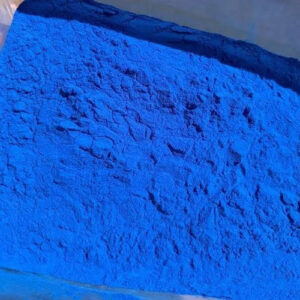
A detailed look at how phycocyanin is extracted and purified from spirulina biomass.
The extraction of phycocyanin from spirulina has gained significant attention in recent years due to the growing demand for natural colorants and nutraceutical ingredients. As the global market shifts toward clean-label and plant-based products, both Blue Spirulina manufacturers in India and Blue Spirulina manufacturers worldwide are focusing on efficient, scalable, and high-purity extraction methods to meet industry needs.
Phycocyanin, a vibrant blue pigment-protein complex found in spirulina biomass, is valued not only for its striking color but also for its antioxidant, anti-inflammatory, and health-promoting properties. The process of extracting this bioactive compound involves a series of carefully controlled steps designed to preserve its stability and maximize yield. From biomass harvesting to cell disruption, filtration, and purification, each stage plays a critical role in determining the final quality of the product.
Harvesting Spirulina Biomass
Harvesting spirulina biomass is a critical first step in the production of high-quality phycocyanin. For both Blue Spirulina manufacturers in India and global Blue Spirulina manufacturers, the efficiency and precision of this stage directly influence the purity, yield, and overall quality of the final blue pigment. Spirulina is typically cultivated in controlled environments such as open raceway ponds or closed photobioreactors, where factors like pH, temperature, and nutrient levels are carefully maintained. Once the biomass reaches optimal density, harvesting begins at the peak of its growth cycle to ensure maximum phycocyanin content. Timing is essential, as delayed harvesting can lead to degradation of valuable compounds and reduced pigment quality.
Cell Disruption Techniques
Cell disruption is a crucial step in the extraction of phycocyanin from spirulina biomass, as it enables the release of intracellular pigments into the extraction medium. For both Blue Spirulina manufacturers in India and global Blue Spirulina manufacturers, selecting the right disruption technique is essential to ensure high yield, purity, and stability of phycocyanin while maintaining cost efficiency.
Spirulina cells possess relatively robust cell walls composed of complex polysaccharides and proteins, which must be effectively broken down without degrading the sensitive phycocyanin pigment. To achieve this, manufacturers employ a range of mechanical, physical, and chemical disruption methods tailored to their production scale and quality requirements.
Aqueous Extraction Process
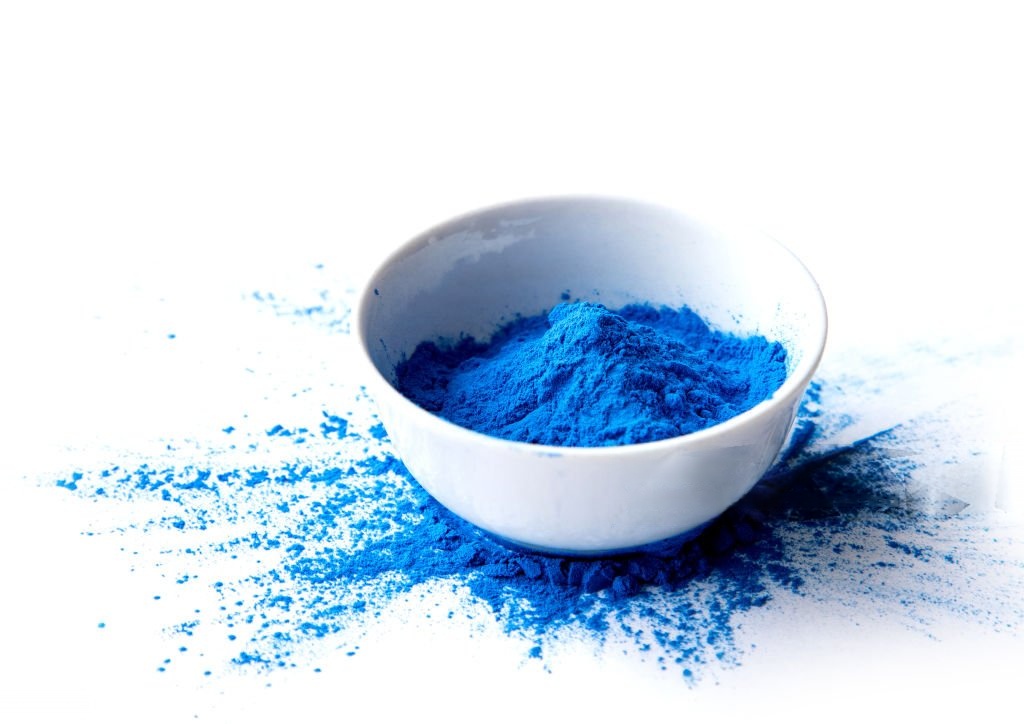
The aqueous extraction process is one of the most widely adopted and efficient methods for isolating phycocyanin from spirulina biomass. Preferred for its simplicity, cost-effectiveness, and ability to preserve the natural integrity of the pigment, this method is extensively used by Blue Spirulina manufacturers in India as well as leading Blue Spirulina manufacturers across the globe.
In this process, dried or fresh spirulina biomass is first suspended in a suitable aqueous medium, typically a buffered solution that helps maintain an optimal pH for phycocyanin stability. Since phycocyanin is water-soluble, this approach allows for gentle extraction without the need for harsh chemicals, making it ideal for food-grade and nutraceutical applications.
The next critical step involves cell disruption. Because phycocyanin is located within the spirulina cells, the cell walls must be broken to release the pigment into the solution. Common techniques include freeze-thaw cycles, sonication, homogenization, or enzymatic treatment. Among Blue Spirulina manufacturers in India, freeze-thaw and mechanical disruption methods are particularly popular due to their effectiveness and scalability.
Filtration & Centrifugation Methods
Filtration and centrifugation are critical steps in the downstream processing of phycocyanin extraction, playing a vital role in separating the soluble pigment from spirulina biomass residues. For both Blue Spirulina manufacturers in India and global Blue Spirulina manufacturers, these techniques ensure high clarity, improved purity, and consistent product quality.
Once the spirulina cells are disrupted and phycocyanin is released into the aqueous medium, the resulting mixture contains cell debris, proteins, and other insoluble materials. Filtration is typically the first step in clarifying this extract. Depending on the scale of production, manufacturers use methods such as microfiltration, ultrafiltration, or membrane filtration to remove suspended particles. Advanced membrane systems are particularly favored by Blue Spirulina manufacturers in India, as they allow for efficient separation while preserving the functional integrity of the sensitive phycocyanin compound.
Following filtration, centrifugation is employed to further refine the extract. High-speed centrifuges separate remaining fine particles based on density differences, resulting in a clearer supernatant rich in phycocyanin. This step is essential for achieving the level of purity required in food-grade and pharmaceutical applications. Many leading Blue Spirulina manufacturers adopt multi-stage centrifugation processes to enhance yield and minimize product loss.
Spray Drying vs Freeze Drying
When it comes to preserving the quality and functionality of phycocyanin derived from spirulina, the choice of drying method plays a critical role. Among the most widely used techniques, spray drying and freeze drying stand out as key processes adopted by both Blue Spirulina manufacturers in India and Blue Spirulina manufacturers globally. Each method offers distinct advantages and limitations, influencing product stability, color intensity, nutrient retention, and overall cost-effectiveness.
As demand for natural blue pigments continues to rise across food, beverage, and nutraceutical industries, manufacturers are increasingly focused on selecting the right drying technology to maintain the delicate structure of phycocyanin. Spray drying, known for its efficiency and scalability, is often favored for large-scale production. In contrast, freeze drying is valued for its ability to preserve bioactivity and produce high-purity, premium-grade products.
For Blue Spirulina manufacturers in India, balancing cost, quality, and market requirements is essential when choosing between these two techniques. Meanwhile, global Blue Spirulina manufacturers are investing in advanced drying technologies to optimize performance and meet international quality standards.
Purification Techniques
Purification is a critical stage in the production of high-quality phycocyanin, as it directly determines the pigment’s purity, stability, and suitability for various applications. For Blue Spirulina manufacturers in India and global Blue Spirulina manufacturers, adopting advanced purification techniques is essential to meet the increasing demand for food-grade, cosmetic-grade, and pharmaceutical-grade blue spirulina extracts.
Once the crude phycocyanin extract is obtained, it contains a mixture of proteins, pigments, cell debris, and other impurities. The purification process aims to isolate phycocyanin while maintaining its functional and structural integrity. One of the most commonly used methods is centrifugation, which helps remove larger particulate matter and clarifies the extract. This is often followed by filtration techniques such as microfiltration or ultrafiltration, which further separate unwanted components based on molecular size.
Ammonium sulfate precipitation is another widely adopted technique, especially among Blue Spirulina manufacturers in India, due to its cost-effectiveness and efficiency. This method works by selectively precipitating phycocyanin proteins, allowing impurities to remain in solution. The precipitated phycocyanin is then collected and redissolved for further purification.
Yield Optimization Strategies
Maximizing phycocyanin yield is a critical focus area for both Blue Spirulina manufacturers in India and global Blue Spirulina manufacturers, as it directly impacts production efficiency, cost-effectiveness, and overall product quality. With increasing demand across food, nutraceutical, and cosmetic industries, manufacturers are continuously refining their processes to achieve higher extraction yields without compromising purity or stability.
One of the primary strategies for yield optimization begins at the cultivation stage. Maintaining optimal growth conditions—such as controlled pH, temperature, light intensity, and nutrient availability—ensures that spirulina biomass contains a higher concentration of phycocyanin. For Blue Spirulina manufacturers in India, leveraging region-specific climatic advantages while integrating controlled cultivation systems like photobioreactors has proven highly effective.
Efficient cell disruption techniques also play a vital role in maximizing yield. Since phycocyanin is located within the cells of spirulina, methods such as freeze-thaw cycles, ultrasonication, and high-pressure homogenization are widely used to break open the cell walls and release the pigment. Advanced manufacturers are increasingly adopting hybrid techniques that combine mechanical and non-mechanical methods to improve extraction efficiency.
Temperature Sensitivity in Extraction
Temperature plays a critical role in the extraction of phycocyanin from spirulina, directly influencing both the yield and quality of the final product. Due to its protein-based structure, phycocyanin is highly sensitive to heat, making temperature control one of the most important factors for Blue Spirulina manufacturers in India and global Blue Spirulina manufacturers striving to maintain product integrity.
During the extraction process, spirulina biomass is typically subjected to cell disruption techniques such as freezing-thawing, homogenization, or ultrasonication. These methods are often carried out under low-temperature conditions to prevent thermal degradation of phycocyanin. Exposure to high temperatures can lead to denaturation of the pigment-protein complex, resulting in loss of its characteristic blue color, reduced antioxidant properties, and decreased commercial value.
For Blue Spirulina manufacturers in India, maintaining an optimal temperature range—generally between 4°C and 25°C—is essential to ensure maximum pigment stability. Cold extraction techniques are widely preferred, as they help preserve the structural and functional properties of phycocyanin while minimizing the risk of contamination and degradation. Additionally, temperature-controlled environments during filtration and purification stages further enhance the quality and shelf life of the final extract.
Industrial vs Lab-Scale Extraction
The extraction of phycocyanin from spirulina varies significantly depending on whether it is performed at a laboratory scale or an industrial scale. Understanding these differences is essential, especially as Blue Spirulina manufacturers in India and global Blue Spirulina manufacturers strive to balance efficiency, cost, and product quality in a competitive market.
At the laboratory scale, extraction processes are typically designed for research, small-batch production, or product development. These methods prioritize precision, flexibility, and high purity over volume. Techniques such as freeze-thaw cycles, sonication, and buffer-based extraction are commonly used to gently break down spirulina cells and release phycocyanin while preserving its bioactivity. Lab-scale processes allow researchers to experiment with parameters like pH, temperature, and solvent composition to optimize yield and purity. However, these methods are often time-consuming, labor-intensive, and not economically viable for large-scale production.
Waste Management in Extraction Units
Waste management plays a crucial role in the sustainable operation of spirulina processing facilities, particularly in the extraction of high-value compounds like phycocyanin. As demand continues to rise, both Blue Spirulina manufacturers in India and Blue Spirulina manufacturers globally are under increasing pressure to adopt environmentally responsible practices that minimize waste and optimize resource utilization.
The extraction of phycocyanin from spirulina biomass generates various types of waste, including residual biomass, process water, and chemical by-products. If not managed effectively, these waste streams can pose environmental risks and increase operational costs. Therefore, modern extraction units are integrating advanced waste management strategies that focus on reduction, reuse, and recycling.