
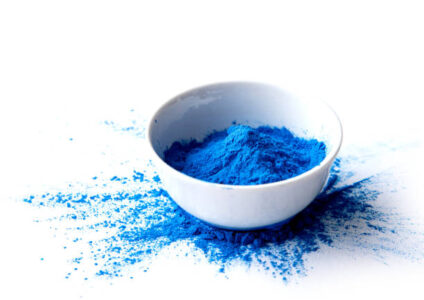
A detailed look at how phycocyanin is extracted and purified from spirulina biomass.
Phycocyanin, the vibrant blue pigment derived from Spirulina, has gained significant attention across food, nutraceutical, and cosmetic industries for its natural color and powerful antioxidant properties. Understanding the extraction process of phycocyanin from spirulina is essential to appreciate its purity, stability, and commercial value. This process involves carefully harvesting Spirulina biomass, followed by cell disruption, pigment extraction, filtration, and advanced purification techniques to achieve high-grade phycocyanin suitable for various applications. In recent years, Blue Spirulina manufacturers in India have expanded their production capabilities to meet rising global demand, adopting advanced technologies to ensure superior quality standards. Leading Blue Spirulina manufacturers focus on maintaining high purity levels and sustainable cultivation practices, making India a key hub in the global phycocyanin market.
Harvesting Spirulina Biomass
Harvesting Spirulina biomass is one of the most crucial steps in the production of high-quality phycocyanin, as it directly impacts the purity, color intensity, and nutritional value of the final extract. The process typically begins with cultivating Spirulina in controlled aquatic environments such as open raceway ponds or closed photobioreactors, where optimal conditions like pH, temperature, light, and nutrient levels are carefully maintained. Once the culture reaches peak density, the biomass is harvested using filtration or centrifugation techniques to separate the Spirulina cells from the growth medium. This freshly collected biomass is then washed to remove impurities before being processed further for phycocyanin extraction. In India, Blue Spirulina manufacturers in India play a key role in refining harvesting techniques to ensure maximum yield and minimal contamination. Leading Blue Spirulina manufacturers focus on adopting sustainable and hygienic harvesting practices, enabling them to produce premium-grade spirulina suitable for food, beverage, and nutraceutical applications.
Cell Disruption Techniques
Cell disruption is a crucial stage in the extraction of phycocyanin from Spirulina, as the pigment is stored within the rigid cell walls of the biomass. To release high-quality phycocyanin efficiently, various mechanical, physical, and non-mechanical methods are used depending on the desired purity, scale, and cost of production. Common techniques include high-pressure homogenization, bead milling, ultrasonication, freeze-thaw cycles, and enzymatic treatment. Each method helps break the cell wall structure and improves pigment yield while preserving its bioactivity and color stability.
In modern production systems, Blue Spirulina manufacturers in India are increasingly adopting advanced and scalable cell disruption technologies such as ultrasonication and high-pressure homogenizers to enhance extraction efficiency and maintain product consistency. Leading Blue Spirulina manufacturers focus on optimizing these techniques to achieve higher phycocyanin recovery rates, reduced processing time, and improved purity levels, ensuring that the final extract meets global quality standards for food, nutraceutical, and cosmetic applications.

Aqueous Extraction Process
The aqueous extraction process is one of the most widely used and efficient methods for obtaining high-quality phycocyanin from Spirulina biomass. This technique relies on water as the primary solvent, making it a safe, eco-friendly, and food-grade method suitable for nutraceutical and cosmetic applications. In this process, Spirulina cells are first harvested and washed to remove impurities, followed by gentle cell disruption using low-temperature conditions to preserve the stability of the blue pigment. The biomass is then mixed with chilled distilled water, allowing phycocyanin to dissolve into the solution. After extraction, the mixture undergoes filtration and centrifugation to separate insoluble residues, resulting in a crude phycocyanin extract.
To enhance purity and color intensity, the extract may be further purified using membrane filtration or precipitation techniques, ensuring a stable and high-quality end product. This method is preferred by many Blue Spirulina manufacturers in India due to its cost-effectiveness, scalability, and ability to retain the natural properties of phycocyanin. Leading Blue Spirulina manufacturers adopt optimized aqueous extraction systems to meet international quality standards while maintaining the natural integrity of the pigment for use in food coloring, dietary supplements, and cosmetic formulations.
Filtration & Centrifugation Methods
Filtration and centrifugation are critical steps in the extraction and purification of phycocyanin from Spirulina, ensuring that the final extract achieves high clarity, stability, and purity. After the initial cell disruption process releases phycocyanin into the solution, the mixture contains cell debris, proteins, and other unwanted impurities that must be removed efficiently.
In the filtration stage, the crude extract is passed through fine filtration systems such as microfilters or membrane filters to separate larger particulate matter. This step helps in achieving a clearer solution while preserving the delicate phycocyanin pigment. Following filtration, centrifugation is applied to further purify the extract by spinning it at high speeds, causing heavier impurities to settle at the bottom while the liquid phycocyanin-rich supernatant is collected.
Spray Drying vs Freeze Drying
Drying is one of the most critical steps in processing spirulina-based products, especially when it comes to preserving the quality of phycocyanin and other bioactive compounds. Among the most widely used techniques in the industry are spray drying and freeze drying, both of which serve the purpose of removing moisture but differ significantly in terms of process, cost, and product quality. Spray drying is a faster and more cost-effective method that uses hot air to convert liquid extract into powder, while freeze drying involves sublimating frozen water under low pressure to retain maximum nutrient integrity and color stability. For premium-grade applications, freeze drying is often preferred due to its ability to better preserve the natural blue pigment. In the growing global market, Blue Spirulina manufacturers in India are increasingly adopting both technologies based on end-use requirements, balancing efficiency with quality. Leading Blue Spirulina manufacturers strategically choose between spray drying and freeze drying to deliver products that meet diverse industry standards across food, beverages, and nutraceuticals.
Purification Techniques
Purification is a crucial stage in the extraction of phycocyanin from Spirulina, as it determines the final quality, color intensity, and application suitability of the pigment. After the initial extraction of crude phycocyanin, several purification techniques are applied to remove impurities such as proteins, lipids, and other cellular components. Common methods include ammonium sulfate precipitation, centrifugation, dialysis, and advanced filtration processes like ultrafiltration and chromatography. These techniques help improve pigment stability and increase purity levels required for food-grade and pharmaceutical applications. In the growing blue pigment industry, Blue Spirulina manufacturers in India are increasingly adopting modern purification technologies to produce high-quality extracts that meet international standards. Similarly, leading Blue Spirulina manufacturers focus on refining these processes to ensure consistent color strength, enhanced bioactivity, and superior product performance across global markets.
Yield Optimization Strategies
Yield optimization in phycocyanin production from spirulina is a critical factor that determines both commercial profitability and product quality. Efficient cultivation and processing methods help maximize pigment concentration while maintaining the stability and purity of the final extract. Key strategies include optimizing growth conditions such as light intensity, temperature, pH levels, and nutrient availability to enhance spirulina biomass productivity. Additionally, selecting high-yield spirulina strains and implementing controlled indoor photobioreactor systems can significantly improve phycocyanin output.
On the processing side, gentle cell disruption techniques and low-temperature extraction methods are essential to prevent pigment degradation and ensure higher recovery rates. Advanced filtration and purification technologies also play a vital role in improving overall yield efficiency. In India, Blue Spirulina manufacturers in India are increasingly adopting these modern cultivation and extraction techniques to meet global demand for high-quality natural blue pigment. Leading Blue Spirulina manufacturers are focusing on research-driven approaches and sustainable production systems to maximize yield while maintaining consistent product standards across large-scale operations.
Temperature Sensitivity in Extraction
Temperature plays a critical role in the extraction and stability of phycocyanin derived from Spirulina. As a delicate protein-pigment complex, phycocyanin is highly sensitive to heat, and even slight increases in temperature during processing can lead to structural degradation, color loss, and reduced antioxidant activity. Therefore, maintaining a controlled low-temperature environment throughout the extraction process is essential to preserve its natural blue color and functional properties.
During extraction, Spirulina biomass is typically processed under chilled or room-temperature conditions to prevent denaturation of the pigment. Excessive heat exposure can break down phycocyanin into non-functional components, significantly affecting yield and quality. This is why cold processing techniques, such as refrigerated centrifugation and low-temperature filtration, are widely used in commercial production.
Industrial vs Lab-Scale Extraction
The extraction of phycocyanin from spirulina varies significantly depending on whether it is performed at a laboratory scale or an industrial scale. Both methods aim to isolate high-quality blue pigment, but they differ in terms of equipment, efficiency, cost, and final output quality. At the lab scale, extraction is typically carried out using small batches of spirulina biomass, where techniques like freeze-thaw cycles, sonication, or simple buffer-based extraction are used for research and development purposes. This approach allows for precise control and experimentation but is not suitable for large-scale commercial production.
In contrast, industrial extraction is designed for mass production and efficiency. Blue Spirulina manufacturers in India rely on advanced technologies such as high-pressure homogenization, spray drying, and membrane filtration systems to process large volumes of biomass while maintaining consistent purity and stability of phycocyanin. These large-scale systems ensure higher yield, better cost efficiency, and standardized quality, which are essential for global distribution.
Waste Management in Extraction Units
Waste management in extraction units plays a crucial role in ensuring sustainable and environmentally responsible production of high-value compounds like phycocyanin from Spirulina. During the extraction and purification process, residues such as spent biomass, residual solvents, and filtration by-products are generated, which must be carefully treated to minimize environmental impact. Efficient waste handling not only supports regulatory compliance but also improves operational efficiency and resource utilization. In the growing algae industry, Blue Spirulina manufacturers in India are increasingly adopting eco-friendly waste management systems such as biomass recycling, composting, and water recovery techniques. Leading Blue Spirulina manufacturers are also investing in zero-waste processing approaches to enhance sustainability while maintaining high production standards, making the industry more environmentally responsible and globally competitive.
1. How is phycocyanin extracted?
2. What methods are used in industry?
3. Does heat affect extraction quality?
4. What is the yield from spirulina?
5. Is extraction eco-friendly?
Algology — microalgae manufacturer & exporter in India
Explore our solutions: Spirulina Manufacturers in India · Blue Spirulina Manufacturers in India · Phycocyanin Manufacturers in India.