
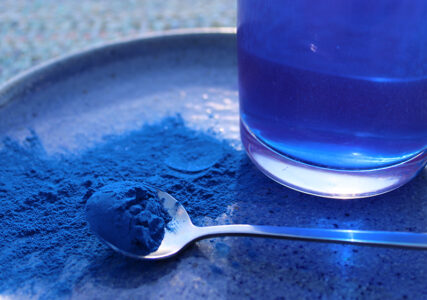
If you have ever compared the price of blue spirulina to ordinary green spirulina powder, the gap is hard to ignore — blue spirulina often costs five to twenty times more per kilogram. That premium is real, and it is not a marketing markup. As a manufacturer of spirulina and phycocyanin, we want to explain exactly where the cost comes from, so that brands, formulators and buyers can make informed sourcing decisions.
The short answer
Blue spirulina is expensive because it is not a whole-food powder — it is a purified extract. The vivid blue colour comes from a delicate protein-pigment called phycocyanin, and isolating that pigment from raw spirulina requires large volumes of biomass, a careful multi-step water extraction, cold-chain handling, and rigorous quality control. Every one of those steps adds cost, and the higher the purity you need, the steeper the price climbs.
What you are actually paying for
Green spirulina is simply the entire algae, harvested and dried into a powder. Blue spirulina is phycocyanin that has been extracted out of that algae. Phycocyanin makes up only a portion of spirulina’s weight, so it can take several kilograms of premium spirulina biomass to yield a single kilogram of usable blue extract — and far more than that for high-purity grades. That yield gap is the single biggest reason blue costs so much more than green.
Phycocyanin is also valued for more than colour. It is a water-soluble antioxidant studied for its anti-inflammatory properties, which is why it commands a premium in nutraceuticals and cosmetics as well as in natural food colouring.
Six reasons blue spirulina costs more
1. It is a concentrated extract, not whole biomass
You are paying for concentration. Because only a fraction of spirulina’s dry weight is phycocyanin, a large amount of carefully cultivated raw material is consumed to produce each batch of blue powder. The raw spirulina itself must be high quality to begin with, or the extract will be dull and impure.
2. A complex, gentle extraction and purification process
Phycocyanin is separated from spirulina using water-based extraction, followed by filtration and purification steps that may include ultrafiltration and controlled drying. The process has to be gentle: phycocyanin is degraded by heat, strong light, and excessive pressure. That rules out the fast, high-temperature methods used for cheaper ingredients and caps how quickly — and cheaply — it can be produced. Spray-drying or freeze-drying the final extract without losing colour is itself a specialised, costly step.
3. Purity grade (the “E ratio”)
Phycocyanin is graded by purity, expressed as a ratio (often written as E3, E6, E18, and so on). A higher number means a purer, more intensely coloured product. Reaching higher grades requires additional purification passes, each of which sacrifices yield — so a high-purity grade can cost several times more than a food-colour grade made from the same starting biomass.
4. Stability and cold-chain handling
Because the pigment is sensitive to heat and light, keeping it vivid through processing, storage and shipping requires temperature-controlled handling and protective, often opaque, packaging. This cold chain is an ongoing cost that plain green spirulina powder simply does not carry, and it is one reason reputable suppliers price the product the way they do.
5. Testing, quality control and certifications
Serious producers test every batch for colour strength, microbiology, heavy metals, and contaminants, and they maintain certifications such as FSSAI, ISO 22000, ISO 9001, HACCP, Halal and Kosher. This level of assurance — essential for food, beverage and cosmetic buyers — is built into the unit price. Cheaper, uncertified material exists, but it carries real risk on purity and consistency.
6. Limited global supply of food-grade phycocyanin
Far fewer facilities can produce consistent, food-grade phycocyanin at scale than can dry spirulina. Specialised equipment, technical know-how, and quality systems create a narrower supply base, and limited supply against rising global demand keeps prices elevated.
Typical price ranges by grade
| Grade | Typical use | Relative price |
|---|---|---|
| Food grade (E3–E6) | Beverages, confectionery, natural blue colour | $ |
| Cosmetic grade (E10–E18) | Skincare, premium colour, supplements | $$ |
| High-purity / analytical (E25–E40+) | Research, diagnostics, fluorescent markers | $$$$ |
Exact pricing depends on order volume, purity grade and specification. For current bulk pricing, request a quote from a manufacturer.
What determines the price you actually pay
Beyond the grade, four factors move your final cost: order volume (bulk orders lower the per-kg price significantly), specification tightness (custom colour strength or solubility adds cost), certifications required for your market, and who you buy from. Buying through layers of distributors stacks markups; buying direct from the manufacturer removes them. Matching the grade to the application is the easiest way to avoid overpaying — a beverage rarely needs analytical-grade pigment.
Is blue spirulina worth the price?
For brands that want a natural, plant-based blue with a clean label — and the antioxidant story that phycocyanin brings — there is no comparable alternative. Synthetic blue dyes are cheaper but increasingly rejected by consumers and some regulators. For the right product, the premium buys differentiation that customers will pay for.
How to buy blue spirulina cost-effectively
Match the grade to your application, buy in bulk, lock in your specification up front, and source directly from a manufacturer rather than a reseller. As a blue spirulina manufacturer in India, Algology supplies food, beverage, supplement and cosmetic brands worldwide with consistent, certified phycocyanin at competitive bulk pricing — including bulk and private-label phycocyanin across grades.
Frequently asked questions
Why is blue spirulina more expensive than green spirulina? Green is the whole dried algae; blue is a purified phycocyanin extract that needs far more raw material, gentle processing and cold-chain handling.
Is blue spirulina worth the higher price? For natural blue colour plus phycocyanin’s antioxidant profile there is no comparable plant-based alternative, so for many brands it is worth it.
Does a higher E-grade always mean better? Higher grade means higher purity and colour strength, not automatically “better” for your use. Choose the grade your application actually requires.
How much spirulina does it take to make blue spirulina? It varies with purity, but several kilograms of quality spirulina biomass typically go into each kilogram of usable blue extract — more for higher grades.
Can I get bulk or private-label blue spirulina? Yes. Algology supplies bulk and private-label phycocyanin across food, cosmetic and high-purity grades — contact us for a quote.