
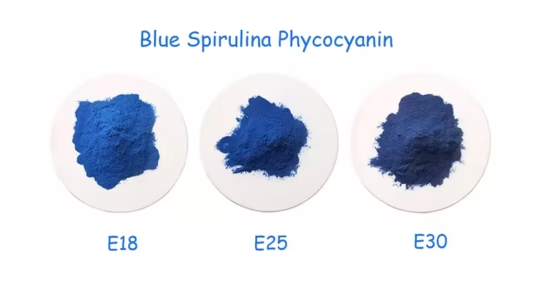
How biotechnology is improving spirulina strains, yield, and phycocyanin content.
Spirulina has emerged as one of the most promising superfoods in the nutraceutical and food supplement industry, and biotechnology is playing a transformative role in unlocking its full potential. The application of modern biotechnological tools is significantly improving Spirulina strains, increasing overall biomass yield, and enhancing the concentration of valuable compounds such as phycocyanin—the pigment responsible for its vibrant blue color and powerful antioxidant properties.
Through advanced strain selection, genetic improvement, and optimized cultivation techniques, researchers and producers are now able to develop Spirulina varieties that grow faster, adapt better to environmental conditions, and deliver higher nutritional value. This has a direct impact on commercial production, enabling Blue Spirulina manufacturers in India to meet the growing global demand with greater efficiency and consistency.
Genetic Improvement of Spirulina Strains
Genetic improvement of Spirulina strains is emerging as a key scientific approach to enhance the productivity, nutritional quality, and commercial viability of this microalgae. Through modern biotechnology techniques such as selective breeding, mutation induction, and molecular-level optimization, researchers are developing superior Spirulina strains that exhibit faster growth rates, higher biomass accumulation, and increased resilience to environmental stress. One of the most significant outcomes of these advancements is the enhancement of phycocyanin content, the natural blue pigment that gives Spirulina its characteristic color and powerful antioxidant properties. By improving genetic traits, producers can obtain strains that yield richer pigment concentration while maintaining purity and stability, which is highly valuable for food, nutraceutical, and cosmetic applications.
Bioengineering for Higher Pigment Yield
Bioengineering is revolutionizing the microalgae industry by enabling targeted improvements in pigment production, particularly in Spirulina. One of the most valuable pigments derived from Spirulina is phycocyanin, widely known for its intense blue color, antioxidant properties, and applications in food, nutraceuticals, and cosmetics. Through advanced bioengineering techniques, scientists are now able to optimize metabolic pathways in Spirulina strains to significantly enhance pigment yield and stability.
Modern approaches such as strain improvement, metabolic engineering, and controlled gene expression allow researchers to increase the efficiency of phycocyanin biosynthesis without compromising biomass growth. Along with this, optimized cultivation conditions—such as light intensity, nutrient composition, and temperature regulation—further support higher pigment accumulation. These advancements are particularly beneficial for commercial-scale production systems.

Controlled Photobioreactor Systems
Controlled photobioreactor systems are revolutionizing the cultivation of Spirulina by providing highly optimized, contamination-free, and scalable environments for biomass production. Unlike open pond systems, these advanced bioreactors allow precise control over light intensity, temperature, pH levels, carbon dioxide supply, and nutrient composition, ensuring consistent growth conditions throughout the cultivation cycle.
For Blue Spirulina manufacturers in India, this technology is particularly valuable as it directly enhances production efficiency and product quality. The controlled environment minimizes the risk of contamination from unwanted microorganisms, which is a major challenge in traditional farming methods. As a result, manufacturers can achieve higher purity Spirulina biomass with improved safety standards, making it suitable for food-grade and nutraceutical applications.
Nutrient Optimization Techniques in Spirulina Production
Nutrient optimization plays a critical role in enhancing the quality, yield, and biochemical composition of Spirulina, especially in commercial-scale cultivation. As demand for high-purity natural pigments and plant-based nutrients continues to rise, Blue Spirulina manufacturers in India are increasingly adopting advanced nutrient management strategies to improve productivity and ensure consistent phycocyanin content.
Spirulina growth is highly dependent on the precise balance of nutrients such as nitrogen, phosphorus, potassium, iron, and trace minerals. By carefully controlling these inputs, producers can significantly influence cell density, growth rate, and pigment concentration. Modern cultivation systems use optimized media formulations that reduce waste while maximizing biomass output, making production more cost-effective and environmentally sustainable.
In addition, Blue Spirulina manufacturers are integrating biotechnology-based monitoring systems to track nutrient uptake in real time. This allows for dynamic adjustments in nutrient supply, ensuring that Spirulina cultures remain in an ideal growth state throughout the production cycle. Techniques such as chelated nutrient delivery, organic carbon supplementation, and controlled nitrogen limitation are also being used to enhance phycocyanin accumulation, which is a key value-added component of Blue Spirulina.
AI in Algae Growth Monitoring
Artificial Intelligence (AI) is rapidly transforming the way algae cultivation is managed, especially in high-value microalgae like Spirulina. In modern production systems, AI-based monitoring tools are helping optimize growth conditions, improve productivity, and ensure consistent quality of biomass and phycocyanin content.
By integrating sensors, machine learning algorithms, and real-time data analytics, algae farms can continuously track critical parameters such as pH, temperature, light intensity, nutrient levels, and dissolved oxygen. This enables precise environmental control, reducing the risk of contamination and maximizing Spirulina yield. For producers, this level of automation significantly improves efficiency and reduces operational costs.
Lab Cultivation Innovations
Lab cultivation has become a cornerstone in the advancement of Spirulina production, enabling precise control over growth conditions and significantly improving product quality. With the rising demand for high-purity Spirulina and phycocyanin extracts, lab-based cultivation innovations are playing a crucial role in supporting the expansion of the nutraceutical and natural food colorant industries.
Modern laboratory techniques allow researchers and producers to simulate ideal environmental conditions such as light intensity, temperature, pH levels, and nutrient composition. This controlled setup ensures faster growth rates, higher biomass productivity, and improved consistency in Spirulina strains. As a result, Blue Spirulina manufacturers in India are increasingly adopting lab cultivation systems to enhance efficiency and maintain strict quality standards required for global markets.
Disease Resistance in Cultures
Disease resistance is one of the most critical factors in the successful cultivation of Spirulina, especially when it is produced at a commercial scale. In open ponds and controlled photobioreactors, Spirulina cultures are often exposed to contamination from bacteria, fungi, viruses, and competing algae. These microbial threats can significantly reduce biomass yield, affect nutrient composition, and compromise the quality of valuable compounds such as phycocyanin.
Modern biotechnology plays a key role in strengthening disease resistance in Spirulina cultures through strain improvement, microbial management, and optimized cultivation environments. By selecting robust Spirulina strains that naturally withstand environmental stress and pathogen attacks, producers can ensure stable and high-yield production cycles. Additionally, advanced monitoring systems and controlled cultivation techniques help maintain purity and prevent contamination.
Sustainable Bio-Production Systems
Sustainable bio-production systems are becoming a cornerstone in modern microalgae cultivation, especially for high-value products like spirulina. As global demand for natural nutrients, plant-based proteins, and clean-label ingredients continues to rise, the focus has shifted toward environmentally responsible and resource-efficient production methods. These systems aim to minimize water usage, reduce carbon footprint, and maximize productivity without compromising quality.
In spirulina cultivation, sustainability is achieved through closed-loop photobioreactors, recycled nutrient mediums, and controlled environmental conditions that ensure consistent growth with minimal waste. Such innovations allow producers to maintain high biomass output while significantly reducing dependency on natural freshwater resources and arable land. This makes spirulina one of the most sustainable superfoods available today.
Future of Synthetic Biology in Spirulina
Synthetic biology is rapidly emerging as a game-changing force in the evolution of Spirulina production, offering unprecedented opportunities to enhance its nutritional profile, scalability, and commercial value. As the demand for natural food colorants and high-protein supplements continues to rise, the future of Spirulina is increasingly being shaped by precision bioengineering and advanced metabolic design.
One of the most significant impacts of synthetic biology lies in its ability to optimize Spirulina at the genetic level. By precisely editing metabolic pathways, scientists can enhance the production of key bioactive compounds such as phycocyanin, chlorophyll, and essential amino acids. This leads to more efficient strains that deliver higher yields and improved pigment concentration, making production more cost-effective and sustainable for Blue Spirulina manufacturers in India.
Ethical Considerations in Bioengineering
Bioengineering has significantly advanced the production and enhancement of Spirulina, especially in improving strain efficiency, phycocyanin content, and overall yield. However, alongside these scientific developments, ethical considerations have become increasingly important, particularly as the demand grows among Blue Spirulina manufacturers in India and global Blue Spirulina manufacturers.
One of the primary ethical concerns is genetic modification and strain enhancement. While bioengineering techniques can improve Spirulina’s nutritional profile and productivity, there is ongoing debate about the long-term ecological and health impacts of genetically optimized strains. Ensuring that modified organisms do not negatively affect natural ecosystems or biodiversity remains a key responsibility for researchers and producers.