

Understanding the economics behind blue spirulina manufacturing and pricing.
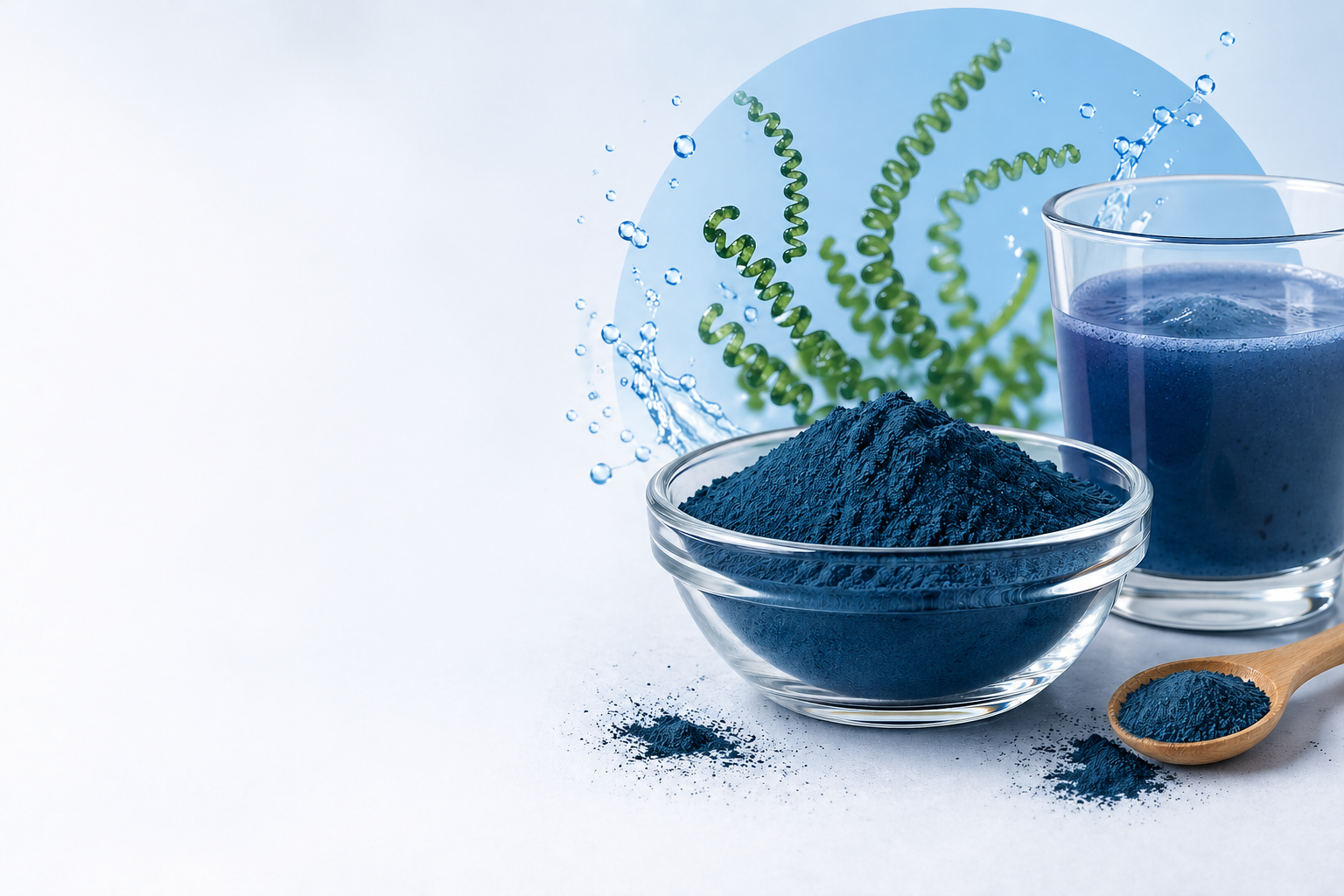
The growing demand for natural, plant-based ingredients has placed blue spirulina at the forefront of the global food, nutraceutical, and cosmetics industries. Known for its vibrant color and powerful antioxidant compound phycocyanin, blue spirulina has become a premium ingredient across multiple sectors. As demand continues to rise, understanding the economics behind its production becomes increasingly important—especially when evaluating pricing, sourcing, and supplier reliability.
In this context, Blue Spirulina manufacturers in India play a crucial role in meeting both domestic and international demand. India’s favorable climate, expanding biotechnology infrastructure, and cost-effective production capabilities have positioned it as a key hub for spirulina cultivation and extraction. However, the pricing of blue spirulina is influenced by several complex factors, ranging from raw material cultivation to advanced extraction processes.
Raw Material & Cultivation Costs
One of the most significant contributors to the overall production cost is the cultivation of spirulina itself. For Blue Spirulina manufacturers in India, maintaining consistent quality at the cultivation stage is critical, as it directly impacts the yield and purity of phycocyanin—the key pigment extracted from spirulina. Spirulina is typically grown in controlled environments such as open raceway ponds or closed photobioreactors. Each method comes with its own cost implications. Open ponds are more cost-effective but require optimal climatic conditions, careful monitoring, and protection against contamination. On the other hand, photobioreactors offer higher control and purity levels but involve greater capital investment and operational expenses. Many Blue Spirulina manufacturers in India balance these approaches based on scale, target market, and quality requirements. The cost of raw materials used in cultivation—such as water, nutrients (nitrogen, phosphorus, trace minerals), and carbon sources—also plays a vital role. High-quality nutrient inputs are essential to ensure healthy algae growth and maximize phycocyanin content. Additionally, maintaining the right pH levels, temperature, and light exposure requires continuous monitoring, which adds to operational costs.
Bakery & Confectionery Applications
The bakery and confectionery industry is increasingly embracing natural ingredients that enhance both visual appeal and nutritional value, and blue spirulina is emerging as a game-changer in this space. Extracted from spirulina algae, its natural blue pigment (phycocyanin) provides a vibrant, eye-catching colour that is replacing synthetic food dyes in cakes, pastries, chocolates, candies, and icing formulations.
In bakery applications, blue spirulina is widely used to create visually striking desserts such as layered cakes, macarons, doughnuts, and frostings without compromising on clean-label expectations. Its stability in various formulations makes it especially valuable for premium and artisanal bakery products. In confectionery, it is used to produce naturally coloured gummies, white chocolates, and sugar-based candies, appealing to health-conscious consumers who prefer plant-based and chemical-free ingredients.
Labour & Infrastructure Expenses
Labour and infrastructure form a significant portion of the overall cost structure for Blue Spirulina manufacturers in India. While India offers a relatively cost-effective workforce compared to many global markets, the production of blue spirulina is not entirely labor-light. It requires skilled technicians, microbiologists, and trained personnel to manage cultivation, monitor growth conditions, and handle sensitive extraction processes. From maintaining optimal pH levels in cultivation tanks to ensuring contamination-free environments, human expertise plays a critical role at every stage.
For Blue Spirulina manufacturers, labour costs are not just about workforce size but also about the level of specialization required. Advanced processes such as phycocyanin extraction, filtration, and drying demand experienced professionals and continuous training. Additionally, maintaining strict hygiene and quality standards often requires dedicated teams for quality assurance and quality control, further contributing to operational expenses.
Extraction & Processing Costs
Extraction and processing represent one of the most critical—and cost-intensive—stages in blue spirulina production. For Blue Spirulina manufacturers in India, this phase directly impacts product purity, color intensity, stability, and overall market value. Unlike raw spirulina powder, blue spirulina (phycocyanin extract) requires advanced techniques to isolate the pigment while preserving its functional properties.
The extraction process typically involves cell disruption, filtration, and purification to separate phycocyanin from the biomass. High-quality Blue Spirulina manufacturers invest in sophisticated technologies such as cold extraction, membrane filtration, and spray or freeze drying. These methods ensure that the final product retains its vibrant blue color and nutritional integrity, but they also significantly increase operational costs due to equipment investment and energy consumption.
Energy Consumption Factors
Energy consumption is one of the most significant cost drivers in the production of blue spirulina, directly impacting overall pricing and operational efficiency. For Blue Spirulina manufacturers in India, managing energy usage effectively is essential to remain competitive while maintaining high-quality production standards. From cultivation to extraction and drying, each stage of the process requires a considerable amount of power.
During the cultivation phase, controlled environments such as open raceway ponds or closed photobioreactors require continuous monitoring, water circulation, and aeration. These systems often rely on pumps, paddle wheels, and lighting setups, all of which contribute to energy consumption. Many Blue Spirulina manufacturers invest in optimized systems to balance productivity with energy efficiency, especially in regions where electricity costs can fluctuate.
Packaging & Logistics Costs
When evaluating the overall pricing structure, packaging and logistics play a significant role in the operations of Blue Spirulina manufacturers in India. Since blue spirulina is a sensitive, high-value natural extract, maintaining its quality throughout storage and transportation is critical. This directly impacts the type of packaging materials used and the associated costs.
Most Blue Spirulina manufacturers invest in high-quality, food-grade, and moisture-resistant packaging to preserve the stability of phycocyanin. Exposure to light, heat, and humidity can degrade the pigment and reduce its effectiveness, making protective packaging essential. Options such as vacuum-sealed pouches, UV-protected containers, and airtight bulk packaging are commonly used, especially for export-grade products.
Impact of Scale on Pricing
One of the most influential factors affecting the cost of blue spirulina is the scale at which it is produced. For Blue Spirulina manufacturers in India, scaling operations can significantly reduce per-unit production costs while improving overall efficiency and consistency. As demand continues to grow across industries, manufacturers are increasingly investing in large-scale production systems to stay competitive in both domestic and global markets.
Large-scale Blue Spirulina manufacturers benefit from economies of scale, where the cost of cultivation, harvesting, and extraction is distributed over a higher volume of output. This allows them to optimize resources such as water, nutrients, energy, and labor more effectively compared to smaller facilities. Bulk procurement of raw materials and streamlined processing workflows further contribute to cost savings, enabling manufacturers to offer more competitive pricing.
Cost Comparison with Global Markets
When evaluating sourcing strategies, it is essential to understand how Blue Spirulina manufacturers in India compare with their global counterparts in terms of pricing, quality, and scalability. Over the years, India has emerged as a competitive player in the blue spirulina market, offering a strong balance between cost efficiency and product quality.
One of the primary reasons Blue Spirulina manufacturers in India are able to offer more competitive pricing is the lower cost of production inputs. Factors such as affordable labor, favorable climatic conditions for spirulina cultivation, and access to large-scale production facilities significantly reduce overall manufacturing expenses. In contrast, manufacturers in regions like North America and Europe often face higher labor costs, stringent environmental regulations, and increased operational expenses, which reflect in higher product prices.
Government Subsidies & Support
The growth of the spirulina and microalgae industry in India is significantly influenced by various government initiatives aimed at promoting sustainable agriculture, biotechnology, and export-driven industries. For Blue Spirulina manufacturers in India, these subsidies and support systems play a vital role in reducing production costs and encouraging large-scale, high-quality manufacturing.
Several government bodies, including the Department of Biotechnology (DBT), Ministry of Micro, Small & Medium Enterprises (MSME), and state-level industrial development corporations, offer financial assistance and incentives to Blue Spirulina manufacturers. These may include capital subsidies for setting up cultivation ponds, photobioreactors, and processing units, as well as grants for research and development in microalgae extraction technologies.
Price Fluctuations & Market Trends
The pricing of blue spirulina is not static—it is influenced by a dynamic combination of supply, demand, production complexity, and global market trends. For Blue Spirulina manufacturers in India, staying competitive requires constant adaptation to these changing market forces while maintaining consistent quality and purity levels.
One of the primary drivers of price fluctuations is the growing global demand for natural food colorants and clean-label ingredients. As more industries shift away from synthetic additives, Blue Spirulina manufacturers are experiencing increased demand from sectors such as food & beverages, nutraceuticals, and cosmetics. This surge often leads to price volatility, especially when supply struggles to keep pace.
Seasonal variations also play a significant role. Since spirulina cultivation depends on controlled environmental conditions like sunlight, temperature, and water quality, any disruption—such as extreme weather or inconsistent yields—can impact raw material availability. This directly affects production volumes and, ultimately, market prices.
Profit Margins for Manufacturers
Profit margins in the blue spirulina industry are shaped by a careful balance between production costs, product quality, and market demand. For Blue Spirulina manufacturers in India, maintaining sustainable margins requires not only efficient operations but also the ability to deliver consistent purity and performance across batches.
Typically, Blue Spirulina manufacturers operate in a premium ingredient segment, where pricing is influenced heavily by the concentration of phycocyanin, extraction efficiency, and application-specific requirements. High-purity grades (such as E18 and above) command significantly better margins due to their superior color strength and functionality, especially in food, beverage, and nutraceutical applications.