
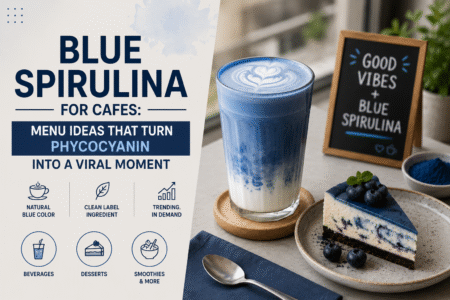
A cafe doesn’t need ten new SKUs to go viral. It needs one drink someone feels compelled to photograph before they drink it.
Blue spirulina (phycocyanin) has become one of the most reliable ingredients for exactly that, because it does something almost nothing else in a cafe kitchen can do: turn a drink genuinely, vividly blue, using nothing but a natural algae extract. That visual shock — combined with a “wait, that’s natural?” story — is what makes phycocyanin drinks travel on social media in a way flavor alone rarely does.
Here’s how to actually build a menu around it, not just add one novelty item.
Why Phycocyanin Works as
a Menu Anchor
- It’s visually unmatched. True blue is rare in food.
A phycocyanin drink stops the scroll in a way a green matcha latte —
however good — no longer does on its own. - It layers beautifully. Phycocyanin is heavier than
milk in some preparations and lighter in others depending on your base,
which makes ombré and layered drinks genuinely achievable, not just an
Instagram filter trick. - It has a clean, sellable story. “Natural blue from
algae, not synthetic dye” is a one-sentence pitch that closes the sale
at the counter. - It’s flexible across dayparts. Cold lattes, iced
refreshers, lemonades, smoothie bowls, even baked goods — phycocyanin
isn’t locked into one format the way, say, a specific espresso drink
is.
Menu Architecture: Build in
Tiers
Tier 1 — The Hero Drink (your signature, non-negotiable item) A single, technically excellent phycocyanin latte or refresher that becomes “the” drink people ask for by name. Nail the ratio, nail the color consistency, and don’t over-flavor it — let the blue and a clean coconut or vanilla note carry it.
Tier 2 — The Layered/Visual Showpiece An ombré or two-tone drink (blue-to-white, blue-to-purple with butterfly pea, blue-to-green with matcha) served in a clear cup specifically for photography. This is your “camera drink” — price it slightly higher, and don’t be afraid to make it slightly harder to make. Scarcity of effort reads as premium.
Tier 3 — The Everyday Cross-Sell Blue spirulina add-ons: a blue cold foam top on an existing bestseller, a blue spirulina shot added to a smoothie, a blue-tinted whipped cream on a pastry. Low effort, incremental ticket size, no new SKU complexity.
Tier 4 — The Limited-Time Offer Seasonal formats — a “Blue Lagoon” iced tea in summer, a spiced blue latte in winter — that create urgency and give you a reason to post new content every quarter without overhauling the core menu.
Recipe and Format Ideas
- Blue Spirulina Coconut Latte — steamed coconut
milk, vanilla, phycocyanin whisked in as a slurry before steaming to
avoid clumping - Blue Spirulina Matcha Ombré — matcha base,
phycocyanin blue layered on top or bottom using density difference (add
sweetener to the heavier layer) - Blue Lagoon Refresher — sparkling water, lemonade,
phycocyanin, mint - Blue Spirulina Chia Pudding / Smoothie Bowl — for
the all-day menu, extends the ingredient beyond drinks - Blue Cold Foam Topper — the lowest-effort, highest
cross-sell option; works on any existing cold drink
The Technical
Details That Prevent a Bad Batch
Phycocyanin is a protein, not a stable synthetic dye, which means execution matters more than with artificial colorants:
- Heat sensitivity. High heat can degrade phycocyanin
and dull the blue. Always bloom or dissolve it in cool-to-lukewarm
liquid before combining with anything hot, or use a heat-stable grade
designed for steamed milk applications. - pH sensitivity. Acidic ingredients (citrus, some
fruit purées) can shift phycocyanin toward green or teal. This is
chemistry, not a batch failure — but your baristas need to know it so
they don’t panic or waste product. - Clumping. Always pre-mix phycocyanin into a small
amount of liquid to form a smooth slurry before adding to a larger
volume. Whisking dry powder straight into milk is the most common cause
of streaky, inconsistent color. - Batch consistency. Color intensity varies with the
purity grade of the phycocyanin you’re sourcing. If your blue looks
different from batch to batch, that’s a supplier-consistency problem,
not a recipe problem — worth raising directly with whoever supplies your
extract.
Making It
Actually Go Viral (Not Just Look Good)
- Design for the pour, not just the final cup. The
moment of layering or color-shifting is what gets filmed. Consider a
clear cup and an in-store “pour moment” your staff can do at the
counter. - Name it something ownable. Generic names (“Blue
Latte”) don’t travel. A distinctive name tied to your cafe’s identity
does. - Seed it with your regulars first. A drink that
looks great in the hands of your existing loyal customers, posted
organically, outperforms paid influencer seeding for a genuinely new
ingredient. - Put the ingredient story on the menu board.
“Colored naturally with blue spirulina (phycocyanin) — no artificial
dye” turns a curious question into a built-in conversion line.
FAQ
Does blue spirulina taste like anything? High-purity phycocyanin extract has a very mild, near-neutral flavor. Whole spirulina powder has a stronger “marine” taste — the two are not the same ingredient, and cafes should be using the purified extract, not raw spirulina powder, for beverage work.
How do I keep the blue color from turning green? Avoid combining phycocyanin directly with strongly acidic ingredients (citrus juice, certain fruit purées) without buffering, and avoid prolonged high heat exposure. Test your specific recipe and supplier’s product before it goes on the menu — stability varies by extraction grade.
Is blue spirulina expensive to use in a cafe? Because phycocyanin is used in small dosages for color (not as a bulk ingredient), per-cup cost is typically manageable and comparable to other specialty add-ins like matcha or specialty syrups, provided you’re sourcing from a manufacturer rather than a repackaged retail product.
Can I make a blue spirulina drink dairy-free? Yes — phycocyanin is plant-based and works well with coconut milk, oat milk, and other dairy alternatives, which is part of why it fits neatly into existing plant-based cafe menus.
Algology supplies food and beverage-grade phycocyanin (AlgaBlu™) engineered for heat and pH stability in cafe applications, with technical support on formulation. [Get in touch about bulk or foodservice sourcing →]