
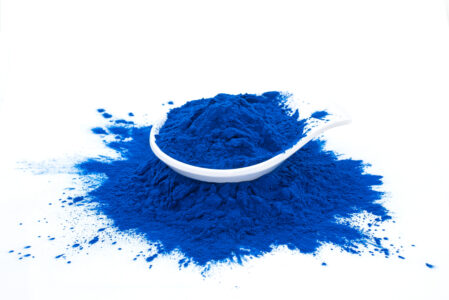
Blue spirulina is not a plant. It’s a protein.
Specifically, it’s C-phycocyanin — a light-harvesting pigment-protein extracted from spirulina (Arthrospira platensis), the same blue-green algae that gives regular spirulina powder its deep green color. Strip out the chlorophyll and other green pigments, isolate the phycocyanin, and you’re left with a vivid, stable, water-soluble blue. No dye. No synthetic chemistry. Just a molecule algae have used for photosynthesis for billions of years, now being extracted for food, beverage, and nutraceutical use.
That distinction — pigment-protein, not dye — is the reason phycocyanin is being taken seriously by formulators, not just Instagram.
What Is Phycocyanin, Exactly?
Phycocyanin belongs to a family of compounds called phycobiliproteins, which cyanobacteria and red algae use to capture light for photosynthesis. In spirulina, phycocyanin can account for a significant share of total protein content, which is part of why high-quality spirulina biomass is so valuable before you even talk about color.
When extracted and purified to food or pharmaceutical grade, it’s typically labeled as:
- C-Phycocyanin (C-PC) — the scientific name
- E18 — its color additive code in the EU
- Blue spirulina extract / Lina Blue / AlgaBlu™-type
brands — commercial names used in ingredient lists
The Nutrient and
Bioactivity Profile
Phycocyanin’s appeal isn’t just visual. A growing body of published research has examined its biological activity, mostly at the cellular and animal-model level, across several areas:
Antioxidant activity. Phycocyanin has a high free-radical scavenging capacity, which helps limit the cellular damage caused by oxidative stress. This antioxidant behavior was first characterized in research dating back to the late 1990s, and the evidence base has broadened considerably since.
Anti-inflammatory action. Published research indicates phycocyanin can selectively inhibit the COX-2 enzyme that drives inflammation — reducing pro-inflammatory mediators like prostaglandin E2 — and can also downregulate the NF-κB signaling pathway that controls inflammatory gene expression. Separate animal-model studies across multiple inflammation models have reported anti-inflammatory effects linked, at least partly, to this same antioxidant and free-radical-scavenging activity.
Hepatoprotective potential. Several studies report that phycocyanin supplementation can lower elevated liver-injury markers such as ALT and AST while helping preserve liver tissue structure — one reason it continues to attract interest in nutraceutical and functional food research.
Immune and cellular research. In vivo work in animal models looking at immunomodulatory effects has found phycocyanin to be well tolerated with meaningful antioxidant potential in a dose-dependent manner, though researchers are clear that more human clinical data is still needed before any therapeutic claims can be made.
It’s important to be precise here: most of this evidence comes from in vitro and animal studies. Phycocyanin is a large protein molecule, which affects how it’s absorbed and metabolized — an active area of ongoing research, particularly around oral bioavailability. Reputable formulators should present this science accurately, not overreach into unproven human health claims.
Why the “Natural Blue”
Framing Matters
Blue is the rarest color in nature’s food palette. Almost nothing edible is genuinely, stably blue — blueberries are technically purple. That’s exactly why the food industry has relied on synthetic dyes like Brilliant Blue FCF (FD&C Blue No. 1) for decades: nothing natural was stable enough at scale.
Phycocyanin changes that equation. It delivers a genuinely vivid blue from a fully natural, food-grade source, which is why it’s increasingly used as a direct, functional alternative to synthetic blue dyes — not just a “clean label” marketing swap, but an ingredient with its own nutritional and bioactive profile layered on top of the color it provides.
Where Phycocyanin Is Used
Today
- Beverages — lattes, smoothies, functional drinks,
RTD beverages - Confectionery and bakery — icings, candy coatings,
macarons - Dairy and alt-dairy — yogurts, ice cream,
plant-based milk products - Nutraceuticals and supplements — capsules, powders,
functional blends - Animal nutrition — aquafeed and companion animal
formulations, where both the pigment and the underlying
protein/antioxidant profile are relevant - Cosmetics — natural colorants in skincare and
personal care
Sourcing and
Quality: What to Actually Look For
Not all phycocyanin is equal. Two extracts with the same “phycocyanin content” figure on a Certificate of Analysis can look and perform completely differently once you open the drum — color intensity, solubility, heat and pH stability, and shelf life all depend on extraction method and purification grade. If you’re sourcing phycocyanin as an ingredient, ask suppliers for:
- Phycocyanin purity ratio (A620/A280), not just total content
- Heat and pH stability data specific to your application
- Microbial and heavy metal testing consistent with food-grade
standards - Traceability back to the cultivation facility, not just a trading
intermediary
FAQ
Is blue spirulina the same as regular spirulina? No. Regular spirulina is the whole-biomass dried algae, which is green because it contains chlorophyll alongside phycocyanin. Blue spirulina is phycocyanin extracted and purified from that same algae, isolating just the blue pigment-protein.
Is phycocyanin safe to consume? Phycocyanin has a long history of use as a food colorant and has been studied extensively for its antioxidant and anti-inflammatory properties. As with any ingredient, safety depends on the extraction process, purity, and dosage — food-grade, properly certified phycocyanin from a reputable manufacturer is the standard to look for.
Does blue spirulina have a taste? Purified phycocyanin extract has a very mild, largely neutral taste compared to whole spirulina powder, which has a stronger, more “marine” flavor. This is one reason phycocyanin extract works well in beverages and desserts where color is wanted without flavor disruption.
Is phycocyanin vegan and allergen-free? Phycocyanin is algae-derived and plant-based, making it suitable for vegan formulations. As with any ingredient, allergen and safety documentation should be confirmed with the specific supplier and extraction process used.
Algology manufactures high-purity phycocyanin (AlgaBlu™) and Dunaliella salina extracts from spirulina cultivated at scale, engineered for food, beverage, and animal nutrition applications. [Talk to our team about phycocyanin sourcing →]