
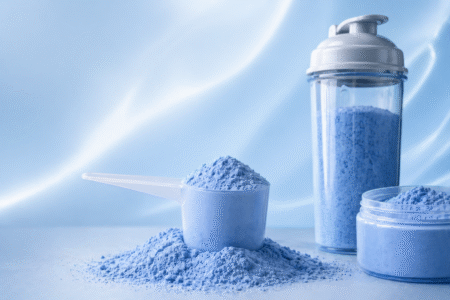
How innovation and scientific research are driving the future of spirulina production.
The global demand for natural, plant-based ingredients has accelerated the growth of the spirulina industry, positioning it as a key player in sectors such as food, nutraceuticals, cosmetics, and pharmaceuticals. At the heart of this expansion lies Research & Development (R&D), which continues to redefine how spirulina is cultivated, processed, and delivered to end-users. Today, innovation and scientific advancements are not just enhancing product quality—they are shaping the entire future of the industry.
For Blue Spirulina manufacturers in India, R&D plays a critical role in achieving higher purity levels, improved yield, and consistent color intensity. Blue spirulina, derived from phycocyanin, requires precise extraction techniques to maintain its vibrant natural pigment while ensuring stability across different applications. Through continuous research, manufacturers are developing advanced cultivation methods, including controlled environment systems and optimized nutrient management, which significantly improve biomass productivity and reduce contamination risks.
Advances in Phycocyanin Extraction
Phycocyanin, the vibrant blue pigment derived from spirulina, has gained significant commercial importance due to its application as a natural colorant and functional ingredient across food, nutraceutical, and cosmetic industries. As demand continues to rise, Blue Spirulina manufacturers in India and global Blue Spirulina manufacturers are increasingly focusing on advanced extraction technologies to improve purity, stability, and overall efficiency. Traditionally, phycocyanin extraction relied on basic methods such as water-based extraction and mechanical cell disruption. While effective to a certain extent, these methods often resulted in lower yields and compromised pigment quality. Today, innovation in extraction techniques is transforming the landscape, enabling manufacturers to achieve higher concentrations and superior product consistency.
Genetic Optimization of Algae Strains
One of the most transformative areas of innovation in the spirulina industry is the genetic optimization of algae strains. As demand for high-quality natural pigments and nutrient-rich superfoods continues to grow, Blue Spirulina manufacturers in India and global Blue Spirulina manufacturers are increasingly investing in advanced research to enhance the performance, stability, and productivity of spirulina at a cellular level.
Genetic optimization focuses on improving key characteristics of spirulina strains, such as higher phycocyanin content, faster growth rates, and improved resistance to environmental stress. Since blue spirulina is derived from phycocyanin, the efficiency of production largely depends on how rich the algae strain is in this valuable pigment. Through selective strain development and controlled cultivation techniques, manufacturers can achieve higher pigment yields without compromising purity or quality.
Improving Yield & Productivity
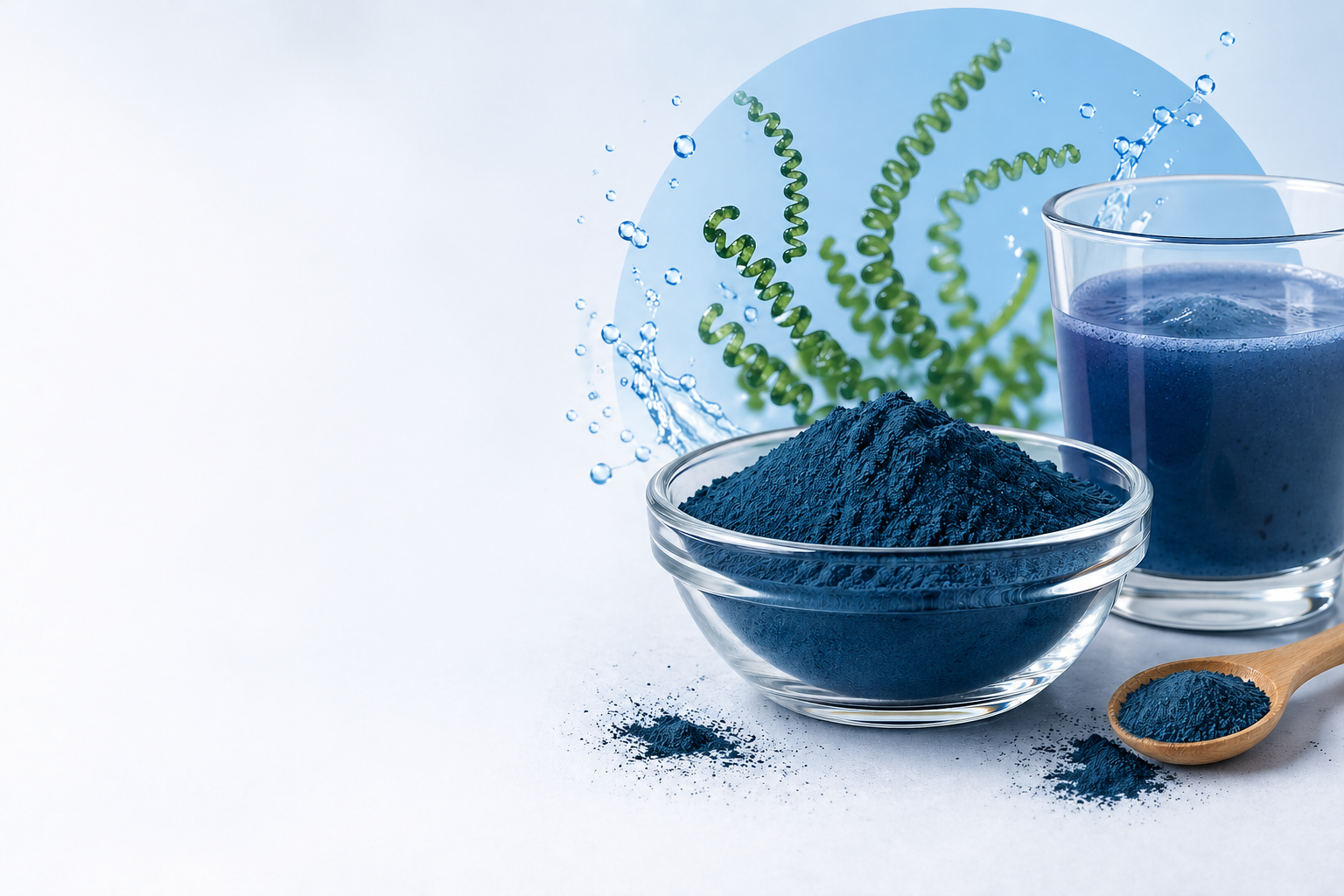
Improving yield and productivity is a central focus area in the spirulina industry, especially as global demand for natural pigments and nutrient-rich ingredients continues to rise. For Blue Spirulina manufacturers in India, achieving higher output without compromising quality is essential to remain competitive in both domestic and international markets. This is where continuous innovation and advanced cultivation strategies play a crucial role.
One of the key approaches adopted by Blue Spirulina manufacturers is the optimization of growth conditions. Factors such as light intensity, temperature, pH levels, and nutrient composition are carefully controlled to create an ideal environment for spirulina cultivation. Modern systems, including closed-loop photobioreactors, allow manufacturers to maintain consistency and significantly increase biomass yield compared to traditional open pond methods.
Collaboration with Research Institutions
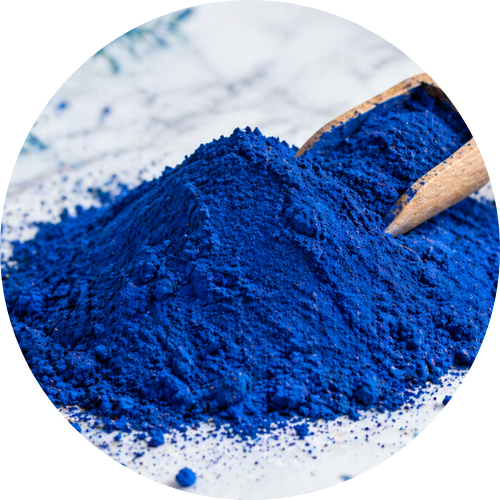
Collaboration with research institutions has become a cornerstone for innovation and long-term growth in the spirulina industry. As the demand for high-quality, natural ingredients rises across global markets, Blue Spirulina manufacturers in India are increasingly partnering with universities, biotechnology labs, and scientific organizations to strengthen their research capabilities and stay ahead of evolving industry standards.
These collaborations enable Blue Spirulina manufacturers to access advanced scientific knowledge, state-of-the-art laboratory infrastructure, and expert insights that may not always be available in-house. Through joint research programs, manufacturers can refine cultivation techniques, enhance strain selection, and improve extraction processes for phycocyanin—the key compound responsible for the vibrant blue color. This leads to better product consistency, higher purity levels, and improved functional performance across applications.
Biotechnology Applications
Biotechnology is playing a transformative role in advancing the spirulina industry, enabling higher efficiency, improved product quality, and expanded commercial applications. For Blue Spirulina manufacturers in India, the integration of biotechnology has become essential to meet the growing global demand for natural blue pigments while maintaining consistency, purity, and scalability.
One of the most significant biotechnology applications lies in strain selection and genetic optimization. Through advanced screening and cultivation techniques, Blue Spirulina manufacturers can identify high-yield spirulina strains with elevated phycocyanin content—the key compound responsible for the rich blue color. This ensures better productivity and stronger color intensity, even at lower usage levels in end products.
Development of New Product Forms
The evolution of spirulina from a niche health supplement to a versatile commercial ingredient is largely driven by continuous innovation in product development. Today, Blue Spirulina manufacturers in India are focusing on creating diverse product forms that cater to the changing needs of industries such as food & beverages, nutraceuticals, cosmetics, and pharmaceuticals. This shift is not only expanding the usability of spirulina but also enhancing its market appeal across different consumer segments.
Traditionally available in powder form, blue spirulina has now evolved into multiple formats including liquid extracts, tablets, capsules, gels, and ready-to-use concentrates. These innovations allow manufacturers to offer greater flexibility in application. For instance, liquid blue spirulina is widely preferred in beverages and confectionery for its ease of blending and uniform color distribution, while powder forms remain popular for dietary supplements and dry mixes.
Clinical Studies on Health Benefits
Clinical research has become a cornerstone in validating the growing popularity of spirulina as a functional ingredient across health and wellness industries. As scientific interest continues to expand, numerous studies are exploring the potential benefits of phycocyanin—the key compound found in blue spirulina. This increasing body of evidence is playing a vital role in strengthening consumer trust and supporting product innovation among Blue Spirulina manufacturers in India and across global markets.
Several clinical studies have highlighted spirulina’s powerful antioxidant and anti-inflammatory properties. Phycocyanin has been shown to help combat oxidative stress by neutralizing free radicals, which are often linked to chronic diseases and aging. For Blue Spirulina manufacturers, these findings are particularly important as they provide scientific backing for its use in dietary supplements, functional foods, and therapeutic formulations.
Shelf-Life Enhancement Techniques
Shelf life is a critical factor in determining the commercial success of natural ingredients, especially in a rapidly growing market like spirulina. As demand rises across food, nutraceutical, and cosmetic industries, maintaining the stability, color, and nutritional value of blue spirulina has become a top priority. This is where advanced preservation strategies and continuous innovation play a key role. For both Blue Spirulina manufacturers in India and global Blue Spirulina manufacturers, enhancing shelf life is essential to ensure product reliability, export readiness, and customer satisfaction.
Blue spirulina, primarily valued for its phycocyanin content, is sensitive to environmental factors such as heat, light, pH variations, and moisture. Without proper handling and storage, its vibrant blue color and functional properties can degrade quickly. To address this challenge, manufacturers are investing in modern drying technologies like spray drying and freeze drying, which help retain bioactive compounds while reducing moisture content to safe levels. These techniques significantly extend product shelf life without compromising quality.
Automation in Research Labs
Automation is rapidly transforming modern research laboratories, bringing a new level of precision, efficiency, and scalability to scientific processes. In the spirulina industry, where consistency and quality are critical, automation has become a key driver of innovation and competitiveness. For Blue Spirulina manufacturers in India and global Blue Spirulina manufacturers, integrating automated systems into R&D is no longer optional—it is essential for meeting growing market demands and maintaining high production standards.
One of the most significant advantages of automation in research labs is the ability to streamline repetitive and time-consuming tasks. Automated systems for culture monitoring, nutrient dosing, and environmental control ensure that spirulina growth conditions remain optimal at all times. This level of precision minimizes human error and enhances the reproducibility of results, which is crucial for developing high-quality phycocyanin extracts.
Funding & Government Support
The rapid growth of the spirulina industry is not solely driven by market demand—it is also strongly supported by funding initiatives and government-backed programs that encourage innovation, sustainability, and large-scale production. For Blue Spirulina manufacturers in India, access to financial support and policy incentives plays a vital role in strengthening research capabilities, upgrading infrastructure, and expanding global reach.
In India, various government bodies and institutions actively promote the development of microalgae-based industries, including spirulina. Through grants, subsidies, and startup support schemes, Blue Spirulina manufacturers in India are able to invest in advanced cultivation systems, modern extraction technologies, and quality testing facilities. These funding opportunities reduce the financial burden associated with high initial setup costs, particularly for photobioreactors, controlled cultivation environments, and phycocyanin extraction units.