
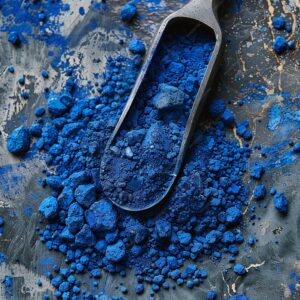
Blue has always stood out — from indigo-dyed textiles to the neon lights of city nights. Today, a natural, brilliant blue is making waves across food, cosmetics, and biotech: phycocyanin — the pigment that gives spirulina its electric hue. As research accelerates, the “Blue spirulina extract” is evolving from a niche novelty into a disruptive ingredient with serious scientific and commercial momentum.
What is phycocyanin (the “Blue spirulina extract”) and why it matters
Phycocyanin is a water-soluble pigment–protein complex found in cyanobacteria such as spirulina. Unlike synthetic blues that carry allergen or regulatory baggage, this Blue Extract offers intense color, antioxidant activity, and an appealing “clean label” story. That combination makes it an attractive alternative for food manufacturers, cosmetic formulators, and even biomedical researchers.
Breakthroughs in extraction and purity
One of the biggest hurdles historically was obtaining phycocyanin at scale, with high purity and stability. Recent research has focused on gentle, efficient extraction methods — for example, membrane filtration, aqueous two-phase systems, and enzyme-assisted extraction — that preserve the pigment’s structure while improving yield. Advances in downstream purification (chromatography refinements, ultrafiltration) now enable manufacturers to produce food-grade and pharmaceutical-grade Blue spirulina extract with consistent quality.
Why that matters: higher-purity phycocyanin opens new applications — from transparent beverages and yogurts to topical skincare serums — where color clarity and product stability are non-negotiable.

Stability and formulation science: keeping blue vivid
Phycocyanin is sensitive to heat, light, and pH, so formulation science has become crucial. Microencapsulation techniques, co-pigmentation strategies, and tailored packaging are being developed to protect the Blue spirulina extract in real-world products. Encapsulation not only improves thermal stability but also enables controlled release in nutraceuticals and targeted delivery in cosmeceuticals. These formulation advances expand where and how Blue spirulina extract can be used — think baked goods, heated sauces, and long-shelf-life cosmetics.
Novel applications beyond color
While color is the headliner, phycocyanin’s functional properties are getting attention. It displays antioxidant, anti-inflammatory, and even potential neuroprotective activity in preliminary studies. That has researchers exploring uses in dietary supplements, sports nutrition, and adjunct therapies. In cosmetics, antioxidant activity translates to potential anti-aging and soothing claims. In short, the Blue spirulina extract is shifting from “pretty pigment” to “ingredient with functional benefits.”
Sustainability and supply-chain innovation
Sourcing matters. Spirulina cultivation is generally resource-efficient compared to many agricultural commodities — it requires less land and water and can be grown on non-arable land. Researchers and producers are now optimizing closed-loop photobioreactors, integrating wastewater reuse, and exploring co-location with renewable energy sources to reduce the carbon footprint of Blue spirulina extract production. These sustainability wins resonate with consumers and regulators and make the Blue spirulina extract a stronger choice for eco-conscious brands.
Regulatory landscape and consumer acceptance
As natural Blue spirulina extract move into mainstream products, regulatory scrutiny rises. Fortunately, many regions have pathways for approval of food and cosmetic ingredients derived from well-characterized microalgae. Ongoing research that documents safety, toxicity thresholds, and consistent manufacturing processes will be the key to wider regulatory acceptance. From a consumer perspective, demand for natural, vibrant colors and clean-label ingredients continues to grow — a trend that favors phycocyanin’s adoption.
Industrial-scale opportunities and market potential
With scaling improvements and better stability, expect the Blue spirulina extract to migrate from novelty runs into mainstream manufacturing. Beverage makers can use it for striking, clear blues without artificial dyes. Confectioners can create novel visual experiences. Premium skincare brands can market antioxidant-rich blue serums. Even the culinary world — avant-garde chefs and mainstream product developers alike — are experimenting with blue-driven aesthetics and flavors.
Challenges that remain
Despite progress, challenges persist: cost-competitiveness with synthetic dyes, long-term stability across diverse product matrices, and ensuring consistent supply at scale. Continued R&D, coupled with economies of scale and process innovations, will be essential to overcome these hurdles.
Looking ahead: the next five years
Expect incremental but meaningful shifts: improved extraction economics, broader regulatory approvals, and creative new product launches that feature Blue spirulina extract not just as color but as a value-added functional ingredient. Collaboration between academia, industry, and regulatory bodies will accelerate safe, responsible adoption. In short, the future is not just blue — it’s smart, sustainable, and surprisingly versatile.
