
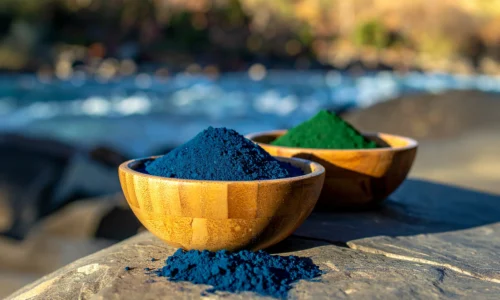
Ensuring premium quality and purity in blue spirulina production for global markets.
The global demand for natural superfoods and clean-label ingredients has significantly increased the need for high-quality blue spirulina. Known for its vibrant color and powerful antioxidant properties, blue spirulina is widely used in health supplements, food products, and cosmetics. To meet international expectations, Blue Spirulina manufacturers in India are focusing on stringent quality standards and advanced production practices that ensure both purity and consistency.
Maintaining premium quality in blue spirulina production involves a carefully controlled process—from sourcing the finest raw spirulina to extracting phycocyanin using safe and efficient methods. Leading Blue Spirulina manufacturers prioritize hygienic cultivation, contamination-free processing, and adherence to global certifications. By implementing strict quality checks at every stage, manufacturers in India are not only meeting domestic demand but also establishing a strong presence in global markets.
Importance of Quality Control in Production
Quality control plays a crucial role in ensuring the safety, purity, and effectiveness of blue spirulina products. As the demand for this natural pigment and superfood continues to grow, Blue Spirulina manufacturers in India are placing greater emphasis on strict quality control measures throughout the production process. From cultivation to final packaging, every stage is carefully monitored to maintain consistency and meet international standards. For Blue Spirulina manufacturers, quality control begins with the selection of high-grade raw spirulina, cultivated in controlled environments to prevent contamination. Advanced filtration and extraction techniques are used to isolate phycocyanin while preserving its nutritional value. Regular laboratory testing for heavy metals, microbial content, and chemical residues ensures that the final product is safe for consumption and meets global regulatory requirements.
Testing for Purity & Contaminants
Ensuring the safety and effectiveness of blue spirulina begins with rigorous testing for purity and contaminants. Leading Blue Spirulina manufacturers in India implement comprehensive quality control measures to guarantee that the final product is free from harmful substances such as heavy metals, pesticides, and microbial impurities. This is especially important as blue spirulina is widely consumed in food, beverages, and dietary supplements.
Advanced laboratory testing methods are used at multiple stages of production—from raw material selection to final packaging. Reputed Blue Spirulina manufacturers conduct tests for contaminants like lead, arsenic, mercury, and cadmium, along with microbiological analysis to detect bacteria, yeast, and mold. These tests ensure that the product meets both national and international safety standards.
Role of GMP in Manufacturing
Good Manufacturing Practices (GMP) play a vital role in ensuring the safety, consistency, and overall quality of blue spirulina production. As the demand for clean-label and nutraceutical products continues to rise, Blue Spirulina manufacturers in India are increasingly adopting GMP guidelines to meet both domestic and international standards. These practices provide a structured framework that governs every stage of manufacturing, from raw material handling to final product packaging.
For Blue Spirulina manufacturers, implementing GMP ensures that production processes are carried out in controlled environments with strict hygiene protocols. This includes proper equipment maintenance, trained personnel, quality documentation, and contamination prevention measures. By following GMP standards, manufacturers can guarantee that the extracted phycocyanin retains its purity, nutritional value, and vibrant color without any compromise.

Heavy Metal & Microbial Testing Standards
Ensuring safety and purity is a critical priority for Blue Spirulina manufacturers in India, especially when catering to global health and nutrition markets. One of the key aspects of quality assurance involves rigorous heavy metal and microbial testing to guarantee that the final product is free from harmful contaminants and safe for consumption.
Reputed Blue Spirulina manufacturers strictly monitor the presence of heavy metals such as lead, arsenic, mercury, and cadmium. These contaminants can enter the cultivation process through water, soil, or environmental exposure. To prevent this, manufacturers conduct regular testing using advanced analytical methods and adhere to internationally accepted safety limits set by regulatory authorities.
Traceability in Supply Chain
Traceability plays a crucial role in maintaining transparency and accountability in the production of blue spirulina. With growing global demand for clean and safe superfoods, Blue Spirulina manufacturers in India are adopting advanced traceability systems to monitor every stage of the supply chain—from cultivation and harvesting to processing and final distribution. This ensures that each batch of blue spirulina can be tracked back to its source, guaranteeing authenticity and quality.
Leading Blue Spirulina manufacturers implement digital tracking, batch coding, and detailed documentation to maintain complete visibility throughout the production cycle. This not only helps in identifying and addressing quality issues quickly but also builds trust among consumers and international buyers. By ensuring traceability, manufacturers can verify that their products meet strict safety standards and are free from contaminants.
Standardization of Phycocyanin Content
One of the most critical aspects of producing high-quality blue spirulina is the standardization of phycocyanin content—the key pigment responsible for its vibrant blue color and powerful antioxidant properties. Leading Blue Spirulina manufacturers in India focus on maintaining consistent phycocyanin levels to ensure product effectiveness, visual appeal, and nutritional value across every batch.
To achieve this, Blue Spirulina manufacturers implement advanced extraction techniques and precise filtration processes that preserve the integrity of phycocyanin. Regular laboratory testing and quality checks are conducted to measure concentration levels, purity, and stability. This standardization not only enhances product reliability but also helps meet international quality benchmarks required for exports.
Third-Party Lab Testing
Third-party lab testing plays a crucial role in ensuring the safety, purity, and quality of blue spirulina products. Reputable Blue Spirulina manufacturers in India rely on independent laboratories to verify that their products meet strict national and international standards. This unbiased testing process helps eliminate any doubts regarding contamination, potency, and overall product integrity.
Leading Blue Spirulina manufacturers use third-party testing to analyze key parameters such as phycocyanin content, microbial load, heavy metals, and the absence of harmful chemicals. These tests not only confirm the nutritional value of the product but also ensure it is safe for consumption across various applications, including food, supplements, and cosmetics.
Batch Consistency & Stability Testing
Maintaining uniform quality across every production cycle is a critical priority for Blue Spirulina manufacturers in India. Batch consistency ensures that each lot of blue spirulina delivers the same color intensity, nutritional value, and purity, which is essential for both consumer trust and industrial applications. To achieve this, manufacturers implement standardized cultivation, extraction, and processing methods, supported by strict quality control protocols at every stage.
Equally important is stability testing, which determines how well blue spirulina retains its potency, color, and safety over time under different storage conditions. Leading Blue Spirulina manufacturers conduct comprehensive tests to evaluate factors such as temperature sensitivity, light exposure, and shelf life. These assessments help in defining proper packaging, storage guidelines, and expiry periods, ensuring that the final product remains effective and visually appealing.
Packaging for Quality Preservation
Proper packaging plays a critical role in maintaining the quality, stability, and effectiveness of blue spirulina. As a sensitive natural extract, blue spirulina is highly prone to degradation when exposed to light, heat, moisture, and air. To address this, Blue Spirulina manufacturers in India adopt advanced packaging solutions that help preserve its vibrant color, nutritional value, and shelf life.
Leading Blue Spirulina manufacturers use airtight, moisture-resistant, and UV-protected containers to prevent oxidation and contamination. Materials such as food-grade, opaque packaging and vacuum-sealed pouches are commonly used to ensure that the product remains fresh from production to consumption. Additionally, controlled storage conditions and tamper-proof packaging further enhance product safety and quality.
Customer Assurance & Transparency
Customer trust plays a crucial role in the growing success of the blue spirulina industry. As demand rises across global markets, Blue Spirulina manufacturers in India are placing strong emphasis on customer assurance and transparency to build long-term credibility. Clear communication about sourcing, production methods, and quality standards helps customers make informed decisions and strengthens brand reliability.
Leading Blue Spirulina manufacturers ensure transparency by providing detailed product information, including ingredient sourcing, extraction processes, and purity levels. Many manufacturers also share third-party lab test reports, certifications, and compliance details to demonstrate their commitment to quality and safety. This open approach not only reassures buyers but also sets a benchmark for industry standards.
