
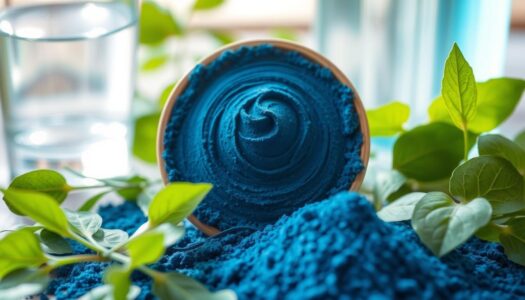
Blue spirulina extract — technically the phycobiliprotein C-phycocyanin — is the bright-blue ingredient food makers, cosmetic brands, and supplement companies prize. In India, several small-to-medium units and a few larger manufacturers produce this “Blue Extract from Spirulina.” Here’s a practical, step-by-step walkthrough of what you’ll actually see when you tour one of these facilities, from incoming biomass to finished powder.
1. Receiving & raw-material checks
The unit usually receives either wet Spirulina biomass from nearby farms or dried Spirulina powder. Incoming batches are logged, sampled and tested for species identity (commonly Arthrospira/Spirulina), moisture, and contamination (heavy metals, microbial load). Good units keep a dedicated QC bench to confirm the raw material matches spec before processing begins. (Quality checks and standards are important for food-grade extracts.)
2. Pre-processing: hydration & slurry preparation
If using dried biomass, workers rehydrate it in chilled, potable water to make a slurry (typical solids:water ratios vary with the lab method). This step makes the phycocyanin more accessible for extraction. For wet biomass, the material may be washed to remove salts and debris. Temperature and pH are kept controlled — phycocyanin is heat-sensitive and best handled cold (usually under ~40–50°C).
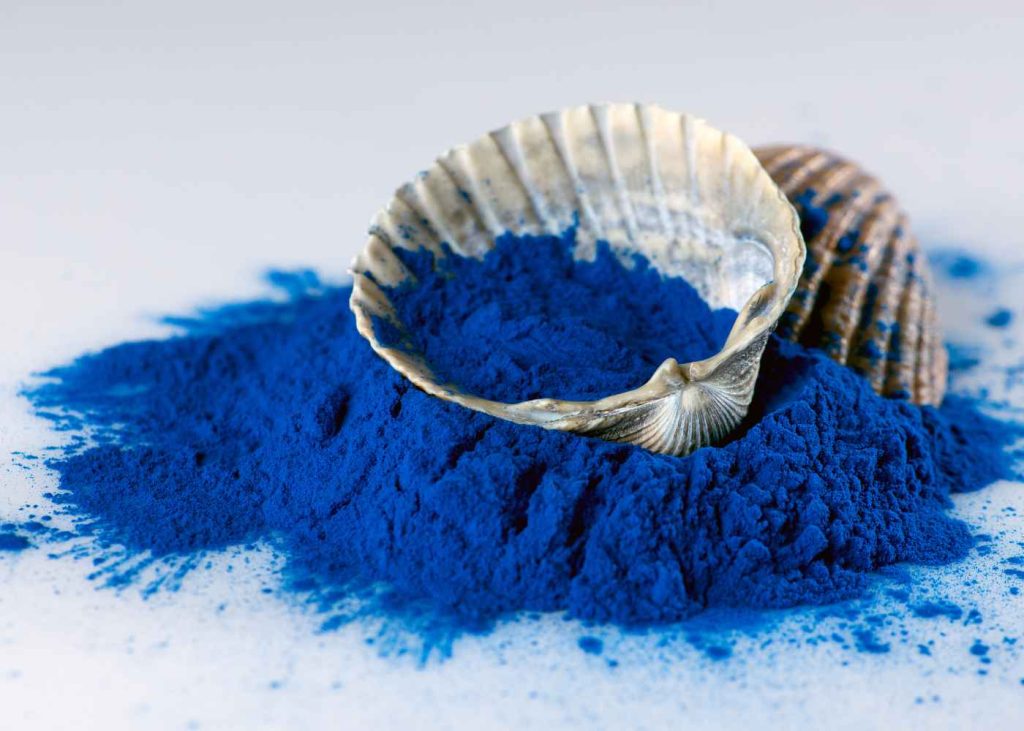
3. Cell disruption / extraction
Breaking open the cyanobacterial cells releases the water-soluble blue pigment. Common technologies in Indian units and research labs include:
Freeze–thaw cycles — repeatedly freezing and thawing to rupture cells (simple, solvent-free).
Ultrasonication / sonication — high-energy cavitation to free intracellular pigments (faster, scalable).
Homogenization or bead milling — mechanical shearing for larger batches.
Emerging methods: pulsed electric fields and hydrodynamic cavitation are being investigated for higher yield and lower energy use.
Operators choose methods based on scale, capital, and desired purity: freeze–thaw is common in smaller setups; ultrasonication and homogenizers appear in more industrialized plants. Extraction is normally performed at low temperature and near-neutral pH to protect protein structure.
4. Solid–liquid separation
After disruption, the slurry is clarified by centrifugation and/or coarse filtration to separate cell debris from the blue liquid (the crude “blue extract”). Some manufacturers add mild flocculants to speed separation (patented approaches exist that use flocculants to help pull out the blue filtrate).
5. Purification & concentration
Crude extract contains proteins, chlorophyll, and other impurities. The common downstream steps are:
Ammonium sulfate precipitation or other salt-based fractionation to remove non-target proteins.
Aqueous two-phase extraction (ATPE) — a scalable method used to partition phycocyanin selectively into one phase for concentration.
Chromatography (ion-exchange, size-exclusion) for high-purity grades used in pharmaceuticals or cosmetics.
Ultrafiltration / diafiltration for desalting and concentrating the protein.
The chosen route balances yield, purity (measured as A620/A280 purity index), and cost — food-grade colorants require lower purity than pharma-grade pigments.
6. Stabilization & drying
Phycocyanin is labile — heat, light, and oxygen degrade it — so manufacturers stabilize before drying:
Addition of stabilizers (sugars, glycerol, or certain salts) to preserve colour.
Drying methods: freeze-drying (lyophilization) gives highest quality but is costly; spray-drying with carrier agents (maltodextrin) is more economical for food-grade powders. The final product is tested for moisture, colour strength, microbial limits, and purity.
7. Quality control, packaging & waste handling
QC runs final assays (spectrophotometric purity, microbial tests, heavy metals). Powder is packed in oxygen-barrier bags or nitrogen-flushed drums, often in dark/UV-blocking packaging to protect the blue pigment. Residual biomass (after pigment removal) is normally valorized — sold as protein feed ingredient, compost, or sent for biomethane/energy recovery in advanced units. Responsible plants treat effluents and dry wastes as per local regulations.
Final notes for brands and buyers
When buying a Blue Extract from Spirulina, ask for the product’s purity index, certificate of analysis, microbial and heavy-metal reports, and recommended storage conditions. Lower-cost powders are fine for bakery or confectionery colours; high-purity, cold-processed phycocyanin is required for sensitive nutraceuticals and cosmetics.
