
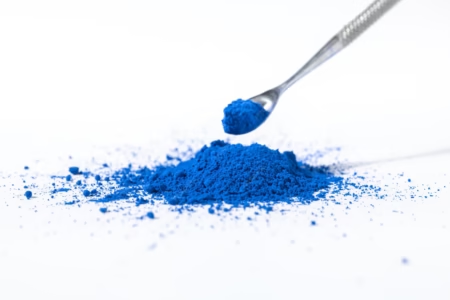
India’s spirulina sector — and specifically the market for blue spirulina Blue Extract (phycocyanin) — is moving from niche to mainstream. Once used mainly in health supplements, phycocyanin is now prized as a natural blue colorant, nutraceutical ingredient, and cosmetic additive. Rising consumer demand for clean-label products, improvements in cultivation/processing, and growing export momentum are positioning India as a major player in the global Blue Extract value chain.
What is “Blue Extract” and why it matters
“Blue Extract” most commonly refers to phycocyanin, the bright blue pigment-protein found in spirulina. It’s water-soluble, naturally derived, and carries antioxidant and anti-inflammatory properties that make it attractive across food & beverage, dietary supplements, pharmaceuticals, and cosmetics. Unlike synthetic blues (which face regulatory and consumer headwinds), phycocyanin offers a market advantage as a sustainable, label-friendly alternative.
Industry growth drivers in India
Several structural trends are fueling India’s ascent:
Clean-label and natural color demand — Global buyers are replacing artificial dyes with natural pigments; phycocyanin’s role as a stable, bright blue meets that need.
Domestic capacity and producers scaling up — A growing number of Indian manufacturers and contract processors are offering organic spirulina and concentrated phycocyanin extracts, shortening supply chains from pond to powder.
Favourable market forecasts — Market research forecasts robust compound annual growth across spirulina and phycocyanin markets over the next decade, signalling long-term opportunity for producers and exporters.
These forces together create both vertical opportunities (higher-value purified Blue Extract) and horizontal ones (value-added products such as colored beverages, gums, confectionery and skincare).

Export landscape & opportunities
India is already exporting spirulina and phycocyanin; trade data points to active exporter networks and multiple international buyers. Key export opportunities:
Food & beverage manufacturers — beverage brands and confectioners in the US, EU and Japan are top markets for natural blues.
Nutraceutical and supplement brands — demand for whole-food ingredients and standardized phycocyanin concentrates is rising.
Cosmetics and personal care — niche premium brands use phycocyanin for positioning around natural, antioxidant-rich formulations.
Price points for phycocyanin and blue spirulina extract vary by grade (food vs pharmaceutical), purity, certification (organic, ISO/HACCP), and packaging; Indian suppliers list kilogram-level pricing that is competitive for global buyers seeking both commodity and specialty grades.
Challenges Indian suppliers must handle
Growth isn’t automatic — exporters must manage:
Standardization & purity: High-value markets demand certificate of analysis, pesticide and heavy-metal screening, and batch-to-batch consistency. Producers scaling purification (to food- and pharma-grade phycocyanin) will capture premium margins.
Processing technology & shelf life: Phycocyanin is light- and heat-sensitive. Rapid harvest-to-processing workflows, cold chain handling, and protective formulations are critical to preserve color and bioactivity.Regulation & approvals: While many markets accept natural food colors, specific country regulations and allowable usage levels differ — exporters must supply regulatory dossiers and usage guidance to buyers.
Future trends to watch
Premiumization and organic certification — organically certified Blue Extract will command higher prices and stronger shelf appeal in Western markets.
Vertical integration — firms combining cultivation, extraction and formulation (pond → extract → finished product) will capture more value and ensure quality control.
Process innovations — enzymatic and membrane separation techniques, as well as improved drying and microencapsulation, will extend shelf life and expand applications.
Higher pharma interest — clinical research into phycocyanin’s health benefits could open pharmaceutical and functional-food pathways, increasing demand for pharmaceutical-grade Blue Extract.
How Indian exporters can win
Invest in certified processing lines (ISO/HACCP/organic), and publish independent lab reports.
Target segmented buyers: start with food & beverage formulators, then move into premium cosmetics and pharma as regulatory approvals and documentation mature.
Adopt value-added product strategies: offer custom blends, microencapsulated powders, or pre-formulated color systems to reduce buyer formulation time.
Conclusion
India’s Blue Extract opportunity is real — driven by global clean-label demand, improving domestic processing capacity, and a favorable export ecosystem. With thoughtful investments in quality control, certification, and processing innovation, Indian manufacturers and exporters can capture a growing slice of the global phycocyanin and spirulina extract market. For buyers and entrepreneurs, the intersection of nutrition, color, and sustainability makes Blue Extract one of the most interesting natural ingredients to watch over the next five to ten years.
