
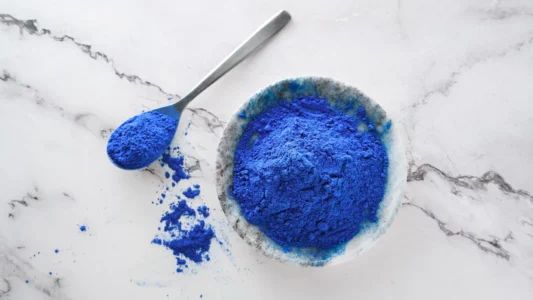
Comparative analysis of manufacturing standards globally.
The global demand for Phycocyanin / Blue Spirulina has grown rapidly as industries shift toward natural ingredients and plant-based colorants. Extracted from Spirulina platensis, Phycocyanin is widely used in food, nutraceuticals, cosmetics, and pharmaceutical products because of its vibrant blue pigment and strong antioxidant properties. As a result, both domestic and international companies are expanding their capabilities to meet the increasing demand for high-quality Blue Spirulina products.
In recent years, Blue Spirulina manufacturers in India have emerged as significant players in the global market. India benefits from favorable climatic conditions for spirulina cultivation, cost-effective production, and growing expertise in nutraceutical manufacturing. These advantages allow Indian manufacturers to produce Phycocyanin-rich Blue Spirulina at competitive prices while maintaining international quality standards.
Cost Advantage of Indian Manufacturers
One of the key factors driving global demand is the cost competitiveness offered by Blue Spirulina manufacturers in India. India has become a preferred sourcing destination for Phycocyanin / Blue Spirulina due to its efficient production systems, favorable environmental conditions, and relatively lower operational costs. These advantages enable Indian manufacturers to produce high-quality Blue Spirulina at prices that are often more competitive than many international suppliers. A major reason for this cost advantage is India’s suitable climate for spirulina cultivation. Warm temperatures and abundant sunlight allow algae to grow naturally in open-pond systems for most of the year. This reduces the need for expensive temperature-controlled facilities or energy-intensive cultivation methods. As a result, Blue Spirulina manufacturers in India can maintain steady production while keeping cultivation expenses relatively low.
Technology Comparison
Technology plays a crucial role in determining the quality, purity, and production efficiency of Phycocyanin / Blue Spirulina. Manufacturers around the world adopt different cultivation and extraction technologies depending on their infrastructure, research capabilities, and production scale. A comparison of these technologies highlights how Blue Spirulina manufacturers in India are evolving while competing with international producers.
Purity Levels Offered
Purity levels are one of the most important quality indicators for Phycocyanin / Blue Spirulina products. The purity of phycocyanin determines its color intensity, nutritional value, and suitability for different industries such as food processing, nutraceuticals, cosmetics, and pharmaceuticals. As demand for natural blue pigments increases, Blue Spirulina manufacturers in India are focusing on producing extracts with higher purity and consistent quality standards.
Phycocyanin purity is typically measured using the absorbance ratio (A620/A280), which indicates the concentration of the blue pigment relative to other proteins. Based on this measurement, Phycocyanin / Blue Spirulina products are generally classified into different grades. Food-grade phycocyanin has a purity value of around 0.7, while reactive-grade products range between 1.0 and 3.9, and analytical-grade phycocyanin used in research applications can exceed 4.0 purity levels.
Certification Differences
Certifications play a crucial role in determining the quality, safety, and global acceptance of Phycocyanin / Blue Spirulina products. Since Blue Spirulina is widely used in food, dietary supplements, and cosmetics, manufacturers must comply with strict regulatory and quality standards. When comparing international companies with Blue Spirulina manufacturers in India, one of the most noticeable differences lies in the types of certifications they obtain and the regulatory frameworks they follow.
Many Blue Spirulina manufacturers in India follow national regulatory standards such as FSSAI (Food Safety and Standards Authority of India) for food and nutraceutical products. In addition to this, several leading Indian producers also obtain globally recognized certifications such as ISO, HACCP, GMP, and Organic certifications. These certifications help ensure that the Phycocyanin / Blue Spirulina produced in India meets safety, hygiene, and quality requirements for both domestic consumption and export markets.
Production Scale
The production scale of Phycocyanin / Blue Spirulina varies significantly between domestic and global manufacturers, mainly due to differences in infrastructure, investment, and technological capabilities. As the global demand for natural blue pigments continues to rise, companies are expanding their production capacities to meet requirements from the food, nutraceutical, and cosmetic industries.
Blue Spirulina manufacturers in India typically operate with a combination of small-to-medium and rapidly growing large-scale production facilities. India’s favorable climate, availability of open-pond cultivation systems, and lower operational costs make it easier for manufacturers to cultivate spirulina in large quantities. Many Indian producers focus on bulk spirulina cultivation and then extract Phycocyanin / Blue Spirulina using standardized filtration and drying processes. While some facilities are still developing advanced infrastructure, several leading manufacturers are investing in improved extraction technologies and expanding their production capacity to meet export demand.
Export Compliance
For companies supplying Phycocyanin / Blue Spirulina to international markets, export compliance plays a crucial role in ensuring product safety, quality, and global acceptance. As demand for natural food colorants and nutraceutical ingredients grows, Blue Spirulina manufacturers in India must follow strict regulatory guidelines and international quality standards to successfully export their products to countries across North America, Europe, and Asia.
One of the primary requirements for exporting Phycocyanin / Blue Spirulina is adherence to food safety and manufacturing certifications. Many Blue Spirulina manufacturers in India obtain certifications such as GMP (Good Manufacturing Practices), ISO standards, HACCP, and FSSAI approval to demonstrate consistent quality and safe production processes. These certifications help Indian manufacturers build credibility and meet the regulatory expectations of global buyers.
Labour & Infrastructure Advantage
One of the major strengths of Blue Spirulina manufacturers in India is the strong advantage in labour availability and manufacturing infrastructure. India has a large skilled workforce in biotechnology, food processing, and nutraceutical production, which supports the efficient cultivation and extraction of Phycocyanin / Blue Spirulina. Compared to many international markets, labour costs in India are relatively lower, allowing manufacturers to maintain competitive pricing without compromising on production quality. This cost efficiency is a key factor that attracts global buyers and private-label brands to partner with Indian producers.
In addition to affordable labour, India has been steadily developing modern infrastructure for algae cultivation and nutraceutical manufacturing. Many Blue Spirulina manufacturers in India operate advanced cultivation farms, controlled photobioreactors, and hygienic processing facilities that meet global food safety and quality standards. These facilities are designed to optimize spirulina growth under favorable climatic conditions, ensuring a stable supply of raw spirulina biomass required for extracting high-quality Phycocyanin / Blue Spirulina.
R&D Investment
Research and development play a crucial role in improving the quality, purity, and efficiency of Phycocyanin / Blue Spirulina production. As the global demand for natural food colorants and nutraceutical ingredients continues to rise, manufacturers are investing heavily in R&D to develop advanced cultivation techniques, improved extraction technologies, and higher-yield spirulina strains. These innovations help ensure consistent quality, better stability of the pigment, and increased scalability for industrial applications.
In recent years, Blue Spirulina manufacturers in India have begun to strengthen their R&D capabilities to compete in the international market. Many Indian companies are collaborating with research institutions, biotechnology laboratories, and universities to enhance spirulina cultivation methods and phycocyanin extraction processes. Through research initiatives, manufacturers are working on optimizing growth conditions, improving pigment concentration, and reducing production costs while maintaining high product purity.
Global Market Share
The demand for Phycocyanin / Blue Spirulina has surged worldwide due to its application in health supplements, natural food colorants, beverages, and cosmetics. The global market is currently dominated by a mix of established international players and emerging producers from countries with favorable cultivation conditions. Among these, Blue Spirulina manufacturers in India are rapidly gaining recognition for their high-quality products and competitive pricing.
India’s share in the global Blue Spirulina market is increasing steadily, driven by cost-effective production, abundant sunlight, and advanced cultivation techniques. Indian manufacturers not only cater to the domestic nutraceutical and food industries but also export substantial quantities of Phycocyanin to markets in Europe, North America, and Asia. This positions India as a key hub in the global supply chain of natural blue pigments.
Competitive Positioning
In the rapidly expanding global market for Phycocyanin / Blue Spirulina, understanding the competitive positioning of manufacturers is essential for buyers and industry stakeholders. Blue Spirulina manufacturers in India have carved a unique niche by combining cost-effective production with natural, high-quality cultivation processes. Indian producers leverage abundant sunlight, favorable climatic conditions, and eco-friendly open-pond systems, enabling them to supply premium Phycocyanin at competitive prices compared to international counterparts.
On the international front, manufacturers often emphasize cutting-edge technology, stringent quality certifications, and research-driven product differentiation. These factors allow them to target pharmaceutical, cosmetic, and functional food markets that demand consistent purity and high Phycocyanin content.
