
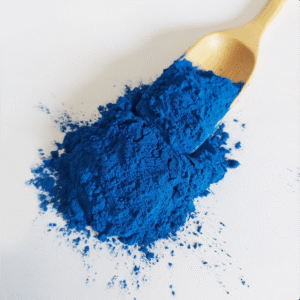
The color blue has always been rare in natural foods. Until recently, achieving a vivid, stable blue in beverages, confections, cosmetics and nutraceuticals meant relying on synthetic dyes. That’s changing fast. In 2025, Phycocyanin — the bright-blue protein pigment extracted from spirulina (a cyanobacterium) — is moving from niche superfood shelves into mainstream formulations. Below I break down the demand drivers, industry adoption, technical enablers, and what brands should watch next.
What is Phycocyanin — quick primer
Phycocyanin is a water-soluble phycobiliprotein responsible for the characteristic blue of spirulina. Beyond color, it’s valued for antioxidant and functional claims that fit “clean label” and wellness positioning. Because it’s plant-based and non-synthetic, phycocyanin sits squarely in the ingredients consumers prefer today.
Demand drivers in 2025
Several overlapping consumer and market forces explain why natural blue — led by phycocyanin — is taking off now:
Clean-label and health-first consumers. Shoppers increasingly avoid artificial dyes and look for plant-derived alternatives. Phycocyanin’s natural origin and antioxidant associations make it attractive to that segment.
Product differentiation & Instagrammability. Brands want visually striking colors that are also “allowed” on social media and in influencer content. Vivid blue products stand out on shelves and feeds.
Cross-category applicability. Phycocyanin is being used in beverages, dairy analogues, confectionery, nutraceuticals, and cosmetic colorants — broadening total addressable demand.
Regulatory and safety progress. Recent approvals and clearer regulatory pathways in several markets have reduced barriers for food and supplement makers to use spirulina extracts as colorants.
Market numbers that matter
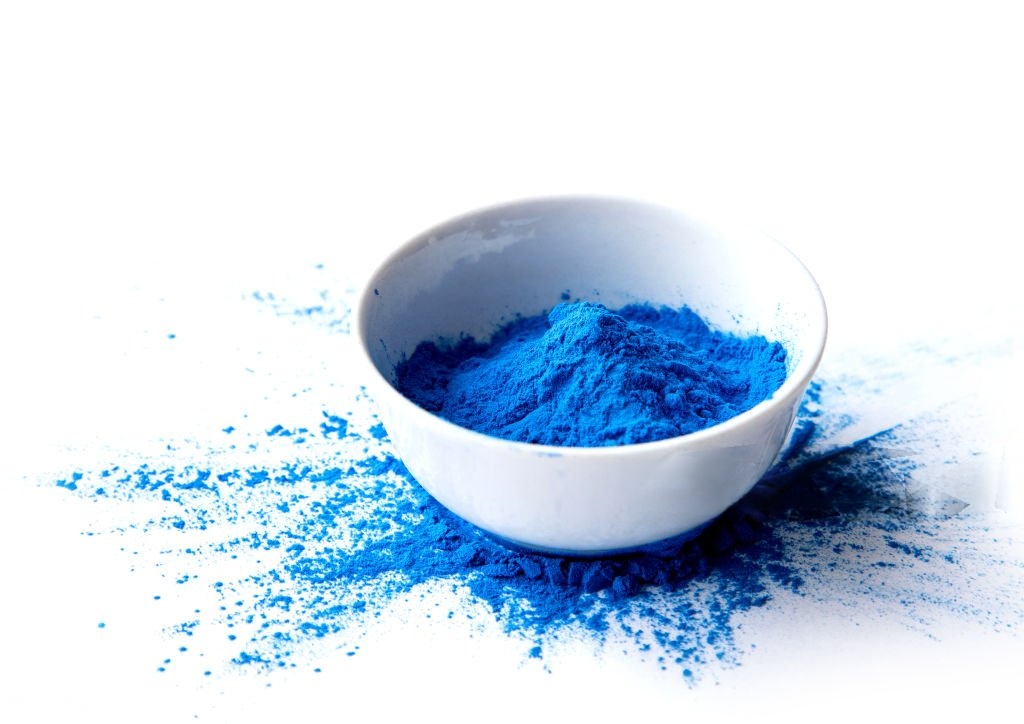
Independent market reports and industry trackers show robust growth for phycocyanin and natural colorants overall. Forecasts vary by source and assumptions, but the consensus is clear: the phycocyanin market is expanding at high single-digit to double-digit CAGR ranges and is projected to be worth hundreds of millions of USD within a few years. These projections reflect rising uptake across food, beverage, nutraceutical and cosmetic categories. (Representative market analyses: Grand View Research, Persistence Market Research, and trade forecasts).
Technical challenges and recent breakthroughs
Historically, two technical issues limited phycocyanin’s use: heat/light stability and cost of high-purity extraction. In the last 18–24 months researchers and ingredient suppliers have made measurable progress — improving extraction methods, stabilizing phycocyanin for use in beverages and dry mixes, and developing formulations (e.g., microencapsulation, emulsions) that extend shelf stability and broaden application types. Those advances are making formulations that were previously impractical (hot-processed goods, long-shelf beverages) commercially viable.
Where brands are using phycocyanin today
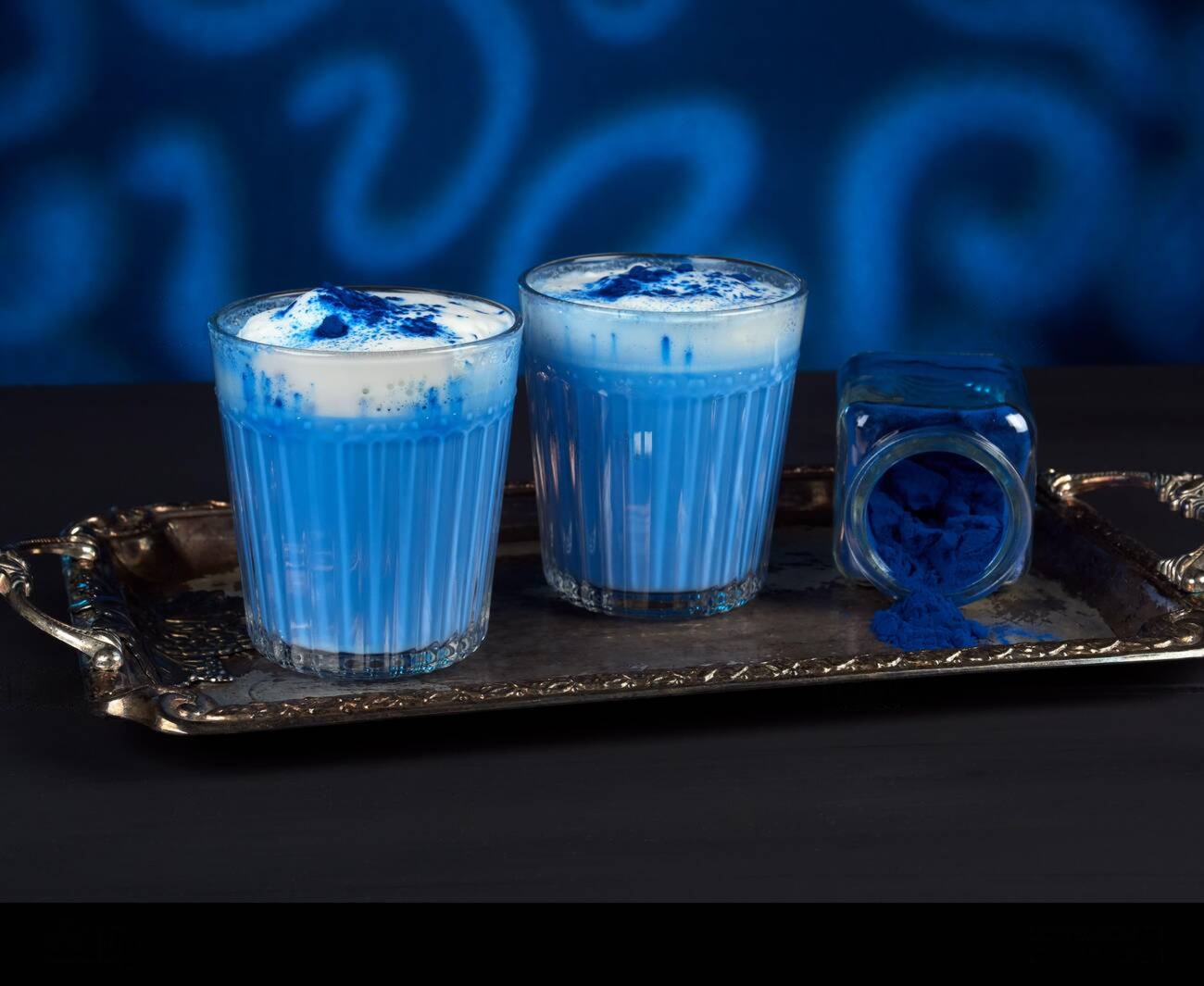
Beverages: craft sodas, functional waters, and ready-to-drink wellness shots use phycocyanin to create distinctive blue/teal hues while claiming natural ingredients.
Confectionery & bakery: novel novelty items and limited-edition products leverage phycocyanin for eye-catching icings and fillings (formulation adjustments needed for heat applications).
Nutraceuticals & supplements: pill coatings and powder blends benefit from both the color and the perceived health halo.
Cosmetics & personal care: color cosmetics (e.g., eyeshadows, face masks) are using spirulina-derived blues for “natural” claims plus antioxidant positioning.
Supply-side & pricing considerations
Supply chain scale-up is underway but not uniform. Large-scale spirulina farms, improved downstream extraction facilities, and ingredient partnerships are increasing supply and driving down costs, yet high-purity phycocyanin for certain food-grade applications remains a premium ingredient. Companies should model ingredient cost sensitivity for margin planning — especially for mainstream SKU scaling. Market reports indicate multiple suppliers and regionally focused producers (including activity in India, Europe and North America).
Risks & caveats
Flavor interference: raw spirulina has a marine flavor; well-formulated phycocyanin extracts minimize this, but taste impact remains a formulation risk (especially in delicate-sensory products).
Stability limits: although improving, phycocyanin still faces constraints in high-heat or long-shelf applications without advanced stabilization.
Regulatory variance: approvals and labeling rules vary by jurisdiction; global launches should verify local requirements.
What this means for product teams (actionable takeaways)
Pilot bold SKUs now. Limited runs (seasonal, influencer drops) let you test consumer acceptance without committing to long-term cost exposure.
Partner with ingredient specialists. Work with suppliers who provide stabilized formats and technical support — this reduces formulation risk and speeds time-to-market.
Design around sensory profile. Use phycocyanin in formats that can mask or tolerate slight marine notes (e.g., fruity beverages, opaque creams, or chocolate coatings).Price & positioning strategy. Use phycocyanin’s premium/clean-label story as a margin lever (limited-edition or premium lines) while planning cost reductions for broader rollouts.
The bottom line
By 2025, Phycocyanin is no longer just a “wellness influencer” pigment — it’s a commercially meaningful natural colorant with growing adoption across multiple industries. Technical improvements, consumer demand for natural ingredients, and clear market momentum mean brands that thoughtfully experiment with phycocyanin today can gain visual differentiation, tell a stronger clean-label story, and capture premium price points — provided they plan around flavor, stability, and supply.
