

Understanding the Complete Value Chain
The journey of blue spirulina from cultivation to global distribution involves a well-structured and intricate value chain. Understanding this complete process is essential to appreciate how India has emerged as a significant player in the global spirulina market. The value chain encompasses multiple stages, including the cultivation of spirulina in controlled farms, harvesting and initial processing, extraction of the vibrant blue pigment phycocyanin, quality testing, packaging, and distribution to both domestic and international markets. Each stage plays a critical role in maintaining the purity, potency, and market value of blue spirulina, ensuring that the end consumers receive a product that meets stringent health and safety standards. By analyzing this chain, we can gain insights into the efficiencies, challenges, and opportunities present at every step, highlighting India’s strengths as a key global supplier of this superfood.
For manufacturers in India, ensuring stability means that every batch of blue spirulina maintains consistent quality from production to the end consumer. A stable product guarantees that health claims are delivered reliably, shelf life is maximized, and customer trust is reinforced. In essence, stability isn’t just a technical specification—it defines product performance, efficacy, and market reputation.
Spirulina Farming Ecosystem
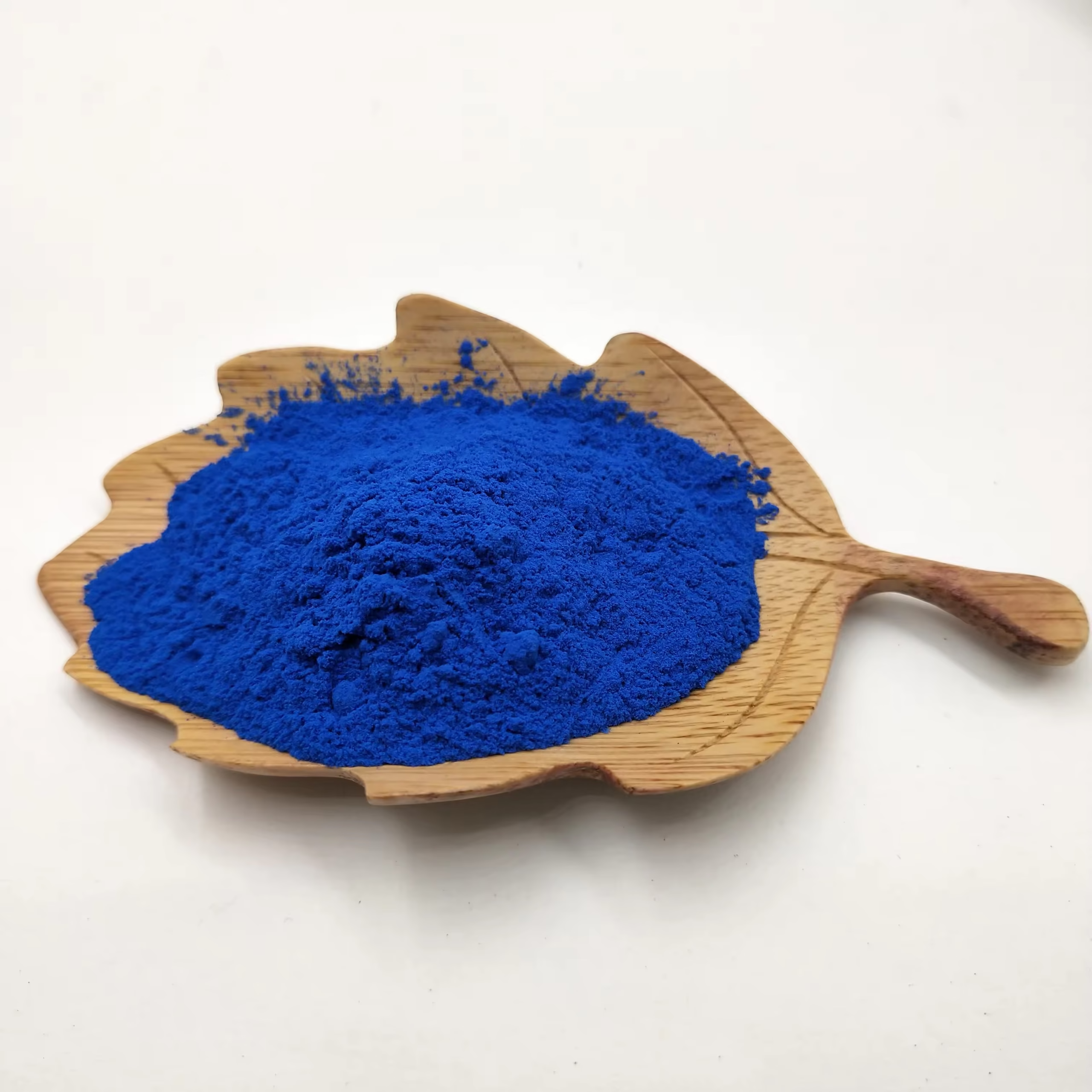
At the heart of India’s blue spirulina supply chain lies a robust and evolving farming ecosystem. Spirulina cultivation is not just about growing algae; it involves a carefully managed network of farms, technologies, and expertise that ensures high-quality yields year-round. The ecosystem includes controlled open ponds or photobioreactors, nutrient-rich water systems, climate management, and skilled farm operators who monitor growth cycles meticulously. Beyond the farms themselves, the ecosystem also comprises suppliers of cultivation inputs, research institutions working on strain improvement, and service providers offering processing and quality testing solutions. This integrated system ensures that Indian spirulina farms can consistently produce phycocyanin-rich biomass that meets both domestic and international standards. Understanding this ecosystem is key to appreciating the efficiency, sustainability, and innovation driving India’s position in the global blue spirulina market. This sensitivity poses a significant challenge for manufacturers, as even minor deviations during processing, storage, or packaging can compromise the product’s quality. Understanding the natural vulnerabilities of phycocyanin is therefore critical for designing strategies that preserve its stability, ensure consistent product performance, and maximize shelf life. In the context of nutraceuticals, such as blue spirulina, private label manufacturing enables brands to offer high-quality, ready-to-market health ingredients without investing heavily in production facilities, research, or regulatory compliance. The manufacturer handles production, quality testing, and often packaging, while the brand owner controls the product’s identity, packaging design, and marketing strategy. From a regulatory standpoint, global food authorities are tightening norms around synthetic colors. Several artificial dyes face partial bans, warning label requirements, or usage restrictions across regions such as the European Union, the United Kingdom, and parts of Asia. In contrast, regulations continue to evolve, creating compliance challenges for food and beverage manufacturers that rely heavily on synthetic colorants. Constant monitoring, reformulation costs, and the risk of future bans make artificial colors a less sustainable long-term option. Blue spirulina manufacturers in India use standardized analytical methods, such as spectrophotometric absorbance ratios, to classify phycocyanin into different purity grades. Higher purity levels result in a more vibrant blue color, improved stability, and fewer impurities like chlorophyll or residual proteins. These factors are critical when phycocyanin is used in sensitive applications such as functional foods, nutraceuticals, cosmetics, and pharmaceuticals. Understanding phycocyanin purity helps buyers assess product quality, compare suppliers, and select the right grade based on intended use. Whether for natural food coloring or high-value health formulations, purity directly impacts performance, safety, and regulatory compliance.
Farmer Partnerships & Contract Farming
At the foundation of India’s blue spirulina supply chain are strong farmer partnerships. Many producers collaborate closely with local farmers through contract farming models, ensuring a steady and reliable supply of high-quality spirulina. Under these arrangements, farmers receive guidance, training, and resources from spirulina manufacturers to maintain optimal cultivation practices, such as controlling water quality, temperature, and nutrient levels.
Contract farming not only guarantees a consistent raw material supply for manufacturers but also provides farmers with financial security through predetermined pricing, technical support, and assured market access. These partnerships are particularly vital in regions like Andhra Pradesh, Tamil Nadu, and Karnataka, where the climatic conditions and freshwater availability are ideal for spirulina cultivation.
By fostering these collaborations, the industry ensures that both farmers and manufacturers benefit—farmers gain access to modern agricultural practices and stable income, while manufacturers maintain a high-quality, traceable raw material base that underpins the global competitiveness of Indian blue spirulina.
Light Exposure
Phycocyanin, the vibrant blue pigment in spirulina, is highly photosensitive. Excessive exposure to sunlight or artificial light can degrade the pigment, causing color fading and loss of bioactive compounds.Temperature and Humidity
High temperatures accelerate chemical reactions and microbial growth, while excess moisture can lead to clumping or spoilage. Maintaining a cool, dry environment is essential for prolonging shelf life.

Raw Biomass Handling
Once spirulina is harvested from the cultivation tanks or ponds, it enters the critical stage of raw biomass handling. This step ensures that the delicate microalgae is carefully collected, cleaned, and prepared for further processing without compromising its quality or nutritional content. Proper handling of raw biomass is essential to prevent contamination, preserve the integrity of phycocyanin—the signature blue pigment—and maintain high levels of protein and other nutrients. In India, advanced handling techniques, combined with hygienic practices, allow producers to efficiently transport biomass from farms to processing units, forming a vital link in the blue spirulina supply chain that directly impacts the overall quality and market value of the final product.
Indian blue spirulina manufacturers focus on controlled processing and storage conditions to combat these effects. This includes low-temperature drying, cold storage during transportation, and packaging that limits light penetration, such as UV-protective bottles or opaque sachets. By carefully managing these factors, manufacturers can significantly extend the product’s shelf life while preserving its nutritional value, color, and bioactivity, ensuring that consumers receive a consistent, high-quality product.
Manufacturers typically offer a range of packaging formats—powder pouches, capsules, tablets, and sachets—allowing brands to cater to diverse consumer preferences. Beyond aesthetics, they also ensure packaging complies with safety, shelf-life, and regulatory standards, giving companies confidence that their products are market-ready. This customization empowers businesses to differentiate their offerings, build brand loyalty, and create a premium perception in the growing health and wellness segment.
Centralized vs Decentralized Processing
In the blue spirulina supply chain, the method of processing plays a pivotal role in determining efficiency, cost, and product quality. Processing can be broadly categorized into centralized and decentralized models, each with distinct advantages and challenges.
Centralized processing involves transporting harvested spirulina from multiple farms to a single, large-scale processing facility. This allows for advanced extraction technologies, stringent quality control, and economies of scale, making it ideal for high-volume production and consistent global supply.
Quality Control Checkpoints
Maintaining high-quality standards is crucial in the blue spirulina supply chain, as the product is highly valued for its purity, potency, and health benefits. Quality control begins right at the farm, where factors like water quality, pH levels, temperature, and nutrient balance are continuously monitored to ensure optimal growth of spirulina. Once harvested, the biomass undergoes rigorous testing for contaminants, including heavy metals, microbial content, and pesticide residues.
Cold Chain Requirements
Blue spirulina, particularly in its powdered or phycocyanin extract form, is highly sensitive to heat, light, and moisture. Maintaining a proper cold chain throughout the supply process is crucial to preserve its vibrant blue color, nutritional properties, and overall quality. In India, the cold chain for blue spirulina begins immediately after harvesting and primary processing.
During storage and transportation, temperature-controlled environments—typically between 2°C to 8°C for extracts and slightly cooler for bulk powders—are essential to prevent degradation of phycocyanin, the key pigment responsible for both its color and antioxidant properties. Advanced refrigeration units, insulated packaging, and real-time temperature monitoring systems are commonly used to ensure that the product remains stable from farm to processing facilities and finally to distribution centers.
Export Documentation Flow
Exporting blue spirulina from India to international markets requires careful adherence to regulatory and logistical documentation. A smooth documentation flow ensures timely delivery, compliance with global standards, and seamless trade transactions. The key documents involved in the export process include:
Commercial Invoice – Details the product, quantity, price, and terms of sale, serving as the primary document for financial and customs purposes.
Packing List – Provides information about the packaging, weight, and dimensions of the shipment, helping customs and logistics companies handle the cargo efficiently.
Certificate of Origin – Confirms that the blue spirulina is produced in India, often required by importing countries to determine duties and eligibility for trade agreements.
Traceability & Batch Control
In the blue spirulina supply chain, maintaining strict traceability and batch control is crucial to ensure product quality, safety, and regulatory compliance. Traceability allows every batch of spirulina—from the farm where it is cultivated to the final packaged product—to be tracked at each stage of processing and distribution. Batch control ensures consistency in potency, color, and purity, which is especially important for products containing phycocyanin, the active blue pigment. Together, these systems not only protect consumers but also strengthen trust with international buyers, who demand transparency and accountability in every shipment. Effective traceability and batch management also enable quick identification and resolution of any quality issues, reducing losses and safeguarding the reputation of Indian spirulina manufacturers in global markets.
Risk Management in Supply Chain
Managing risks is a critical aspect of ensuring the smooth operation of the blue spirulina supply chain in India. From cultivation to global distribution, various factors—such as climatic variations, contamination risks, logistical delays, regulatory changes, and market fluctuations—can impact the quality and availability of the product. Effective risk management involves identifying potential threats at each stage of the supply chain, implementing preventive measures, and having contingency plans in place to minimize disruptions. For Indian producers and exporters of blue spirulina, robust risk management not only safeguards the product’s integrity but also strengthens their reputation in competitive international markets. By proactively addressing these challenges, the supply chain can remain resilient, ensuring a consistent and high-quality supply to consumers worldwide.
