
Understanding Product Formats
When exploring blue spirulina as a functional ingredient or supplement, one of the first decisions formulators, brands, and consumers face is the choice of product format. Blue spirulina—derived from the algae Arthrospira platensis and rich in the natural pigment phycocyanin—is available primarily in powder and liquid extract forms, each with distinct characteristics, advantages, and uses.
On one hand, the powdered format of blue spirulina is widely offered by Indian producers and suppliers. This form is stable, easy to store, and commonly used as a vibrant blue colorant and nutritional booster in smoothies, health foods, cosmetic formulations, and wellness blends. Powdered phycocyanin can be sourced in bulk quantities by ingredient manufacturers and often comes in standardized grades (e.g., E‑series) to meet different industrial requirements.
In contrast, liquid extracts provide a ready‑to‑use soluble form that can integrate more readily into liquid formulations, cosmetic serums, beverages, and specialized products where dispersion and solubility are priorities. Indian manufacturers are increasingly offering both water‑soluble and oil‑soluble liquid spirulina extracts, extending utility for different categories of end products.
Understanding how these formats differ—not just in physical form but also in handling, application, and performance—sets the stage for evaluating what Indian manufacturers currently produce and supply domestically and for export.
Blue Spirulina Powder Overview
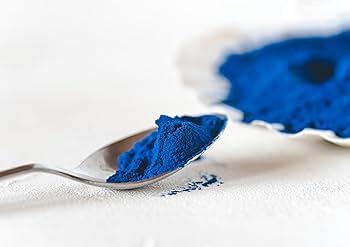
Blue spirulina powder is a natural, vibrant blue ingredient derived from the algae Arthrospira platensis, celebrated for its high phycocyanin content—the pigment responsible for its striking color and potent antioxidant properties. In India, this powdered form is one of the most widely produced and used formats by manufacturers catering to the food, beverage, nutraceutical, and cosmetic industries. The powder is dried and finely milled, making it stable, shelf‑friendly, and easy to handle. Its concentrated phycocyanin ensures consistent color intensity and nutritional benefits, which is why it is popular in smoothies, health drinks, protein blends, ice creams, confectionery, and even cosmetic formulations. Indian manufacturers often supply blue spirulina powder in various grades, depending on the phycocyanin purity, ranging from general wellness grades to high‑purity extracts suitable for premium functional foods or supplements. One of the key advantages of the powdered form is its versatility. It can be mixed into dry formulations or rehydrated, allowing brands and home users alike to harness its natural color and antioxidant benefits without requiring specialized storage conditions. Additionally, it supports bulk manufacturing, making it a cost-effective choice for both small-scale and industrial producers. Overall, blue spirulina powder combines ease of use, stability, and multifunctionality, making it the preferred format for many Indian manufacturers supplying domestic and export markets.
Liquid Phycocyanin Extract Overview
Liquid phycocyanin extract refers to the concentrated water‑soluble blue pigment phycocyanin derived from Arthrospira platensis (commonly known as spirulina). Unlike powdered spirulina or dried phycocyanin powders, this extract is processed into a viscous liquid form that retains the natural bioactive compounds and intense blue coloration of phycocyanin without requiring further reconstitution.
What it is and how it’s made:
The production of liquid phycocyanin typically involves aqueous extraction, where spirulina biomass is subjected to mild physical processes such as concentration, centrifugation, and filtration to release phycocyanin into solution without denaturing the protein‑pigment complex. Water is usually the sole additive during extraction, preserving its purity and solubility.

What Is Green Spirulina?
One of the fundamental distinctions between blue spirulina powder and liquid extracts lies in how they dissolve and interact with different solvents, which directly affects their suitability for specific applications.
1. Powder Form Solubility
Blue spirulina powder—typically made from dried and milled Arthrospira platensis containing concentrated phycocyanin—is water‑dispersible but not instantly soluble in all liquid systems. When added to water, juices, or smoothies, the powder tends to suspend rather than fully dissolve, creating a vibrant but slightly textured appearance unless adequately mixed. This behavior is generally acceptable in foods and beverages where a slight body or texture is not an issue.
In formulations such as dry blends, capsules, or bakery products, manufacturers often appreciate powdered spirulina because it integrates easily without introducing extra moisture. However, in highly aqueous systems requiring crystal‑clear clarity, the suspended particles can settle or require additional processing (like high‑shear mixing) for uniformity.

Stability & Shelf‑Life Comparison
When comparing blue spirulina powder and liquid spirulina extract, one of the most important practical differences lies in their stability and shelf life—factors that significantly affect manufacturing, storage, logistics, and end‑use performance.
1. Powdered Blue Spirulina (Phycocyanin Powder)
Shelf Life: High‑quality blue spirulina powder typically retains stability for 18–24 months when stored in airtight, cool, dry conditions away from light and humidity.
Stability Factors: The dry powder form protects the phycocyanin pigment from oxidation and microbial activity better than liquid, because there’s no free water to facilitate chemical degradation.
2. Liquid Spirulina Extract (Phycocyanin Liquid)
Shelf Life: Commercial liquid spirulina extracts (often used as food colorants or nutraceutical ingredients) generally list a 12‑month shelf life under refrigeration (0–10°C), though some industrial sources may claim up to 24 months with controlled storage.
Storage Requirements: Because a liquid matrix contains free water, refrigeration and protection from heat/light are essential to slow down protein denaturation and microbial spoilage.
Why India Is Ideal for Spirulina Manufacturing
India offers a unique combination of natural, economic, and policy advantages that make it an ideal destination for spirulina cultivation and manufacturing. These factors enable manufacturers to produce high-quality spirulina and derivatives (like blue spirulina and phycocyanin) efficiently and competitively for both domestic and global markets.
1. Favorable Climate and Geography
India’s tropical and subtropical climate supports year-round spirulina cultivation. The microalgae thrive in warm temperatures and abundant sunlight, which are essential for optimal photosynthesis and growth, reducing dependency on artificial heating systems and lowering energy costs. Regions like Tamil Nadu, Andhra Pradesh, and Karnataka are particularly well-suited due to their consistent sunshine and warm conditions throughout the year.
2. Cost-Effective Production
Compared to many other spirulina-producing countries, India benefits from lower labor and operational costs. Affordable farm labor, competitive input prices, and the ability to utilize open pond systems contribute to cost-efficient cultivation and processing. This cost advantage allows Indian manufacturers to offer spirulina products at competitive prices in global markets.
Application-Based Selection
Choosing between blue spirulina powder and liquid extract is not just about preference—it’s largely driven by how the ingredient will be used. Different applications demand different characteristics, and Indian manufacturers tailor their offerings accordingly. For example, powdered blue spirulina is ideal for dry formulations, dietary supplements, bakery products, and smoothies, where ease of storage, shelf life, and precise dosing are priorities.
On the other hand, liquid extracts are preferred in applications requiring quick solubility or uniform dispersion, such as beverages, functional drinks, cosmetic serums, and ready-to-use food formulations. Understanding the specific requirements of your product—whether it’s stability, color intensity, solubility, or nutritional potency—guides the choice between powder and liquid formats.
By aligning the product format with the intended application, businesses and formulators can maximize both efficiency and effectiveness, while also ensuring compatibility with Indian manufacturers’ production capabilities and quality standards.
Packaging Options
Packaging plays a crucial role in preserving the quality, stability, and usability of blue spirulina products—whether in powdered form or as a liquid extract. Given the sensitivity of blue spirulina’s key bioactive, phycocyanin, to environmental factors like light, heat, and moisture, the choice of packaging can significantly impact shelf life, functional performance, and ease of use.
Indian manufacturers offer a range of packaging solutions tailored to the specific needs of different product formats and end‑use applications. For powdered blue spirulina, packaging typically ranges from multi‑layered pouches with moisture barriers to drum and jumbo bag formats for bulk industrial orders. These options help protect the powder from humidity and oxidative degradation while supporting efficient handling and storage throughout the supply chain.
In the case of liquid blue spirulina extracts, packaging must also account for leak prevention, material compatibility, and product stability. Manufacturers in India supply liquid extracts in amber glass bottles to guard against UV light, food‑grade HDPE containers for greater impact resistance, and bulk totes for larger commercial buyers. Each format is selected to maintain product integrity while meeting regulatory and logistical requirements.
By understanding the packaging options available across formats, brands and formulators can make informed decisions that align with their product positioning, distribution strategy, and quality standards.
Manufacturing Infrastructure in India
India’s manufacturing infrastructure for blue spirulina and related phycocyanin extraction reflects a mix of traditional cultivation systems, emerging pilot projects, and increasingly formalized processing units designed to meet both domestic and international demand.
1. Cultivation Systems and Facilities
The backbone of blue spirulina production lies in its cultivation infrastructure, which typically comprises open ponds and, increasingly, more controlled systems like photobioreactors. Traditional open-raceway ponds remain widespread due to lower capital costs and suitability to India’s warm climate, but they require careful monitoring of pH, nutrient balance, and contamination control to ensure high-quality biomass. Photobioreactors and semi-closed systems, though costlier, are gaining interest for premium and export-grade production due to better control of growth conditions and purity.
2. Production and Processing Units
Prominent producers such as Parry Nutraceuticals have established vertically integrated production systems in India that manage cultivation, harvesting, drying, and downstream extraction of high-purity phycocyanin. These facilities often include food-grade filtration, controlled drying technologies, and quality assurance labs to maintain consistent product standards for nutraceutical and food-grade outputs.
Storage Requirements
Proper storage is a critical yet often overlooked aspect of working with blue spirulina, whether in powdered or liquid extract form. The stability, potency, and color vibrancy of blue spirulina’s key pigment, phycocyanin, can be significantly affected by environmental factors such as temperature, light, humidity, and exposure to air. Indian manufacturers typically provide specific storage guidelines to help preserve product quality from the moment it leaves the factory to the point it’s used in formulations or consumed. Understanding these requirements not only ensures maximum shelf life and efficacy, but also helps businesses, formulators, and end‑users maintain compliance with safety and quality standards across supply chains.
Dosage Considerations
When incorporating blue spirulina—whether in powder or liquid extract form—understanding dosage is critical for both safety and effectiveness. The optimal amount depends on the intended use, the concentration of phycocyanin, and the formulation type. For example, powdered spirulina may require higher quantities to achieve the desired color or nutritional impact, while liquid extracts, being more concentrated, often need smaller doses.
Indian manufacturers typically provide recommended usage guidelines based on product grade and application—ranging from food and beverage fortification to cosmetics and nutraceuticals. Carefully following these dosage instructions ensures consistent results, maintains product stability, and avoids potential side effects, such as digestive discomfort or overconsumption of bioactive compounds.
A clear understanding of dosage considerations helps formulators, brands, and consumers maximize the benefits of blue spirulina while maintaining safety and product quality.
Export Market Growth
The export market for blue spirulina and related products (notably phycocyanin extracts and spirulina powder) has been witnessing significant expansion driven by rising global demand for natural, plant-based ingredients. The global spirulina extract market—an important driver of blue spirulina exports—is projected to grow robustly at an approximate CAGR of ~6.8% to 8.7% through the next decade, reflecting increasing adoption across food and beverages, nutraceuticals, cosmetics, and functional foods sectors worldwide.
A key driver of this export momentum is the growing consumer preference for natural alternatives to synthetic additives, particularly in developed regions like North America and Europe, where stringent regulatory views on synthetic colorants are accelerating the uptake of natural blue pigments such as spirulina-derived phycocyanin. Globally, forecasts estimate that the natural blue spirulina market could grow from an estimated valuation in the low hundreds of millions of dollars in the early 2020s to well over that by 2030+, indicating sustained demand and expanding export opportunities.
India’s role in this growing export landscape has strengthened in recent years. Indian spirulina and phycocyanin producers are increasingly exporting to markets across North America, Europe, Japan and Southeast Asia, supported by competitive production costs, improved quality control, and certification programs that align with international standards. According to available trade data, India exports phycocyanin (the blue pigment from spirulina) to multiple countries including the Netherlands, Poland, and the United States, highlighting both diversification of export destinations and rising global demand for Indian supply.
Export Market Preferences
When examining export demand for blue spirulina formats, global buyers tend to show distinct preferences based on application, regulations, and ease of use—all of which influence what Indian manufacturers focus on.
1. Powder Form Dominates Traditional Export Segments
Powdered spirulina (including whole biomass and phycocyanin powders) remains the more widely exported format from India. This is because powdered forms are stable, easier to store and transport, and can be incorporated into a broad range of products such as nutraceuticals, dietary supplements, protein mixes, and dry‑blend functional foods. In many European markets like Germany, the Netherlands, and the UK, spirulina powder is consistently a top import category, reflecting long‑standing demand for whole biomass and pigment powders.
2. Liquid Extracts Growing with Beverage & Functional Food Demand
Globally, liquid spirulina and phycocyanin extracts are gaining traction, especially where uniform dispersion and vibrant natural color are priorities. Beverage manufacturers and formulators of ready‑to‑drink products find liquid extracts more convenient because they mix easily without sedimentation, a key advantage over powdered pigments in aqueous systems.
