
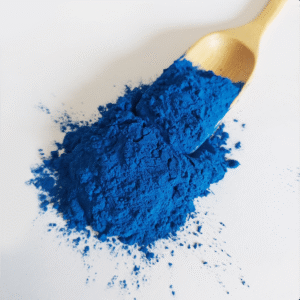
Beverage‑Grade Quality Standards
For beverage manufacturers incorporating Phycocyanin / Blue Spirulina into their products, adhering to beverage‑grade quality standards is essential to ensure safety, stability, and consumer acceptance. Blue spirulina is distinct from regular spirulina because its primary value lies not just in its nutrient profile but in the vibrant natural blue color of phycocyanin — a pigment that must meet stringent quality criteria for use in drinks, smoothies, functional waters, and other liquid formulations.
Solubility Requirements
For beverage manufacturers, the functional performance of Phycocyanin / Blue Spirulina goes far beyond its striking color — solubility is a critical quality parameter that directly impacts product stability, mouthfeel, and visual appeal. Unlike many plant‑based colorants that can clump or settle, high‑performance blue spirulina should dissolve smoothly in aqueous systems to ensure consistent dispersion, minimal sedimentation, and a clean visual profile in finished beverages.
pH Stability in Drinks
One of the key formulation challenges when working with Phycocyanin / Blue Spirulina in beverages is its sensitivity to pH. Phycocyanin — the vibrant blue pigment derived from blue spirulina — delivers natural color and functional appeal, but its molecular structure can be affected by the acidity of the drink. At lower pH levels (more acidic), the pigment’s stability decreases, potentially leading to color fading or changes in hue over time. For beverage developers, this means careful consideration of the pH range during product design to ensure consistent color performance throughout shelf life.
Most formulations that successfully incorporate blue spirulina target a near‑neutral to mildly acidic pH (typically in the range of ~4.5–7), where Phycocyanin / Blue Spirulina maintains better stability and visual intensity. Beverages with very low pH — such as cola‑style sodas or citrus‑forward juices — may require protective formulation strategies, including blending with buffering ingredients, using stabilizers, or microencapsulation techniques to help preserve the pigment’s integrity.
Taste Neutralization Techniques
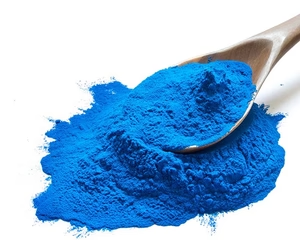
One of the key challenges beverage developers face when incorporating Phycocyanin / Blue Spirulina into products is managing its subtle sea‑like flavor. While blue spirulina is prized for its vibrant natural color and health benefits, even its mild taste can influence the sensory profile of smoothies, juices, and functional drinks if not handled properly. This has made taste neutralization techniques an important area of focus for formulators seeking to deliver visually striking beverages without compromising on overall flavor harmony.
Dosage for Color vs Nutrition
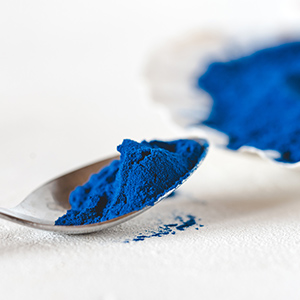
When using Phycocyanin / Blue Spirulina in beverages, understanding the correct dosage is essential to balance visual appeal and nutritional benefits. The amount added to a drink can vary depending on whether the goal is color enhancement or functional nutrition.
1. Dosage for Color
For products where the vibrant blue hue is the main objective, smaller quantities of blue spirulina are often sufficient. Typically, 0.1–0.5% of the beverage weight can achieve a striking natural blue shade without affecting taste. This approach is commonly used in smoothies, mocktails, and novelty drinks, where eye-catching color is a key selling point.
Cold & Hot Beverage Applications — Harnessing Phycocyanin / Blue Spirulina
Phycocyanin / Blue Spirulina has emerged as a versatile ingredient across a wide range of beverage formats — from refreshing cold drinks to warm, comforting brews — offering both functional benefits and striking visual appeal. As consumer interest in naturally derived colors and health‑boosting botanicals grows, beverage formulators and Blue Spirulina manufacturers in India are exploring innovative ways to incorporate this vibrant blue ingredient into category‑defining products.
Custom Extract Strengths
As demand grows for natural colorants and functional ingredients in beverages, one of the key value‑adds offered by Blue Spirulina manufacturers in India is the ability to provide custom extract strengths of Phycocyanin / Blue Spirulina to suit diverse formulation needs. Beverage developers often require variations in pigmentation intensity, nutritional profile, and solubility depending on the product type — from lightly tinted wellness shots to deeply colored smoothies or dairy alternatives. Leading Indian suppliers now offer phycocyanin and blue spirulina powders in standardized concentrations (e.g., high‑purity phycocyanin 20%, 30%, or even 40%+) as well as tailor‑made extract strengths based on specific application requirements.
