
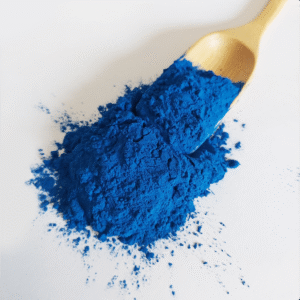
One of blue spirulina’s biggest advantages over regular spirulina is its taste — or rather, its near-total lack of one. If you have avoided spirulina because of the strong “pond” flavour, blue spirulina is a very different experience. Here is exactly what to expect and how to use it.
What does blue spirulina taste like?
Blue spirulina (phycocyanin) is almost tasteless. At most it has a very faint, slightly sweet or neutral note that disappears entirely once mixed into food or drink. This is a dramatic contrast with green spirulina, which has a strong, earthy, marine, “pond-like” flavour that many people struggle with.
Why is it so much milder than green spirulina?
Green spirulina is the whole dried algae, so it carries all of the plant’s naturally earthy, sulphur-like compounds. Blue spirulina is only the extracted blue pigment — the phycocyanin — separated and purified from the rest of the algae. Removing the green components removes most of the flavour, leaving colour without taste.
Why the neutral taste matters
The lack of flavour is the main reason blue spirulina is so popular as a natural food colour. You can turn a smoothie, latte, lemonade or dessert a vivid blue without altering the taste — something synthetic dyes also do, but without the clean-label, plant-based appeal that brands and consumers want.
Does green spirulina really taste that bad?
“Bad” is subjective, but its earthy intensity is strong. Common ways to mask green spirulina include:
- Blending with strong fruits like banana, mango, pineapple or berries.
- Adding citrus, cocoa, peanut butter or dates.
- Taking it in tablet or capsule form to bypass the taste entirely.
Blue spirulina sidesteps almost all of this because there is little flavour to hide.
How to use blue spirulina for colour without any off-taste
- Blend a small amount into fruit smoothies for a vivid blue with no flavour change.
- Stir into lemonade, coconut water, or plant milk to make blue drinks and “moon milk”.
- Use in ice cream, yoghurt bowls, energy balls, frosting and baking for natural colour.
- Mix a pinch into pancake or waffle batter for a fun, dye-free colour.
Tips for the best results
Use only a small amount at first — the colour is intense and a little goes a long way. Blue spirulina is water-soluble, so it blends smoothly into cold liquids. Keep it away from high heat and strong acids where possible, since those can dull the vibrant blue over time.
Frequently asked questions
Is blue spirulina flavourless? Almost — far milder than green spirulina and usually undetectable in recipes.
Will it change my recipe’s taste? In normal colouring amounts, no.
Does blue spirulina taste fishy? No — that strong marine taste belongs to green spirulina, not the purified blue extract.
Can I use it in hot drinks? Yes, but very high heat can fade the colour, so add it to warm rather than boiling liquids.
Want consistent, food-grade blue spirulina? Algology supplies food-grade blue spirulina with reliable colour and purity.