
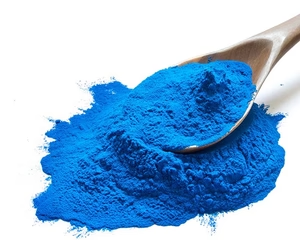
Exploring how blue spirulina is transforming the food and beverage sector as a natural color and functional ingredient.
The global food and beverage industry is rapidly shifting toward natural, clean-label, and functional ingredients, and one standout innovation driving this transformation is blue spirulina. Derived from the natural pigment phycocyanin found in spirulina algae, blue spirulina is gaining immense popularity as a vibrant natural colourant and a nutrient-rich additive. Unlike synthetic dyes, it offers not only striking blue hues but also antioxidant and protein benefits, making it highly attractive to health-conscious consumers and innovative food brands.
In recent years, the demand for blue spirulina has significantly increased in India, with several Blue Spirulina manufacturers in India emerging to meet both domestic and global requirements. These manufacturers are focusing on high-quality extraction processes to ensure purity, stability, and safety, enabling its widespread use across beverages, confectionery, dairy products, smoothies, and functional foods. As a result, Blue Spirulina manufacturers are playing a key role in redefining how natural colours and health-enhancing ingredients are integrated into modern food formulations.
Use in Smoothies & Health Drinks
Blue spirulina is rapidly becoming a preferred ingredient in smoothies and health drinks due to its vibrant natural blue color, mild flavor, and impressive nutritional profile. Extracted from the pigment phycocyanin in spirulina algae, it blends easily into liquids without altering taste significantly, making it ideal for functional beverages that focus on both health and visual appeal. In smoothie formulations, blue spirulina is widely used to create visually striking “blue bowls,” detox smoothies, and protein shakes. Health cafés and wellness brands use it to enhance the nutritional value of their offerings, as it contains antioxidants, amino acids, and anti-inflammatory properties. This makes it especially popular among fitness enthusiasts, vegans, and consumers looking for clean-label alternatives to artificial colorants.
Bakery & Confectionery Applications
The bakery and confectionery industry is increasingly embracing natural ingredients that enhance both visual appeal and nutritional value, and blue spirulina is emerging as a game-changer in this space. Extracted from spirulina algae, its natural blue pigment (phycocyanin) provides a vibrant, eye-catching colour that is replacing synthetic food dyes in cakes, pastries, chocolates, candies, and icing formulations.
In bakery applications, blue spirulina is widely used to create visually striking desserts such as layered cakes, macarons, doughnuts, and frostings without compromising on clean-label expectations. Its stability in various formulations makes it especially valuable for premium and artisanal bakery products. In confectionery, it is used to produce naturally coloured gummies, white chocolates, and sugar-based candies, appealing to health-conscious consumers who prefer plant-based and chemical-free ingredients.
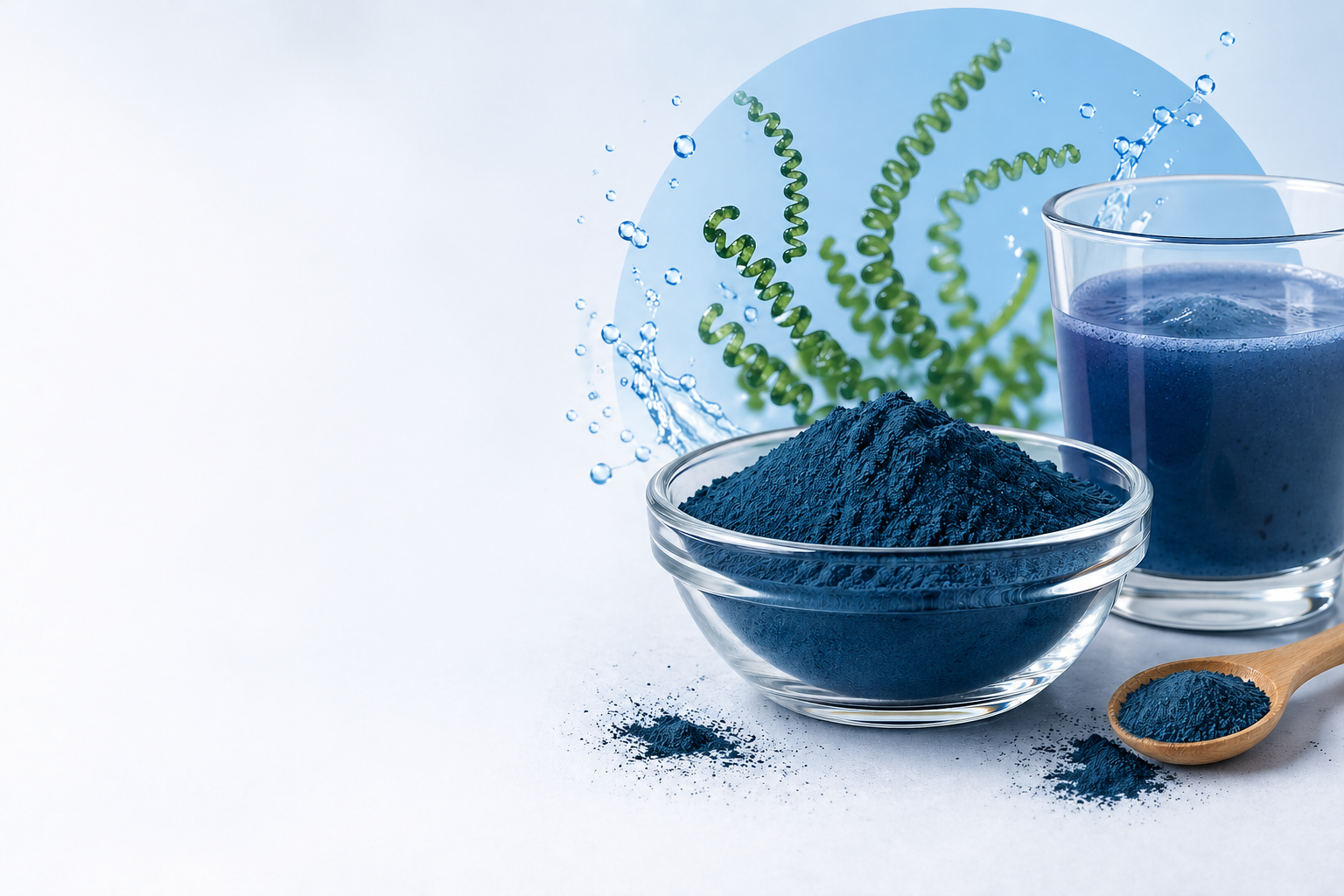
Dairy Products & Ice Cream Colouring
Blue spirulina is emerging as a game-changing natural colourant in the dairy and frozen dessert industry, offering a vibrant alternative to synthetic blue dyes. Its intense blue pigment, derived from phycocyanin, blends seamlessly into milk-based formulations without compromising taste or texture, making it ideal for products like flavoured milk, yoghurts, cheese spreads, and especially ice cream.
In ice cream manufacturing, visual appeal plays a major role in consumer choice, and blue spirulina helps brands create eye-catching flavours such as blueberry, bubblegum, cotton candy, and tropical blends. Beyond aesthetics, it also adds functional value due to its antioxidant properties and natural protein content, aligning with the growing demand for healthier indulgence options.
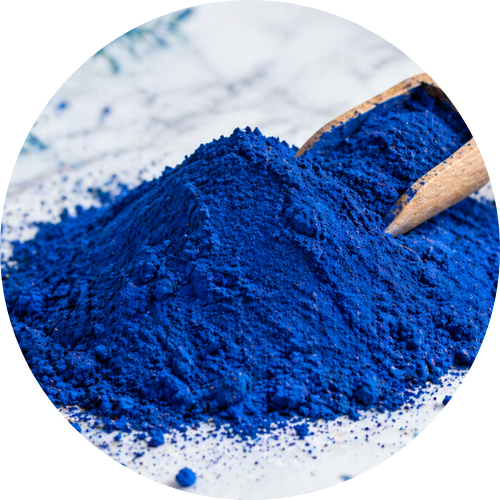
Plant-Based Food Innovation
Plant-based food innovation is reshaping the global food industry by offering healthier, more sustainable, and environmentally friendly alternatives to traditional animal-based products. As consumers increasingly prioritize clean-label ingredients and functional nutrition, natural additives and superfoods are becoming central to product development. Among these emerging ingredients, blue spirulina stands out as a powerful natural colourant and nutrient-rich component that is driving innovation in plant-based foods.
Blue spirulina, derived from the pigment phycocyanin in spirulina algae, is widely valued for its vibrant blue color, antioxidant properties, and high protein content. It is now being extensively used in plant-based beverages, dairy alternatives, desserts, and nutritional supplements to enhance both visual appeal and health benefits. The rising demand for such clean and functional ingredients has encouraged the growth of Blue Spirulina manufacturers in India, who are focusing on sustainable cultivation and advanced extraction techniques to deliver high-quality products for the global market.
Heat Stability in Food Processing
Heat stability is one of the most critical factors in modern food processing, especially when working with natural colourants and functional ingredients. As the food and beverage industry continues to move away from synthetic additives, ingredients like blue spirulina are gaining strong attention for their vibrant color, nutritional value, and clean-label appeal. However, maintaining color integrity and functional properties under varying processing temperatures remains a key challenge.
This is where the role of Blue Spirulina manufacturers in India becomes highly significant. With advanced extraction technologies and improved formulation techniques, leading producers are working to enhance the heat stability of blue spirulina, ensuring it retains its vivid blue hue and nutritional benefits even during processes such as pasteurization, baking, and beverage sterilization. These innovations are enabling wider application across heat-processed foods without compromising quality or appearance.
Flavour Neutrality Advantage
One of the most significant reasons for the rising adoption of blue spirulina in the food and beverage industry is its excellent flavour neutrality. Unlike many natural colourants that may introduce earthy, bitter, or marine-like tastes, blue spirulina delivers a vibrant blue hue without altering the original flavour profile of the product. This makes it an ideal choice for manufacturers who want to maintain the authentic taste of their beverages, desserts, and functional foods while still achieving visually appealing results.
For product developers and food brands, this advantage opens up a wide range of formulation possibilities. From smoothies and protein shakes to candies, ice creams, and bakery items, blue spirulina can be incorporated seamlessly without compromising taste quality. This is especially important in highly competitive markets where consumer preference is strongly influenced by both visual appeal and flavour consistency.
Clean Label Product Development
Clean label product development has become a major focus in the global food and beverage industry, driven by rising consumer demand for transparency, natural ingredients, and minimally processed formulations. Brands are increasingly replacing synthetic additives, artificial colours, and chemical stabilizers with plant-based and naturally derived alternatives that are easier to recognize and trust. Among these innovative ingredients, blue spirulina is emerging as a powerful solution for clean label innovation.
Sourced from natural algae, blue spirulina (phycocyanin) offers a vibrant blue colour along with functional health benefits such as antioxidant properties and nutritional value. Its ability to deliver both visual appeal and clean-label compliance makes it highly valuable for product developers working across beverages, confectionery, dairy alternatives, and functional foods. This shift is encouraging manufacturers to reformulate existing products and create new offerings that align with health-conscious consumer expectations.
Market Demand in F&B Sector
The food and beverage (F&B) industry is experiencing a strong shift toward natural, plant-based, and functional ingredients, and blue spirulina has emerged as one of the most in-demand natural colourants in this transformation. With increasing consumer awareness about health, wellness, and clean-label products, manufacturers are actively replacing synthetic dyes with safer, natural alternatives like blue spirulina. This growing preference is significantly driving the demand for reliable suppliers and strengthening the role of Blue Spirulina manufacturers in India in the global market.
India has become an important hub for spirulina production due to its favourable climate and expanding nutraceutical and food ingredient industry. As a result, Blue Spirulina manufacturers are scaling up production to meet rising requirements from beverage brands, bakery products, dairy alternatives, confectionery, and health supplements. The vibrant blue pigment derived from spirulina not only enhances visual appeal but also aligns with the increasing demand for natural and functional ingredients that support overall wellness.