
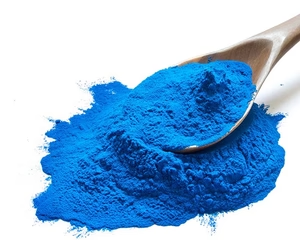
Shift from Artificial to Natural Pigments
In recent years, there has been a significant shift from artificial to natural pigments across food, beverage, and nutraceutical industries. Consumers today are more health-conscious and ingredient-aware, demanding products that are not only vibrant and visually appealing but also clean, safe, and sustainably sourced. This trend has propelled natural colorants into the spotlight, particularly Phycocyanin / Blue Spirulina — a brilliant blue pigment derived from the microalgae Spirulina.
Unlike traditional synthetic blue food color additives, which are often associated with regulatory scrutiny and growing consumer skepticism, Blue Spirulina manufacturers in India are gaining traction for offering a natural, plant-based alternative with a strong nutritional profile. Phycocyanin — the key bioactive compound in Blue Spirulina — not only delivers a striking hue but also comes with antioxidant and immune-supporting benefits, making it an attractive choice for formulators and buyers alike.
Natural vs Synthetic Color Sources
The choice between natural and synthetic color sources plays a major role in product quality, consumer trust, and regulatory acceptance. As clean-label demand rises globally, buyers are increasingly comparing traditional artificial colors with natural alternatives such as Phycocyanin / Blue Spirulina. Synthetic blue food colors are chemically produced pigments designed to deliver strong, stable color at a low cost. While they offer consistency and heat stability, many synthetic dyes face growing regulatory restrictions and consumer resistance due to concerns about long-term health effects and artificial additives on ingredient labels.
Health & Safety Comparison
When comparing Phycocyanin / Blue Spirulina with synthetic blue food colors, health and safety are among the most important factors influencing buyer decisions. As global regulations tighten and consumer awareness increases, natural pigments are increasingly preferred over artificial alternatives.
Phycocyanin / Blue Spirulina: A Natural & Safer Option
Phycocyanin, the blue pigment extracted from spirulina, is a naturally occurring protein with well-documented health benefits. It is free from harmful chemicals and is considered safe for regular consumption when produced under certified conditions. Many Blue Spirulina manufacturers in India follow international food safety standards such as FSSAI, ISO, HACCP, and GMP, ensuring high levels of purity and quality.

Regulatory Approval Differences
When comparing Phycocyanin / Blue Spirulina with conventional synthetic blue food colors, one of the most critical considerations for buyers is the regulatory landscape governing their use. Regulatory frameworks around food colorants directly impact product formulation, market access, and compliance costs — making it essential for brands and purchasers to understand how natural and artificial pigments are treated differently across regions.
Blue Spirulina manufacturers in India benefit from a growing global acceptance of Blue Spirulina / Phycocyanin as a safe, natural food-grade pigment. Phycocyanin — the vibrant blue compound extracted from Spirulina — has received approvals or positive assessments in many key markets, including the United States and Europe, where regulatory bodies such as the FDA and EFSA recognize its safety when used within specified limits. This has enabled Indian producers to export Blue Spirulina-based colorants internationally with fewer barriers compared to certain synthetic dyes that face tighter restrictions or are banned in some jurisdictions due to health concerns.
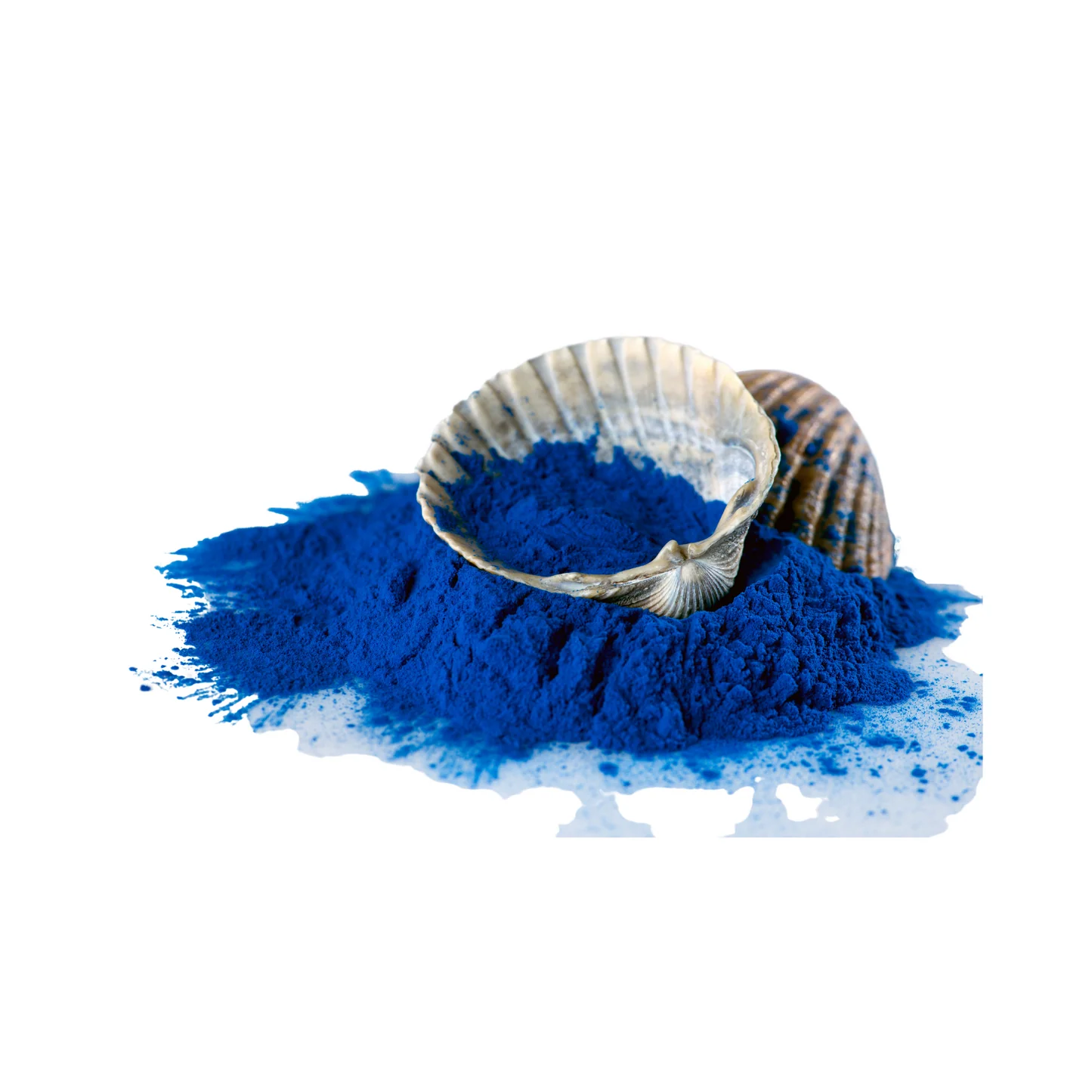
Color Intensity Comparison
When evaluating natural and synthetic blue colorants, one of the most critical factors for buyers is color intensity — the strength and vividness of the shade produced at given concentrations. Phycocyanin / Blue Spirulina, the natural pigment sourced from Spirulina algae, offers a unique blue hue that is highly sought after by food and beverage brands emphasizing clean labels and natural ingredients.
Phycocyanin / Blue Spirulina generally delivers a softer, more translucent blue compared to the sharper, more concentrated tones typical of synthetic blue food colorants. This makes Blue Spirulina particularly appealing for applications where a subtle, visually pleasing color is desired, such as in smoothies, dairy products, confectionery, and health drinks. However, achieving a deeply saturated blue with Phycocyanin / Blue Spirulina often requires higher usage levels than synthetic alternatives, which can influence formulation decisions.
Heat & pH Stability
When comparing Phycocyanin / Blue Spirulina with synthetic blue food colors, heat and pH stability are key factors buyers must consider. Phycocyanin, the natural blue pigment extracted from spirulina, is sensitive to high temperatures and extreme pH levels. It performs best in low-heat processing and in products with a neutral to mildly acidic pH range (around pH 5.5–7).
Due to this sensitivity, Blue Spirulina manufacturers in India use advanced extraction, filtration, and drying technologies to preserve pigment quality and color intensity. Cold processing, spray drying under controlled conditions, and protective packaging help maintain the stability of Phycocyanin during storage and transportation. However, prolonged exposure to heat above 60°C or highly acidic environments may cause color fading.
Cost Comparison
When comparing Phycocyanin / Blue Spirulina with synthetic blue food colors, cost often emerges as a key decision factor for buyers. Natural pigments like Phycocyanin tend to command a premium price due to factors such as cultivation, extraction processes, and quality assurance standards. In contrast, synthetic blue food colors are generally less expensive to produce at scale, benefiting from well-established petrochemical supply chains and lower processing costs.
Consumer Perception & Label Claims
Consumer perception plays a crucial role in the growing preference for natural food colors over synthetic alternatives. Modern consumers actively read ingredient labels and are increasingly influenced by terms such as natural, plant-based, clean label, and chemical-free. In this context, Phycocyanin / Blue Spirulina has emerged as a highly trusted natural pigment that aligns well with current market expectations.
Products colored with Phycocyanin / Blue Spirulina are perceived as healthier and safer compared to synthetic blue food colors. Unlike artificial additives that may carry E-numbers or FD&C codes, Blue Spirulina can be clearly labeled as spirulina extract or phycocyanin, which enhances transparency and brand credibility. This positive labeling advantage directly influences purchase decisions, especially in categories such as health beverages, functional foods, supplements, and children’s products.
Market Demand Trends
The global food and beverage industry is undergoing a transformative shift as health-conscious consumers increasingly favor clean-label and naturally sourced ingredients over synthetic alternatives. This evolution in preference has notably influenced the colorants market, where natural pigments are rapidly replacing artificial dyes due to growing awareness about health concerns and regulatory pressure on synthetic additives. In this changing landscape, Phycocyanin / Blue Spirulina has emerged as one of the most sought-after natural blue pigments, capturing attention for its vibrant hue and associated health benefits.
Blue Spirulina manufacturers in India are strategically positioned to capitalize on this surge in demand. India’s established capacity for spirulina cultivation, combined with competitive production costs, has enabled domestic suppliers to serve both national and international markets effectively. As brands across food, nutraceuticals, cosmetics, and beverages seek safer and more sustainable coloring solutions, there’s a pronounced uptick in sourcing Phycocyanin — the bioactive compound responsible for the characteristic blue color of Spirulina. Its dual appeal as a functional ingredient with antioxidant properties and a visually striking pigment makes it particularly attractive in premium and health-oriented product segments.
Is Blue Spirulina safer than synthetic blue?
Does Blue Spirulina fully replace artificial food color?
Is Blue Spirulina suitable for clean-label products?
Why is natural blue more expensive than synthetic blue?
Which industries prefer Blue Spirulina?
Algology — microalgae manufacturer & exporter in India
Explore our solutions: Spirulina Manufacturers in India · Blue Spirulina Manufacturers in India · Phycocyanin Manufacturers in India.