
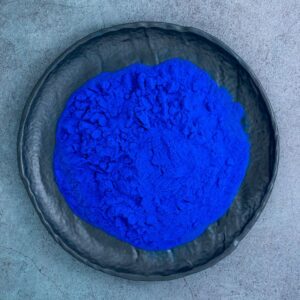
What Are Synthetic Blue Colorants?
Synthetic blue colorants are artificially produced dyes created through chemical processes rather than derived from natural sources. They have long been used across the food, beverage, pharmaceutical, cosmetic, and textile industries because of their intense color strength, low cost, and high stability under heat, light, and varying pH conditions.
Common synthetic blue colorants include Brilliant Blue FCF (FD&C Blue No. 1) and Indigotine (FD&C Blue No. 2). These dyes are petroleum-based and are widely used in products such as soft drinks, candies, ice creams, baked goods, syrups, mouthwashes, and personal care formulations. Their ability to deliver consistent shades of blue made them the industry standard for decades.
Health & Regulatory Concerns with Artificial Colors
Artificial food colorants have long been used to enhance visual appeal, but increasing scientific scrutiny and consumer awareness have raised serious concerns about their safety and long-term health impact. Synthetic blue dyes such as Brilliant Blue (E133) and Blue No. 1 are petroleum-derived and have been linked in various studies to hyperactivity in children, allergic reactions, and potential toxicity when consumed in excess. While these colorants are legally permitted within specified limits, many health-conscious consumers are choosing to avoid products containing artificial additives altogether. From a regulatory standpoint, global food authorities are tightening norms around synthetic colors. Several artificial dyes face partial bans, warning label requirements, or usage restrictions across regions such as the European Union, the United Kingdom, and parts of Asia. In contrast, regulations continue to evolve, creating compliance challenges for food and beverage manufacturers that rely heavily on synthetic colorants. Constant monitoring, reformulation costs, and the risk of future bans make artificial colors a less sustainable long-term option. Blue spirulina manufacturers in India use standardized analytical methods, such as spectrophotometric absorbance ratios, to classify phycocyanin into different purity grades. Higher purity levels result in a more vibrant blue color, improved stability, and fewer impurities like chlorophyll or residual proteins. These factors are critical when phycocyanin is used in sensitive applications such as functional foods, nutraceuticals, cosmetics, and pharmaceuticals. Understanding phycocyanin purity helps buyers assess product quality, compare suppliers, and select the right grade based on intended use. Whether for natural food coloring or high-value health formulations, purity directly impacts performance, safety, and regulatory compliance.
Advantages of Natural Blue Spirulina
Blue spirulina, derived from the cyanobacterium Arthrospira platensis, has emerged as a preferred alternative to synthetic blue colorants due to its natural origin and multiple benefits. Some of the key advantages include:
Clean-Label Appeal
As consumers increasingly demand transparency in ingredients, blue spirulina offers a natural and recognizable source of color. It aligns perfectly with clean-label trends, making it ideal for health-conscious buyers.Rich in Phycocyanin
Blue spirulina is a powerhouse of phycocyanin, a potent antioxidant pigment that not only provides its striking blue hue but also offers anti-inflammatory and immune-supporting properties.

Color Performance Comparison
When evaluating blue spirulina against synthetic blue colorants, several aspects of colour performance come into play, including vibrancy, stability, solubility, and versatility in different applications.
1. Vibrancy and Visual Appeal:
Synthetic blue colorants, such as Brilliant Blue FCF (E133), are known for their intense and uniform blue hue that remains consistent across batches. Blue spirulina, derived from phycocyanin, offers a slightly softer, turquoise-blue shade. While it may appear less intense on its own, it creates a more natural and appealing look in foods and beverages, which is highly valued by health-conscious consumers.
2. Stability under Various Conditions:
Synthetic blues are chemically stable under a wide range of pH levels, light exposure, and heat, making them ideal for processed foods. Blue spirulina, however, is sensitive to extreme pH and high temperatures, which can cause fading or color changes. Despite this, modern extraction and stabilization techniques by Indian manufacturers have significantly improved its thermal and pH stability, widening its usability.

Stability in Food & Beverage Applications
One of the major challenges in using natural colorants is their stability under different food processing conditions. Unlike synthetic blue colorants, which maintain their hue across varying temperatures, pH levels, and light exposure, natural pigments like blue spirulina (phycocyanin) can be sensitive to heat, acidity, and prolonged storage.
However, Indian manufacturers are making significant strides in improving stability. Through advanced extraction methods, microencapsulation techniques, and controlled formulation, blue spirulina can now retain its vibrant color in products ranging from beverages, ice creams, and dairy items to baked goods. These innovations not only preserve the aesthetic appeal of the food but also maintain the nutritional benefits of the pigment.
As a result, more food and beverage companies are confidently replacing synthetic blues with natural spirulina-based colors, aligning with the growing consumer demand for clean-label, visually appealing, and safe products.
Cost Comparison: Natural vs Synthetic
When choosing between natural blue spirulina and synthetic blue colorants, cost is often a key consideration for manufacturers. Synthetic colorants, such as FD&C Blue No. 1, are widely available and inexpensive due to large-scale chemical production. They offer consistent hue and high stability, which reduces wastage and simplifies formulation.
On the other hand, natural blue spirulina, derived from the microalgae Arthrospira platensis, comes at a higher production cost. The cultivation, harvesting, and extraction of phycocyanin—the pigment responsible for the blue color—require specialized facilities, controlled conditions, and careful processing to maintain purity and vibrancy.
Consumer Trends Driving the Shift
The shift from synthetic to natural blue colorants is largely fueled by evolving consumer preferences. Today’s consumers are more health-conscious and label-savvy, actively seeking products free from artificial additives, preservatives, and synthetic dyes. Concerns about potential long-term health effects of chemical colorants, such as hyperactivity in children or allergic reactions, have further heightened demand for natural alternatives.
In addition, millennial and Gen Z buyers are driving the market with their strong preference for clean-label, plant-based, and sustainably sourced ingredients. Social media and wellness influencers amplify this trend, making naturally colored foods not just a choice but a lifestyle statement. Consumers also increasingly associate natural colors like blue spirulina with functional benefits, such as antioxidants and protein content, adding perceived nutritional value beyond aesthetics.
Role of Indian Manufacturers in Clean-Label Movement
Indian manufacturers are increasingly at the forefront of the clean-label movement, responding to growing consumer demand for transparency, natural ingredients, and healthier products. Leveraging both traditional knowledge and modern technology, they are pioneering solutions that replace synthetic additives with natural alternatives—like plant-based colorants, preservatives, and flavorings—without compromising on quality or shelf life. By focusing on innovation, sustainability, and regulatory compliance, Indian manufacturers are not only meeting domestic demand but also positioning themselves as leaders in the global shift toward clean-label, safe, and environmentally conscious food products.
Brand Success Stories Using Blue Spirulina
As consumer demand for natural, clean-label ingredients continues to surge, brands are increasingly turning to blue spirulina to add vibrant color and nutritional appeal to their products. This naturally derived pigment not only replaces artificial blue colorants but also brings added health benefits like antioxidants and proteins, making it a powerful marketing and functional ingredient. Across India and beyond, several innovative brands have leveraged blue spirulina to stand out in the crowded food, beverage, and wellness markets. Their success stories highlight how embracing natural colorants can enhance product appeal, foster consumer trust, and even open doors to new market segments.
1. Is blue spirulina safer than synthetic colors?
2. Does it replace all artificial blue dyes?
3. Is natural color more expensive?
4. Do regulations favor natural colors?
5. Is color consistency reliable?
Algology — microalgae manufacturer & exporter in India
Explore our solutions: Spirulina Manufacturers in India · Blue Spirulina Manufacturers in India · Phycocyanin Manufacturers in India.