

Understanding purity grades and why they matter
Phycocyanin purity grades play a crucial role in determining the quality, performance, and application of blue spirulina extracts. As demand for natural blue pigments and functional ingredients grows across food, nutraceutical, cosmetic, and pharmaceutical industries, understanding these purity levels has become essential for buyers and formulators alike. Blue spirulina manufacturers in India categorize phycocyanin based on concentration, color intensity, and protein integrity, which directly influence its stability, solubility, and end-use suitability.
Different purity grades are designed to meet specific industry requirements—ranging from cost-effective food coloring to high-purity formulations used in health supplements and biomedical research. Choosing the right grade not only impacts product appearance and efficacy but also ensures compliance with regulatory standards and export quality benchmarks. By understanding how purity grades are defined and measured, businesses can make informed sourcing decisions and maximize the value of phycocyanin in their applications.
What Is Phycocyanin Purity?
Phycocyanin purity refers to the concentration and quality level of the blue pigment protein extracted from spirulina. It is typically measured as a ratio that compares the amount of phycocyanin present to the total protein content in the extract. This purity ratio indicates how clean, concentrated, and effective the phycocyanin is for various industrial applications. Blue spirulina manufacturers in India use standardized analytical methods, such as spectrophotometric absorbance ratios, to classify phycocyanin into different purity grades. Higher purity levels result in a more vibrant blue color, improved stability, and fewer impurities like chlorophyll or residual proteins. These factors are critical when phycocyanin is used in sensitive applications such as functional foods, nutraceuticals, cosmetics, and pharmaceuticals. Understanding phycocyanin purity helps buyers assess product quality, compare suppliers, and select the right grade based on intended use. Whether for natural food coloring or high-value health formulations, purity directly impacts performance, safety, and regulatory compliance.
Optical Density (OD) Values Explained
Optical Density (OD) is the most widely used measurement for determining the purity and quality of phycocyanin extracted from blue spirulina. Blue spirulina manufacturers in India rely on OD values to classify phycocyanin into different grades, as it directly reflects the concentration and color strength of the pigment. In simple terms, a higher OD value indicates greater purity, deeper blue color intensity, and better functional performance.
OD values are calculated by measuring the absorbance of phycocyanin at specific wavelengths using a spectrophotometer. The ratio of absorbance at 620 nm (phycocyanin) to 280 nm (total protein) helps manufacturers assess how pure the phycocyanin extract is. Based on this ratio, phycocyanin is commonly categorized into food grade, cosmetic grade, reagent grade, and analytical grade, each suited for different industrial applications.
Common Purity Grades (E3, E6, E10, E18+)
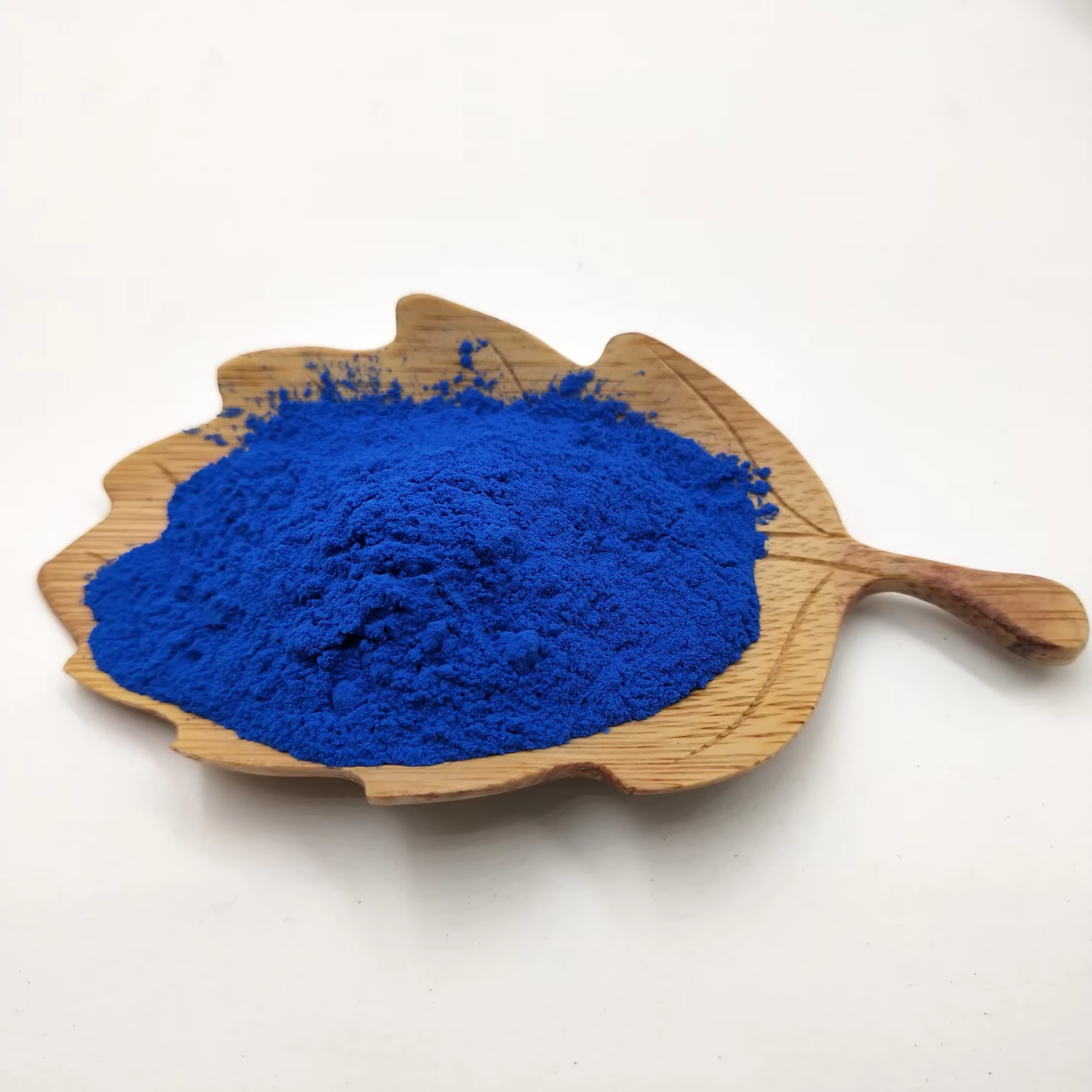
Blue spirulina manufacturers in India classify phycocyanin purity using the E-value system, which represents the ratio of light absorbance at 620 nm (phycocyanin) to 280 nm (total protein). A higher E-value indicates greater phycocyanin concentration, deeper blue color, and higher functional performance. Each grade is suited for specific commercial and industrial applications.
E3 Grade (Food Grade)
E3 phycocyanin is considered a basic food-grade purity level. It offers a light blue shade and is commonly used in confectionery, beverages, dairy products, and baked goods where mild coloration is sufficient. Indian manufacturers supply E3 grade as a cost-effective solution for large-scale food applications requiring natural coloring rather than high bioactivity.
E6 Grade (Premium Food & Cosmetic Grade)
E6 purity provides a more vibrant blue color with improved stability and solubility. This grade is widely used in premium food products, cosmetics, and personal care formulations. Blue spirulina manufacturers in India often recommend E6 phycocyanin for applications that demand better color consistency and enhanced antioxidant properties.
Food-Grade vs Cosmetic-Grade vs Pharma-Grade Phycocyanin
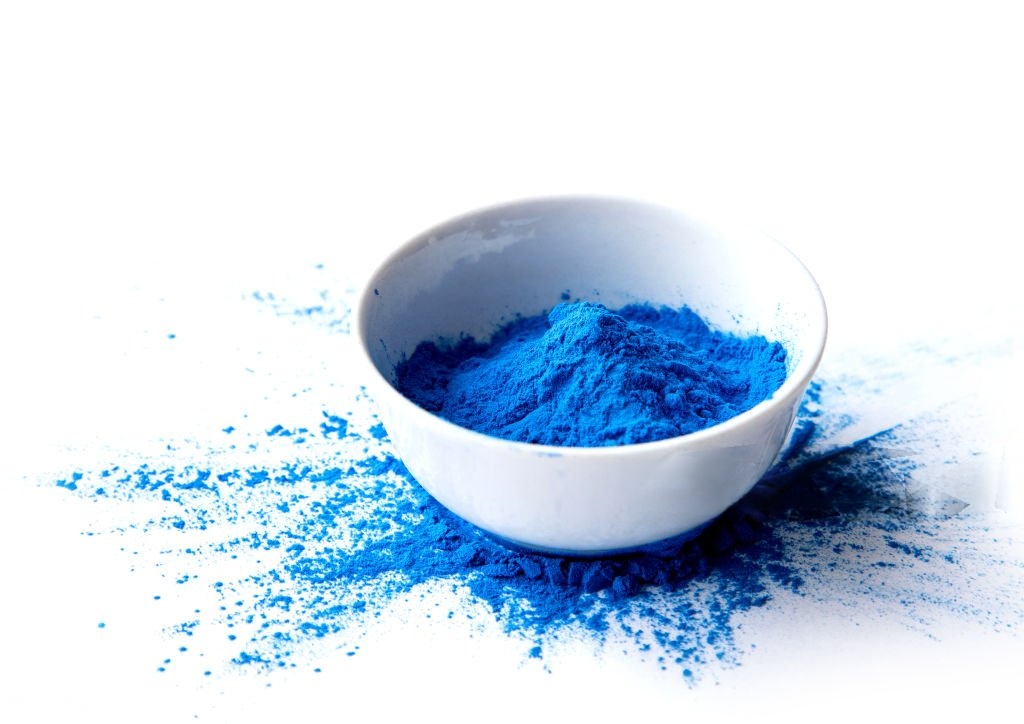
Blue spirulina manufacturers in India produce phycocyanin in different purity grades to meet the specific safety, stability, and performance requirements of various industries. Each grade is defined by its extraction method, purity ratio, regulatory compliance, and intended application.
Food-Grade Phycocyanin
Food-grade phycocyanin is the most commonly used grade and is primarily intended for natural coloring and nutritional enhancement in food and beverage products. It typically has moderate purity levels and is extracted using water-based, food-safe processes.
This grade is widely used in confectionery, beverages, dairy products, desserts, and health foods where vibrant blue color and antioxidant properties are required. Food-grade phycocyanin complies with food safety standards such as FSSAI in India and international regulations for export markets. While it offers good color intensity, it may have lower stability under heat and light compared to higher grades.
Pharmaceutical Research Developments
Blue spirulina, rich in phycocyanin, is attracting significant attention in pharmaceutical research due to its potent antioxidant, anti-inflammatory, and immune-boosting properties. Researchers in India are exploring its potential in developing supplements that can support liver health, reduce oxidative stress, and even aid in chronic disease management. Additionally, ongoing studies are examining phycocyanin’s role in neuroprotection and cardiovascular health, opening new possibilities for functional medicines and nutraceutical products.
For manufacturers, these research developments present opportunities to collaborate with academic institutions, participate in clinical trials, and create high-purity, standardized extracts tailored for pharmaceutical applications. As scientific validation continues, blue spirulina could move beyond dietary supplements to become a key ingredient in therapeutic formulations, further solidifying its place in India’s growing health and wellness market.
How Indian Manufacturers Achieve High Purity
Indian blue spirulina manufacturers achieve high phycocyanin purity through a combination of controlled cultivation practices, advanced extraction technologies, and stringent quality management systems. The process begins at the cultivation stage, where spirulina is grown in carefully monitored environments with optimized pH, temperature, light exposure, and nutrient balance. These controlled conditions help maximize phycocyanin concentration while minimizing contamination from unwanted pigments or microbes.
Once harvested, manufacturers employ gentle yet efficient extraction methods such as aqueous extraction, membrane filtration, and low-temperature processing to preserve the molecular integrity of phycocyanin. Advanced purification techniques like ultrafiltration and chromatography further enhance purity by removing proteins, chlorophyll, and other impurities. Many Indian producers also use food-grade and solvent-free processes, ensuring the final product meets clean-label and international safety standards.
Purity vs Color Intensity Relationship
The relationship between phycocyanin purity and color intensity is one of the most critical factors evaluated by blue spirulina manufacturers in India. Purity refers to the concentration of phycocyanin protein relative to other compounds, while color intensity reflects the depth and vibrancy of the blue pigment produced. As purity levels increase, the blue color becomes more vivid, stable, and uniform, making high-purity grades more desirable for premium applications.
Lower-purity phycocyanin typically appears lighter or slightly greenish due to the presence of chlorophyll, carbohydrates, and other residual proteins. These grades are commonly used in applications where cost efficiency is prioritized over visual brilliance, such as basic food coloring or animal feed supplements. In contrast, higher-purity grades deliver a deep, bright blue hue with superior clarity, which is essential for beverages, confectionery, cosmetics, and nutraceutical formulations.
Stability Challenges at Higher Purity
While higher-purity phycocyanin is valued for its intense blue color and enhanced functional properties, it also presents significant stability challenges. As purification levels increase, protective proteins and natural stabilizing compounds present in lower-grade extracts are reduced or removed. This makes high-purity phycocyanin more sensitive to external factors such as heat, light, pH fluctuations, and oxidation.
Blue spirulina manufacturers in India often address these challenges during extraction and post-processing stages. High-purity phycocyanin tends to degrade faster when exposed to temperatures above 45°C, acidic environments, or prolonged light exposure, leading to color fading and reduced bioactivity. Moisture control and oxygen exposure during storage also play a critical role in maintaining stability.
Choosing the Right Grade for Your Application
Selecting the appropriate phycocyanin purity grade is essential to achieve the desired performance, visual appeal, and regulatory compliance of the final product. Blue spirulina manufacturers in India typically offer multiple grades to cater to diverse industrial needs, and understanding these distinctions helps businesses optimize both quality and cost.
For food and beverage applications, such as confectionery, beverages, dairy products, and natural color blends, lower to mid-range purity grades are often sufficient. These grades provide vibrant blue color, good solubility, and cost efficiency, making them ideal for large-scale consumption products where visual impact is a priority.
In nutraceutical and dietary supplement formulations, higher purity grades are preferred due to their enhanced protein concentration and antioxidant properties. These grades ensure better bioavailability, consistent potency, and compliance with quality standards required for capsules, tablets, and powdered supplements.
Cost Implications of Higher Purity Levels
Higher phycocyanin purity levels directly influence production costs, pricing, and overall value. Blue spirulina manufacturers in India invest significantly more resources to achieve high-purity grades, as these require advanced extraction techniques, multiple filtration stages, and strict quality control measures. Each additional purification step increases processing time, energy consumption, and operational complexity, contributing to higher manufacturing costs.
Raw material selection also plays a key role in pricing. High-purity phycocyanin demands premium-quality spirulina biomass cultivated under controlled conditions to minimize contamination and pigment degradation. Manufacturers must maintain precise temperature, pH, and light conditions during cultivation and extraction, further adding to production expenses. In contrast, lower purity grades allow for more flexible processing parameters and reduced input costs.
What OD value is considered high purity?
Is higher purity always better?
Can one manufacturer supply multiple grades?
How is purity tested?
Does purity affect shelf life?
Algology — microalgae manufacturer & exporter in India
Explore our solutions: Spirulina Manufacturers in India · Blue Spirulina Manufacturers in India · Phycocyanin Manufacturers in India.