

What Lies Ahead for the Industry
The blue spirulina industry in India is poised for remarkable growth, driven by rising consumer awareness of natural superfoods and the increasing demand for plant-based, nutrient-rich ingredients in food, beverages, and cosmetics. As health and wellness trends continue to dominate lifestyle choices, manufacturers are exploring innovative production techniques, higher purity extraction methods, and sustainable cultivation practices to meet evolving market expectations. Additionally, the expansion of e-commerce and global export opportunities is opening new avenues for Indian producers to compete on the international stage. With technology advancements and strategic investments, the industry is set to evolve from a niche market into a mainstream segment, redefining how blue spirulina is sourced, processed, and consumed.
Growing Global Demand
The global appetite for natural superfoods and clean-label ingredients is driving a surge in demand for blue spirulina, and India is emerging as a key player in this trend. Consumers across North America, Europe, and Asia are increasingly seeking plant-based alternatives rich in nutrients, antioxidants, and natural pigments, making blue spirulina an attractive choice for food, beverage, and cosmetic applications. This rising international demand encourages Indian manufacturers to scale up production, improve product quality, and adopt internationally recognized certifications to gain a competitive edge. As export opportunities expand, Indian producers have the potential to establish themselves as reliable suppliers in a rapidly growing global market, positioning the country as a hub for premium, high-purity blue spirulina.
Advances in Extraction Technology
One of the most significant factors shaping the future of blue spirulina manufacturing in India is the rapid advancement in extraction technology. Traditionally, extracting phycocyanin—the vibrant blue pigment—from spirulina was a labor-intensive process that often resulted in lower yields and compromised purity. However, modern techniques are revolutionizing production, making it more efficient, sustainable, and cost-effective.
Emerging methods such as ultrasonic-assisted extraction, membrane filtration, and enzyme-based processes allow manufacturers to obtain higher-purity phycocyanin while preserving its nutritional and antioxidant properties. These innovations not only improve product quality but also reduce processing time and energy consumption, aligning with growing sustainability goals.
Furthermore, advances in cold extraction and non-chemical methods are gaining traction, ensuring that the final blue spirulina products are free from contaminants and suitable for sensitive applications in nutraceuticals, functional foods, and cosmetics. As Indian manufacturers adopt these cutting-edge techniques, they are better positioned to meet both domestic and international quality standards, driving the industry toward a more competitive and globally recognized future.

Higher Purity & Stability Innovations
One of the most significant trends shaping the future of blue spirulina manufacturing in India is the focus on higher purity and stability of phycocyanin, the vibrant blue pigment that defines the product. Consumers and industries alike are demanding extracts that are not only visually striking but also nutritionally potent and shelf-stable, making innovations in extraction and processing critical.
Manufacturers are investing in advanced filtration, freeze-drying, and microencapsulation techniques to enhance purity levels and extend the shelf life of blue spirulina powder and liquid extracts. These innovations reduce degradation caused by heat, light, and pH variations, ensuring consistent quality in food, beverages, cosmetics, and nutraceutical applications.
Additionally, research into natural stabilizers and eco-friendly solvents is gaining momentum, allowing producers to deliver high-performance extracts without compromising on sustainability. As these technologies mature, Indian manufacturers are expected to meet international quality standards more efficiently, positioning themselves as reliable suppliers in both domestic and global markets.
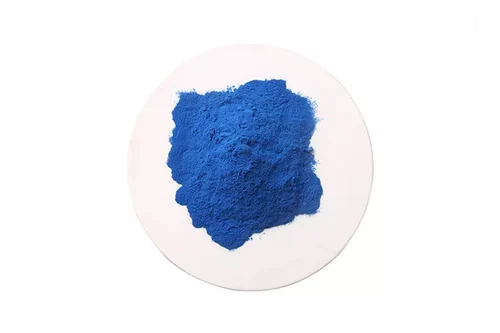
New Food & Beverage Applications
The versatility of blue spirulina is opening exciting opportunities for food and beverage manufacturers in India. Traditionally used as a natural colorant, it is now being incorporated into a wide range of products—from smoothies, energy drinks, and dairy alternatives to confectioneries, bakery items, and even gourmet ice creams. Its vibrant blue hue, combined with high nutritional value and antioxidant properties, allows brands to create visually appealing and health-conscious offerings that resonate with younger, wellness-focused consumers.
Moreover, innovative applications are emerging in functional foods, such as protein bars and nutraceutical beverages, where blue spirulina not only enhances aesthetics but also adds measurable health benefits. As Indian consumers increasingly seek products that are natural, safe, and nutritionally enriched, manufacturers are experimenting with blends, fortification, and ready-to-drink formats, making blue spirulina a key ingredient in the next generation of functional food and beverage products.
Pharmaceutical Research Developments
Blue spirulina, rich in phycocyanin, is attracting significant attention in pharmaceutical research due to its potent antioxidant, anti-inflammatory, and immune-boosting properties. Researchers in India are exploring its potential in developing supplements that can support liver health, reduce oxidative stress, and even aid in chronic disease management. Additionally, ongoing studies are examining phycocyanin’s role in neuroprotection and cardiovascular health, opening new possibilities for functional medicines and nutraceutical products.
For manufacturers, these research developments present opportunities to collaborate with academic institutions, participate in clinical trials, and create high-purity, standardized extracts tailored for pharmaceutical applications. As scientific validation continues, blue spirulina could move beyond dietary supplements to become a key ingredient in therapeutic formulations, further solidifying its place in India’s growing health and wellness market.
Personalized Nutrition Trends
The era of one-size-fits-all nutrition is gradually giving way to personalized dietary solutions, and blue spirulina is positioned to play a key role in this shift. Consumers today are increasingly seeking nutrition tailored to their unique health profiles, lifestyles, and wellness goals. Advances in data analytics, wearable health devices, and genetic testing are enabling manufacturers to develop products that cater to individual nutrient needs. For blue spirulina producers in India, this trend presents opportunities to create customized formulations—such as high-phycocyanin extracts for immune support, antioxidant-rich blends for skin health, or low-calorie variants for weight management. By aligning product development with personalized nutrition insights, manufacturers can tap into premium markets and strengthen brand loyalty, while also contributing to a more health-conscious society.
Expansion of Export Markets
Indian blue spirulina manufacturers are increasingly looking beyond domestic boundaries as global demand for natural, plant-based superfoods continues to surge. Countries in North America, Europe, and the Asia-Pacific region are witnessing a growing appetite for clean-label ingredients in health supplements, functional beverages, and cosmetics, creating significant export opportunities for Indian producers. With stringent quality standards and certifications becoming key differentiators, manufacturers are investing in premium-grade extraction processes and compliance measures to meet international requirements.
Automation in Manufacturing
Automation is emerging as a game-changer for blue spirulina manufacturers in India. From controlled cultivation in photobioreactors to precision harvesting and extraction processes, automated systems ensure higher efficiency, consistent quality, and minimal human error. By integrating sensors, real-time monitoring, and AI-driven process controls, manufacturers can optimize growth conditions, reduce resource wastage, and scale production to meet increasing demand. Beyond efficiency, automation also plays a crucial role in maintaining the purity and potency of phycocyanin, the active blue pigment, which is highly sensitive to environmental variations. As the industry grows, embracing automation will be key for Indian manufacturers to stay competitive globally while meeting stringent quality standards.
Regulatory Evolution
As the blue spirulina market in India grows, regulatory frameworks are evolving to ensure safety, quality, and standardization across the industry. The Food Safety and Standards Authority of India (FSSAI) has begun to focus on clear guidelines for natural food colorants and nutritional supplements, including labeling requirements, purity standards, and permissible usage limits. For manufacturers, staying compliant is becoming both a challenge and an opportunity—those who proactively adapt to regulations can gain consumer trust and a competitive edge in domestic and international markets.
Moreover, global export potential is driving Indian producers to align with international standards such as ISO certifications and the European Union’s Novel Food regulations. As regulatory oversight becomes stricter, it will encourage transparency, higher-quality production practices, and innovative methods to achieve consistent phycocyanin concentrations while maintaining sustainability. This evolution is not just about compliance; it is shaping the foundation for a robust, trustworthy, and globally competitive blue spirulina industry in India.
India’s Long-Term Global Position
India is emerging as a key player in the global blue spirulina market, thanks to its favorable climate, abundant natural resources, and growing expertise in sustainable cultivation practices. With the country already supplying to major international markets, Indian manufacturers are increasingly focusing on quality, consistency, and scalability to strengthen their global footprint. Investments in research, advanced extraction technologies, and compliance with international standards are positioning India not just as a supplier, but as a trusted leader in premium blue spirulina. Over the long term, this strategic approach is expected to enhance India’s competitiveness, enabling manufacturers to capture larger market shares, drive exports, and establish the nation as a hub for innovation in the natural superfood industry.
1. Is blue spirulina demand growing?
2. Will prices reduce in the future?
3. Are new applications emerging?
4. Will regulations become stricter?
5. Is India competitive globally?
Algology — microalgae manufacturer & exporter in India
Explore our solutions: Spirulina Manufacturers in India · Blue Spirulina Manufacturers in India · Phycocyanin Manufacturers in India.