
Phycocyanin is no longer a lab curiosity — it’s a vibrant, marketable ingredient with applications across food and beverage, cosmetics, nutraceuticals, and natural colorants. For companies building brands around phycocyanin, the challenge is twofold: educate customers about what makes the pigment special, and translate that scientific appeal into a clear, trustable, and differentiated brand. Below are concrete branding strategies that combine science-forward clarity with consumer-facing storytelling.
1. Lead with education — make Phycocyanin accessible
Many consumers haven’t heard the term, or confuse it with generic “spirulina.” Create clear, digestible educational content that explains what phycocyanin is, how it’s sourced (microalgae/phycocyanin extract), and the specific benefits (natural blue pigment, antioxidant properties, potential functional ingredients). Use a tiered approach: Quick explainer (social posts, packaging callouts) Mid-length content (blog posts, explainer videos) Deep dives (whitepapers, downloadable product dossiers for B2B customers) Using visuals — molecular diagrams simplified into friendly graphics, before/after color demos, or short lab-to-shelf flowcharts — converts complex science into confident buying decisions.
2. Differentiate by application — speak to multiple audiences
Phycocyanin’s value changes with context. Build verticalized messaging for each target:
Food & beverage: focus on natural color, regulatory status (clean-label advantage), stability in various pH/processing conditions, and sensory impact.
Cosmetics: emphasize gentle, bright color, antioxidant profile, and clean-beauty credentials.
Supplements/Nutraceuticals: highlight purity, potency, and any bioactive data.
B2B ingredient buyers: provide technical specs, batch consistency, and supply-chain assurances.
Segmented landing pages, product datasheets, and tailored case studies make buyers feel the brand understands their specific problem.
3. Use transparency as a trust anchor
Trust is critical for novel ingredients. Commit to transparency across:
Source and provenance: where the algae are grown, harvested, and processed.
Purity and testing: show COAs, third-party lab results, and heavy-metal testing.
Manufacturing: outline your extraction and concentration processes, and any certifications (GMP, ISO, QAI, organic, etc.).
Sustainability claims: disclose water, energy use, or circular practices.
Make this information easy to find and digest — a “Transparency Hub” on the website builds credibility with both consumers and ingredient buyers.
4. Visual identity that sells color and science
Phycocyanin’s striking blue gives an immediate visual hook. Design choices should:
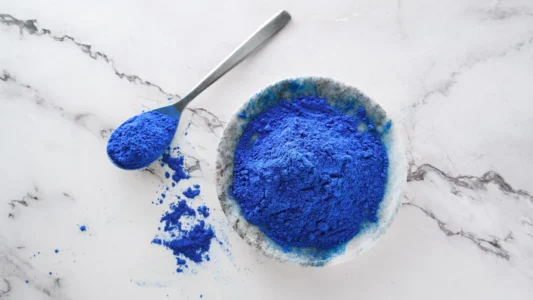
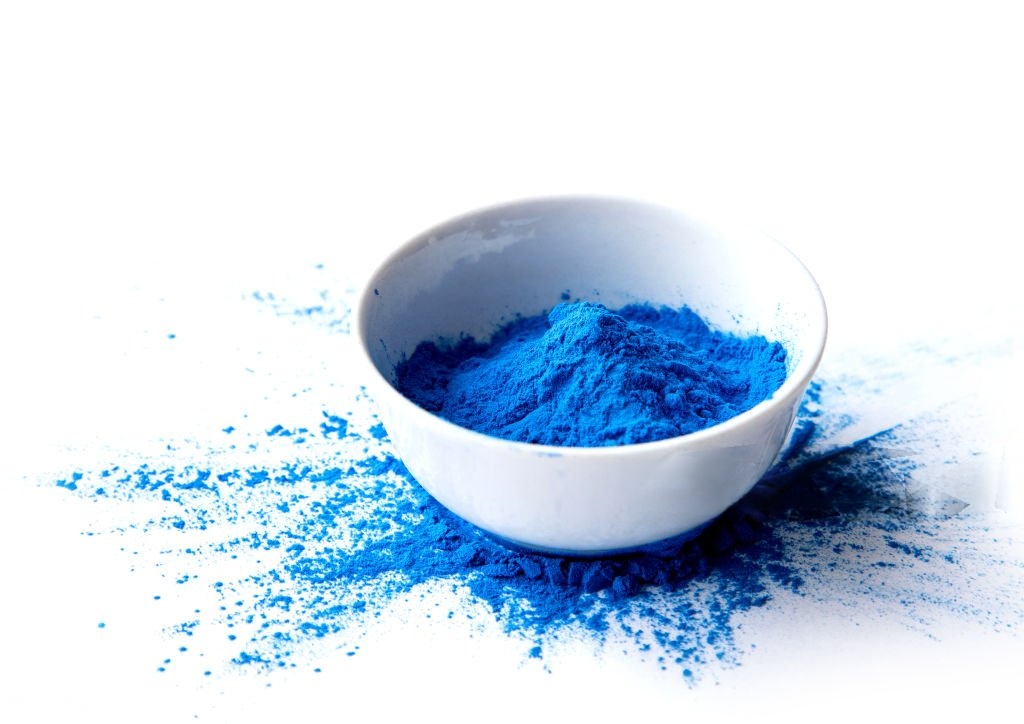
Use the pigment itself (or its close palette) in brand assets and packaging for instant recognition.
Pair the blue with clean, scientific typography and layout to balance wonder with authority.
Use high-contrast imagery that shows applications (a blue smoothie, a lipstick swatch, product formulation photos).
Avoid gimmicky neon blues; aim for an authentic, premium hue that signals natural origin.
5. Leverage storytelling — from microalgae to shelf
People connect to stories. Tell a concise narrative around your product’s journey: who grows the algae, how the extract is produced, and why it matters (health, sustainability, clean-label demand). Use founder stories, short factory-tour videos, and customer testimonials to humanize the brand without overclaiming benefits.
6. Proof points: science, certifications, and visible use-cases
Phycocyanin’s acceptance hinges on evidence:
Publish or summarize relevant studies and safety data.
Partner with reputable labs for third-party validation.
Pursue certifications that matter to your market (organic, non-GMO, cruelty-free, vegan, Halal/Kosher where relevant).
Showcase real product applications — formulators’ notes, recipe cards, or “formulation spotlight” case studies for B2B buyers.
7. Strategic partnerships and co-branding
Work with established brands (food manufacturers, cosmetic lines, chefs, influencers in natural living) to showcase phycocyanin in finished products. Co-branding or limited-edition drops with trend-forward partners can rapidly boost awareness and provide social proof.
8. Content & community marketing
Create a mix of evergreen and trend-driven content:
Recipes and DIY uses (for consumer markets)
Technical webinars and formulation guides (for B2B)
Social content that highlights color transformations, behind-the-scenes R&D, and sustainability wins
Build community through user-generated content challenges (e.g., “#BlueNaturally” recipe contest), and by supporting formulators with active developer communities or Slack groups.
9. Smart influencer and PR strategy
Select micro- and macro-influencers who align with clean-label, natural beauty, or functional foods. Provide them with data-backed talking points and product samples so stories are credible. For press, pitch angles that combine novelty (natural blue color), sustainability (algae cultivation), and innovation (new applications) to lifestyle, trade, and science outlets.
10. Pricing, packaging, and channel strategy
Pricing: position based on target buyers — premium for high-purity extracts and accessible for larger-volume food-grade pigments.
Packaging: use small, eye-catching containers for cosmetic/small-batch buyers and bulk, clearly-labeled drums for industrial customers. Include usage rates and storage guidance.
Channels: combine direct-to-consumer for finished goods with a strong B2B channel (ingredient sales, co-packing, white-labeling) to diversify revenue and adoption routes.
11. Regulatory posture and risk management
Be proactive about regulatory compliance in target markets (food additive approvals, cosmetic ingredient listings, dietary supplement regulations). Publish a clear regulatory page that explains permitted uses and regional status, which reduces friction for procurement and formulation teams.
12. Measure and iterate
Track metrics that matter: adoption rate among target verticals, time-to-first-purchase for B2B, repeat purchase for consumer goods, engagement on educational resources, and sentiment around sustainability claims. Use feedback loops from formulators and customers to refine claims, packaging, and technical support.
Algology — microalgae manufacturer & exporter in India
Explore our solutions: Spirulina Manufacturers in India · Blue Spirulina Manufacturers in India · Phycocyanin Manufacturers in India.