

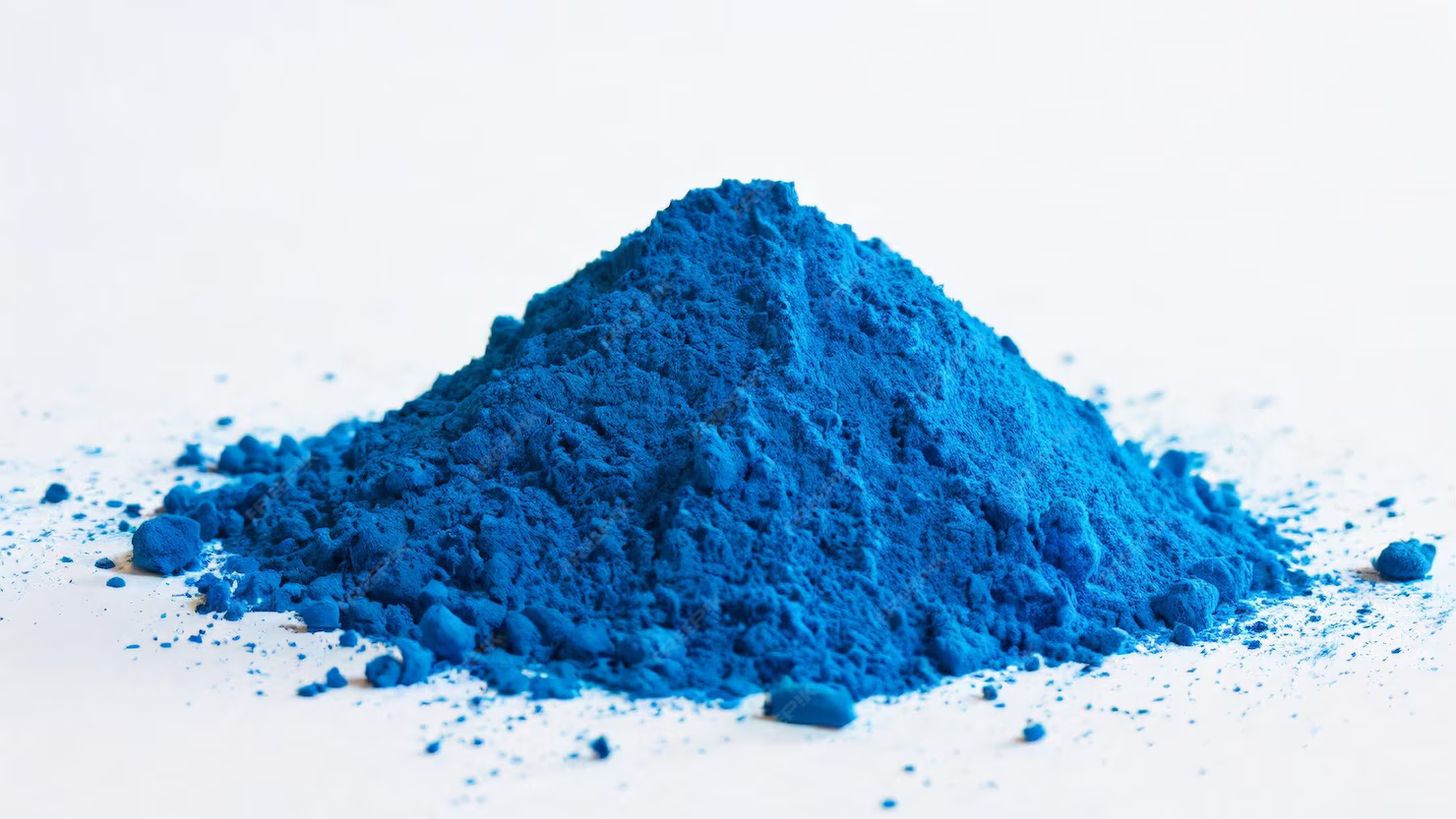
Blue spirulina extract — rich in phycocyanin and prized for its natural, vibrant blue color — is delicate. The molecule that gives it the signature hue is sensitive to light, heat, oxygen, pH shifts and moisture. Choosing the right packaging is therefore as important as formulation: poor packaging erodes color, potency and shelf life. This post outlines practical, industry-ready packaging solutions to preserve the stability of Blue spirulina extract from production through the consumer’s pantry.
Key degradation risks for Blue spirulina extract
Before picking materials, understand what attacks the pigment and activity: Light (especially UV/blue wavelengths) causes photodegradation and color loss. Oxygen accelerates oxidative breakdown of phycocyanin. Moisture can hydrolyze or enable microbial growth in powdered forms. Heat speeds up chemical degradation—thermal stability is limited. pH shifts can denature phycocyanin in liquid formulations. Packaging must create an environment that controls these stressors.
Primary packaging formats & recommendations
1. Sachets / stick packs (powdered Blue spirulina extract)
Best for single-serve food and beverage enhancers.
Use multi-layer laminates: polyester (PET) / aluminum foil / polypropylene (PP) or PET / metallized film / PE to provide high barrier to moisture, oxygen and light.
Heat-sealed edges for airtight closure.
Include nitrogen flushing on filling line to reduce residual oxygen to <1–2% before sealing.
Add desiccant-lined inner layer or small desiccant packets when feasible to control residual moisture.
2. Resealable stand-up pouches (powder)
Good for retail-size consumer packs.
Multi-layer barrier pouches with aluminum foil or metallized PET barrier.
Zip-lock with peel seal—but ensure initial foil/heat seal remains intact until first use.
Recommend oxygen scavenger sachet inside (iron-based) for longer shelf life.
Print storage instructions (“Store in a cool, dark place; refrigerate after opening”) and include a best-before date.
3. Bottles & jars (tablets, capsules, liquid concentrates)
For liquids, use amber or opaque glass bottles to block light and provide excellent inertness. Glass minimizes leachables.
For capsules/tablets, use HDPE or amber glass with airtight liners (induction-sealed foil + pressure-sensitive liner).
Headspace should be minimized; consider nitrogen blanketing prior to capping.
For liquids, add chelation/antioxidant strategies in formulation and pair with barrier packaging.
4. Blister & ampoules (single-dose liquid)
Single-dose aluminum/foil blisters or glass ampoules protect from light and oxygen and reduce repeated exposure risk.
Excellent for high-value applications (cosmetics, pharmaceuticals).
Secondary packaging & transport protection
Use outer cartons with opaque, printed boxes to shield primary packages from light and to provide physical protection.
Include temperature-control (insulated boxes, gel packs) when shipping to hot climates or for liquid concentrates. Avoid exposure above recommended storage temperatures during transport.
Use humidity indicators for shipments to high-humidity regions.
Active packaging aids (when extra protection is needed)
Oxygen scavengers: iron-based sachets or incorporated scavenging layers reduce oxygen in headspace—very effective for powdered Blue spirulina extract.
Desiccants: silica gel or molecular sieves for moisture control.
Modified atmosphere packaging (MAP): replace headspace with nitrogen or argon during sealing.
Light-blocking inks / coatings: UV absorbers in external inks or addition of opaque layers.
Labeling, instructions and regulatory compliance
Clearly label storage instructions: “Keep refrigerated after opening” or “Store in a cool, dry place below X°C.” Use specific temperature limits if known.
Declare batch number, manufacturing date and best-before for traceability.
Ensure food-grade materials and compliance with regional regulations (e.g., FSSAI, FDA, EU) for direct food contact materials.
For cosmetic or nutraceutical claims, ensure packaging labels meet regulatory and marketing compliance.
Practical checklist for manufacturers
Choose a primary package with high barrier to light, O₂ and moisture.
Implement nitrogen flushing or MAP on filling lines.
Add oxygen scavenger/desiccant for multi-use packs.
Use amber/opaque glass for liquids or metallized laminates for powders.
Validate with stability testing in real pack conditions.
Specify cold-chain procedures if heat sensitivity is high.
Train handling staff to avoid prolonged light/heat exposure.
Quality control & validation
Conduct accelerated stability testing (e.g., 40°C/75% RH) and real-time stability studies in the chosen package to set shelf life.
Test for oxygen ingress, water vapor transmission rate (WVTR), photostability and headspace oxygen levels post-seal.
Include microbial testing for products susceptible to contamination.
Conclusion
Preserving the vibrancy and activity of Blue spirulina extract requires a systems approach: choose the proper barrier materials, remove oxygen and moisture during filling, protect from light and temperature, and validate with stability testing. Thoughtful packaging design not only preserves color and potency but also builds consumer trust by ensuring a consistent, high-quality product every time.
Algology — microalgae manufacturer & exporter in India
Explore our solutions: Spirulina Manufacturers in India · Blue Spirulina Manufacturers in India · Phycocyanin Manufacturers in India.