
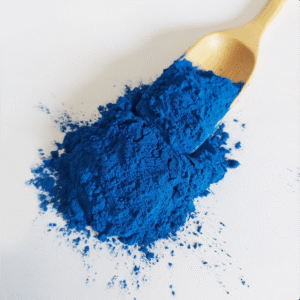
In recent years, the demand for natural colorants has skyrocketed, and among them, the Blue Extract from Spirulina stands out as one of the most fascinating and vibrant discoveries. Known for its stunning hue and impressive nutritional profile, this natural blue pigment is not just beautiful—it’s also clean-label, sustainable, and packed with antioxidants. But how exactly is this magical blue extracted from the humble spirulina algae? Let’s explore the journey of blue spirulina extract, right from cultivation to the final extraction.
What Is Blue Spirulina Extract?
Spirulina is a type of blue-green microalgae (technically cyanobacteria) that grows naturally in freshwater and alkaline lakes. It’s renowned as a superfood, rich in protein, vitamins, minerals, and antioxidants. The Blue Extract from Spirulina refers to phycocyanin—a brilliant blue pigment-protein complex that gives spirulina its distinct color. Phycocyanin is not only a natural coloring agent but also valued for its powerful antioxidant and anti-inflammatory properties. This makes it highly sought after in food, beverage, and cosmetic industries as a plant-based alternative to synthetic dyes.
Step 1: Cultivation of Spirulina
The journey begins with cultivating spirulina under controlled conditions. While it can grow in natural lakes, commercial production happens in large open ponds or photobioreactors to ensure purity and quality.
Optimal Environment: Spirulina thrives in warm, alkaline water with temperatures between 30°C and 38°C.
Nutrient Medium: A balanced nutrient mix containing carbonates, nitrates, and trace minerals is essential for healthy growth.
Light Source: Since spirulina is photosynthetic, it requires adequate sunlight or artificial light to produce chlorophyll and pigments.
The cultivation process usually takes about 5–10 days before the algae mass becomes dense enough for harvesting.

Step 2: Harvesting the Algae
Once spirulina reaches the right density, it’s harvested using filtration or centrifugation techniques. This process separates the algal biomass from the water.
The harvested spirulina is a thick, green paste.
It is then rinsed multiple times with clean water to remove impurities and residual nutrients.
This fresh paste serves as the raw material for pigment extraction.
Step 3: Cell Disruption and Extraction
The key challenge in obtaining the Blue Extract from Spirulina lies in breaking open the tough cell walls of the algae to release phycocyanin. Since spirulina’s cell walls are made of complex polysaccharides, they are not easily penetrable.
Several methods are used for extraction:
Mechanical Disruption: Using high-pressure homogenization or bead milling to physically break the cells.
Ultrasonic Extraction: Employing sound waves to rupture the cell walls.
Enzymatic Lysis: Using specific enzymes to dissolve the cell membranes gently.
After cell disruption, the phycocyanin pigment is released into a water-based solution.
Step 4: Purification
The crude extract obtained after cell disruption contains various impurities—proteins, carbohydrates, and other pigments. The next step involves purifying the phycocyanin to achieve the desired purity and stability.
Purification is typically done through:
Centrifugation to separate heavier particles.
Filtration and Dialysis to remove salts and other unwanted compounds.
Chromatography to isolate high-purity phycocyanin.
Depending on the intended application, different purity grades are produced—food grade, cosmetic grade, or pharmaceutical grade.
Step 5: Concentration and Drying
The purified phycocyanin solution can be used directly as a liquid extract, but for better stability and ease of transport, it’s often concentrated and dried into a powder form.
Spray Drying or Freeze Drying methods are used to preserve the pigment’s color and functionality.
The result is a fine, vivid blue powder—known as Blue Spirulina Extract—ready for various applications.
Applications of Blue Spirulina Extract
The Blue Extract from Spirulina has become a favorite across multiple industries:
Food & Beverages: Used in smoothies, ice creams, confectioneries, and health drinks as a natural blue coloring agent.
Cosmetics: Added to skincare and bath products for its antioxidant and anti-inflammatory benefits.
Nutraceuticals: Included in dietary supplements for its high antioxidant content.
Unlike synthetic blue dyes (like Brilliant Blue FCF), phycocyanin is natural, vegan, and non-toxic, making it ideal for clean-label and health-conscious brands.
Sustainability and Health Benefits
The production of Blue Extract from Spirulina is not only environmentally friendly but also sustainable. Spirulina cultivation requires minimal land, uses less water compared to traditional crops, and absorbs carbon dioxide during photosynthesis—helping reduce greenhouse gases.
Moreover, phycocyanin offers numerous health benefits:
Protects cells from oxidative stress.
Supports immune function.
May aid in reducing inflammation.
Conclusion
From sunlit cultivation ponds to advanced extraction facilities, the process of creating the Blue Extract from Spirulina beautifully combines nature’s brilliance with scientific innovation. This vibrant blue pigment represents the future of natural colorants—safe, sustainable, and full of wellness benefits.
As more industries move toward natural and plant-based solutions, blue spirulina extract continues to shine—bringing a splash of natural color and vitality to the world.
Algology — microalgae manufacturer & exporter in India
Explore our solutions: Spirulina Manufacturers in India · Blue Spirulina Manufacturers in India · Phycocyanin Manufacturers in India.